


At the close of its three professional days, Europe’s largest tech event handed out its prizes — but it was India’s Prime Minister, AI Country Partner of the 2026 edition, who gave the day its clearest message.
Paris Expo Porte de Versailles — Friday, June 19, 2026
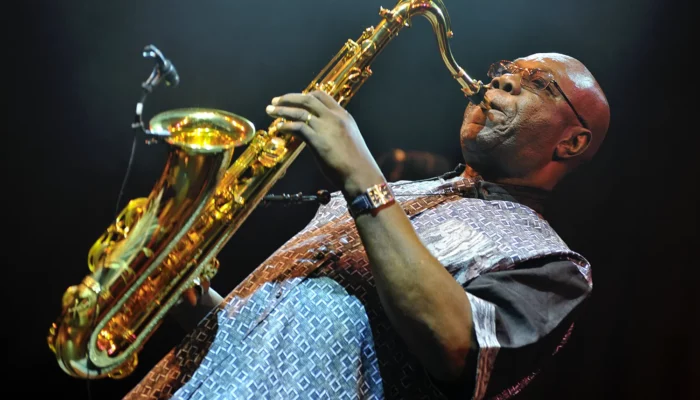
On the final professional day of VivaTech’s tenth-anniversary edition, the strongest line came from a head of government. Narendra Modi, Prime Minister of India — named AI Country Partner of the 2026 edition — made inclusion his throughline: technology, he argued, leads to progress only when it is democratized. In an age of disruption, he said, AI must improve lives, widen access, drive growth and help keep the planet healthy — a vision he framed as the reason for India’s prominent presence in Paris.
The message landed squarely within this year’s theme, Artificial Intelligence: Impact, Not Illusion — a deliberate move away from hype toward measurable results, organized around four tracks: AI and productivity, cybersecurity and defense, sovereignty and ethics, and energy and mobility. With Germany as Country of the Year and India as AI partner, the edition drew some 180,000 visitors, 15,000 startups and more than 4,000 investors across a Hall 7 expanded by 30 percent.
The Startup Prizes: five founders, one winner
Day three was also awards day. On Stage One, the VivaTech Startup Prizes ceremony closed the event’s flagship competition, the Female Founder Award, now in its eighth year. The context still matters: women-founded or co-founded startups capture only around 12 percent of venture funding. This health- and deeptech-heavy edition drew 444 applications from 85 countries.
After pitching the day before, five finalists were in contention for the title revealed today:
- Robeauté (France) — therapeutic microrobots designed to diagnose, treat and monitor the brain with new precision.
- Revolty (France) — residential solar storage built from repurposed lithium-ion batteries reclaimed from mobility and industry.
- Ark Climate (Germany) — a data platform helping cities measure and steer their climate action.
- ExoMatter (Germany) — a deeptech accelerating the discovery and selection of new materials.
- Endolith — a biology-driven approach to recovering metals, reinventing extraction itself.
A lineup that reflects how far the award has come: no longer FemTech alone, but health, energy, climate, materials and mining.

Bloomberg Awards: the faces of a tech decade
The day’s other honors, the Bloomberg Awards, recognized figures spanning research, entrepreneurship and investment: Sir Tim Berners-Lee (Visionary), inventor of the World Wide Web and CTO of Inrupt; Joe Tsai (Leadership), founder and chairman of Alibaba Group; Yann LeCun (Momentum), executive chairman of AMI Labs; Peter Steinberger (Breakthrough), creator of OpenClaw; Jeannette zu Fürstenberg (Investor), of General Catalyst; May Habib (Rising Star), co-founder and CEO of Writer; and Ukraine (CitizenTech).
The lines that defined the edition
Beyond the trophies, it was the executives’ words that set the tone.
On sovereignty, Aliette Mousnier-Lompré (Orange Business) was blunt: digital sovereignty doesn’t exist, the supply chain too tangled for anyone to be fully sovereign. What clients want, she said, is trust — resilience and options, not lock-in.
Cedrik Neike (Siemens) offered a reminder that some tasks tolerate no approximation: get a one-nanometer chip wrong and you can scrap half a billion dollars of wafers — a field where AI estimates simply won’t do.
Joe Tsai (Alibaba) made the case for open source: a model you download into your own data center, he noted, ends up “completely independent” from its maker — an answer to enterprises’ need to protect proprietary data. The flip side, said Ana Paula Assis (IBM), is governance: with companies now running multiple agents at once, orchestrating them — and keeping visibility for cybersecurity — has become decisive.
Thibault Sottiaux (OpenAI) described demand surging since GPT-5.5, and a mission to put “a personal AGI in everyone’s pocket.” And Elizabeth Stone (Netflix) summed up a growing creative-industry stance: provide the tools, leave the choice to creators — some want nothing to do with AI, “and that’s fine”; others see stories they couldn’t tell without it.
Saturday belongs to the public
With these prizes, VivaTech 2026 closed its professional run. On Saturday, June 20, the VivaTech Festival opens the doors to the general public — humanoid robots, live demos and workshops — a fitting close to an anniversary edition that, ten years on, kept its promise: tech measured by its impact, not its illusions.