


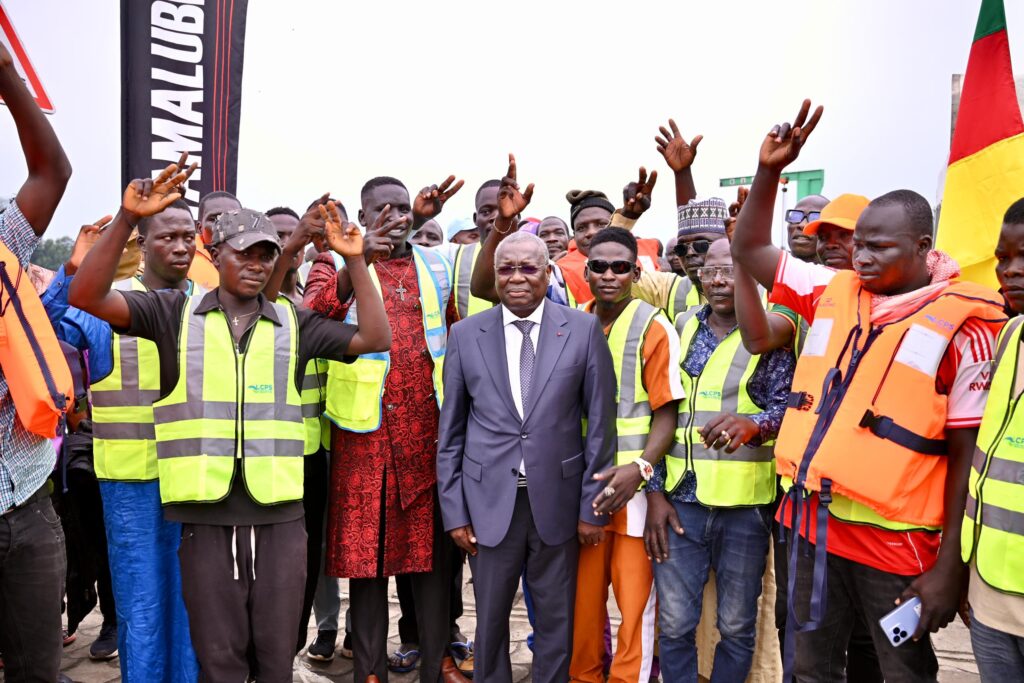
The 10th edition of the “Doing the Future Together” economic forum, convened by the Elessa Lothin-Sen Foundation, gathered policymakers, central bankers, development financiers and business leaders at the Malimba Club in Bonapriso, Douala, on 11–12 June 2026. Over two days, participants sketched the portrait of a country determined to convert its regional weight into lasting economic attractiveness — and to build bridges well beyond its borders.
DOUALA, 16 June 2026 —
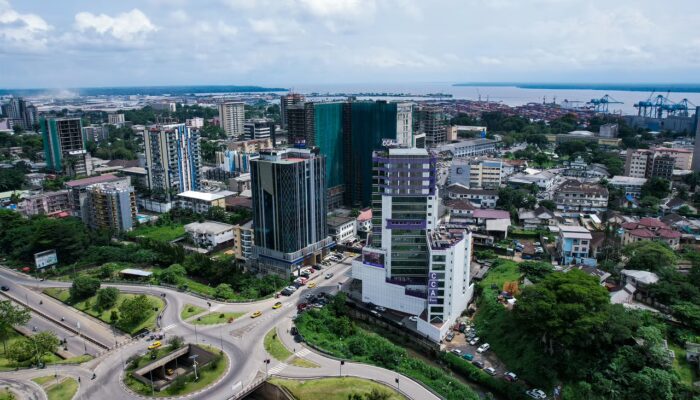
For two days, Cameroon’s economic capital hosted what has quietly become a fixture on Central Africa’s business calendar. Held under the theme “Cameroon, a major economic draw within the CEMAC sub-region? Its institutions, its actors and the country’s outlook,” the 10th FELS Economic Forum brought together administrative authorities, company directors, investors and experts around a shared conviction: with close to 45% of the CEMAC zone’s GDP, a diversified economy, a strategic geographic position and a dynamic agricultural sector, Cameroon already holds the cards of a genuine regional hub. The harder question — the one that ran through every panel — is how to translate that macroeconomic weight into tangible benefits for the consumer and the citizen.
A forum that has come of age
Reaching a tenth edition is no small feat for a privately driven economic gathering on the continent. Behind it stands the Elessa Lothin-Sen Foundation, the NGO created in 2017 by entrepreneur Louis Deschamps Lothin Elessa in memory of his late parents, and active in Cameroon’s fisheries sector since 2011. Year after year, the “Doing the Future Together” platform has positioned itself at the meeting point of economic reflection and field action — a place where ministers, regulators and operators sit at the same table to confront ideas with reality. The 2026 edition, hosted at the Foundation’s own Malimba Club in the upscale Bonapriso district, placed domestic consumption and the health of the internal market squarely at the centre of the debate.
The founder’s vision: produce in order to protect
That focus was no accident. It reflects a conviction that Louis Deschamps Lothin Elessa has carried for years — that Cameroon must structure and supervise the way consumer goods are brought to market, with particular attention to the fisheries value chain. Opening the proceedings, the Foundation’s president framed public health and traceability as the real stakes, insisting that mastering the value chain — from primary production all the way to the plate — is a collective responsibility shared by producers, businesses and public authorities alike.
“When you produce, it is someone else who consumes; that person must be protected. Beyond legal obligation, there is moral integrity.” — Louis Deschamps Lothin Elessa, President of the Elessa Lothin-Sen Foundation
For him, the urgency is to make local products safe, traceable and competitive. Seafood embodies the challenge perfectly: a considerable resource and a real export opportunity, but one that carries high sanitary risks if the cold chain and standards are not respected. Workshops of this kind, he argued, help raise the awareness of every actor in the chain, so that each understands precisely where they stand and what is expected of them.

Institutional weight, openly assumed
The presence of the Minister of Livestock, Fisheries and Animal Industries (MINEPIA), Dr Taïga, as special guest, gave the discussions an operational heft. Welcoming the field-level grounding of the Foundation’s work, the minister judged that the professionalisation of artisanal fishing had found its “anchor point” through this initiative, before congratulating its promoter. It is a recognition that carries history: the same ministry has, in recent years, repeatedly backed the Foundation’s efforts to bring Cameroonian seafood up to international standards of quality, traceability and conservation.
On the macroeconomic reading, the national director of the Bank of Central African States (BEAC), Pierre Emmanuel Nkoa Ayissi, reminded the audience that growth had reached 3.5% in 2025, stressing the solidity of the sub-region’s monetary framework.
“Our economy is more stable than in several other African countries.” — Pierre Emmanuel Nkoa Ayissi, National Director of the BEAC
He pointed in particular to the quality of the exchange-rate regime and to the country’s financial depth as structural advantages. Picking up the thread, the regional representative of the International Finance Corporation (IFC/SFI), Charlotte Ndaw Sako, opened up the forward-looking horizon — the opportunities emerging around digital services and the rise of local and national champions — signalling where private capital increasingly expects to find returns.
Attractiveness begins with trust
The Mayor of Douala, Dr Roger Mbassa Dinè, connected consumption to the competitiveness of territories, making consumer confidence the very foundation of urban attractiveness. The state, he noted, manages the underlying factors — sanitised markets, quality control, monetary stability — but the decisive ingredient lies elsewhere.
“An attractive city is, first and foremost, a city where consumers trust what they buy.” — Dr Roger Mbassa Dinè, Mayor of the City of Douala
A stable CFA franc reassures, he observed in substance; but the confidence of the consumer reassures even more. In a sub-region competing to attract serious industrial investment, that trust becomes a form of capital in its own right.
The blue economy as a strategic frontier
If one theme crystallised the forum’s ambitions, it was the blue economy. By the figures discussed, it contributes around 5.8% of national GDP and accounts for close to 3% of jobs. Built on the sustainable exploitation of marine resources and inland waters, it is estimated to generate ecosystem services worth more than 22,600 billion CFA francs, according to the Economic Commission for Africa (ECA). Yet the sector remains underexploited: shrimp exports, for instance, are still limited to a few hundred tonnes a year.
This is precisely where the Foundation’s flagship project intends to make a difference. The stated goal is to move from a logic of shrimp simply caught to thousands of tonnes valorised, locally processed and exported. On the ground at Youpwê, in Douala, that vision is already taking shape: trained fishermen, equipped pirogues, export markets being secured and a processing plant in the pipeline. The roadmap extends to modern fishmongers fitted with cold rooms and compliant display counters, and, in the medium term, to a centre of halieutic excellence combining canning, a drying line and the production of fishmeal from carcasses — a by-product in strong demand in markets such as Germany and Switzerland for premium animal feed. The ambition, in short, is to turn a national constraint into an economic opportunity, while training young people from coastal neighbourhoods in world standards of handling and hygiene.
A message without ambiguity
The takeaway of this 10th edition was unmistakable: Cameroon will only assert itself as a pole of attractiveness within the CEMAC zone if its internal market is healthy, secure and demanding. A protected consumer attracts serious industrialists; a responsible consumption chain enhances the value of the “Made in Cameroon” label. With “Doing the Future Together,” the Elessa Lothin-Sen Foundation lays the groundwork for an economy in which producing and consuming go hand in hand with protecting the citizen. And, as the Douala chapter closed, the Foundation made clear that its bridge-building does not stop at the country’s borders.
🇫🇷 Next Stop, Paris: The French Edition and Golf Diplomacy
The story now travels to France, with a Parisian edition expected on 30 June 2026.
International outreach has long been part of the Foundation’s DNA — and golf has become one of its most original instruments of soft power. Through its Golf Section and its Malimba Golf Academy, the Elessa Lothin-Sen Foundation, an NGO, is steadfast in developing its international golfing cooperation. That trajectory has already carried the Foundation’s charity tournament beyond Cameroon’s fairways — notably to Morocco, in partnership with the country’s royal golf institutions — positioning Cameroonian golf as a travelling ambassador for the nation.
The next milestone is Paris. The Foundation’s Golf Section is Guest of Honour at the African Golf Tour Pro Am, on 22 June, at the Liberty Country Club in Paris, France — the African Golf Tour being a continental circuit dedicated to building partnerships and friendship among golf professionals across Africa. There, the Malimba Golf Academy will be celebrated as a major and powerful golf-training initiative on the continent.
We are building international bridges for the Cameroonian golf movement.
“Being useful to others…”