


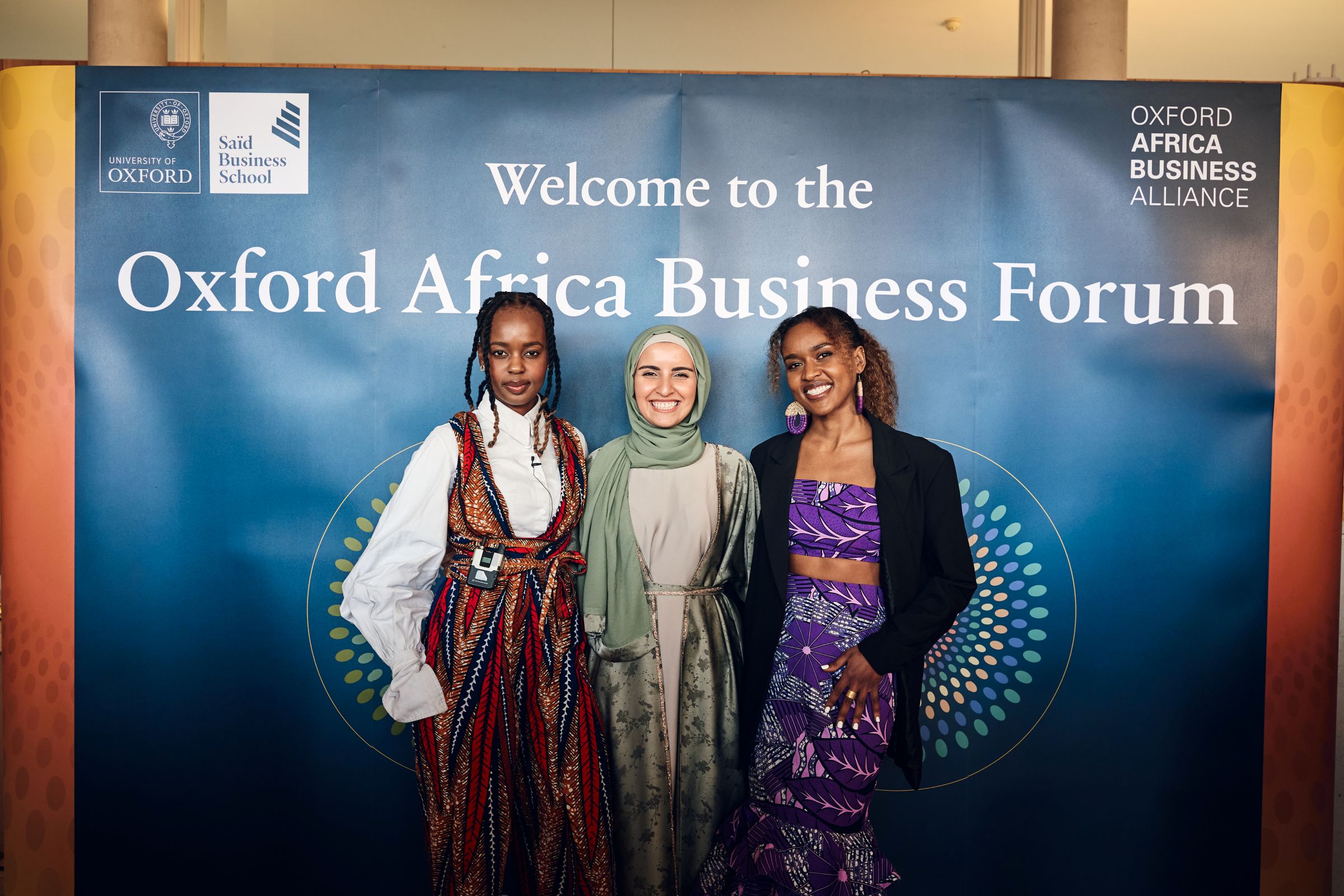
Africa’s capital markets have become more selective, not smaller — and selectivity puts the pressure on execution rather than on money. Oxford Saïd arrives at AFSIC 2026 as a headline sponsor betting on the input that takes longest to build: people.
Foreign direct investment into Africa reached roughly $70bn in 2025, down from an exceptional $94bn the year before, but still the third-highest figure since 1990 and about a third above the continent’s long-run average. The more revealing number sits underneath: the announced value of greenfield projects fell by almost a third, while the number of projects rose. More investors, smaller cheques.
Private capital tells the same story. AVCA counted $5.1bn deployed across 530 deals in 2025 — an 8% rise in deal count, the third consecutive annual increase, at a time when the global count fell 7%. Value slipped 5%. Private debt volumes jumped 57%. Fundraising contracted by a third, to $2.7bn across just sixteen vehicles, with DFIs anchoring 64% of commitments and African investors 21%.
Capital has not left. It has become harder to please. And when capital is disciplined rather than abundant, the binding constraint shifts from money to the ability to structure, govern and hold a transaction together — which is to say, to people.
The thesis
That is the space Oxford Saïd’s Africa Initiative claims. Its stated purpose is to build a network connecting Africa and the global business community, surfacing opportunity while equipping leaders to handle complexity. The gap it identifies is not attention — the continent has rarely had more — but engagement that is sustained, rigorous and connected rather than episodic.
In practice this means Africa-focused material inside the MBA and Executive Education: market structure, financing, infrastructure, human capital, data, political context. Some teaching happens on the continent, with company visits and time in front of operators. The school’s claim is that this shows up later as sharper judgement — better risk assessment, stronger local partnerships, more informed decisions about where to build and invest.
It is a promise that resists auditing. The pipeline figures are firmer.
The numbers
Oxford Saïd reports having supported over 450 African students through its degree programmes, with alumni across more than 25 African countries. Africans now make up around 10% of the MBA class — against a 2025-26 cohort of 332 students from 63 nationalities, that is roughly thirty people a year. More than 60% hold scholarships. More than half are women.
That last figure is worth pausing on. In private equity, venture capital and infrastructure finance, gender balance remains poor almost everywhere in the world. A majority-female African cohort, largely funded, is a resource-allocation decision rather than a communications line.
Why the timing matters
Bilateral aid from DAC donors to sub-Saharan Africa fell by around 26% in 2025 on preliminary OECD figures, with a further decline projected for 2026. The “aid to investment” conversation has stopped being theoretical, and it now runs straight into a question of domestic capacity.
The money exists. The Africa Finance Corporation puts African institutional capital — pension funds, banks, sovereign-linked entities — above $2trn. The plumbing does not. African pension portfolios remain heavily weighted to government securities, held back by thin deal pipelines, regulatory constraints and a shortage of managers to allocate to. In Ghana, where a 2025 directive pushes pension funds and insurers toward a 5% allocation to private equity and venture capital, 89% of surveyed funds had engaged with fewer than three fund managers in the past year.
The skills deficit, in other words, is not adjacent to Africa’s financing problem. It is one of its choke points. Oxford Saïd has been working that seam directly: its African Venture Finance Programme, run with Boost Africa and AfricaGrow, brought forty-four managers from thirty-three African VC funds through the school in 2024.
The limits
Scale invites an obvious objection. More than ten million young Africans enter the labour market each year against roughly three million formal jobs created; sub-Saharan Africa would need to generate some fifteen million annually by 2030 to absorb new entrants. Thirty MBAs a year do not register in that arithmetic — and are not meant to. The bet is positional rather than numerical: a small number of people placed where capital allocation decisions are made.
Two harder questions remain. One is return: a scholarship to Oxford guarantees no path back, and the value to the continent depends entirely on where graduates land. The other is the local ecosystem — Lagos Business School, GIBS, UCT GSB and Strathmore now train far larger cohorts on the continent, under international accreditation. The question is not who confers legitimacy, but whether Northern institutions build local capacity or absorb the strongest candidates from it. Oxford’s African visiting fellowships and its role in BS4CL Africa, a climate coalition of African schools, are partial answers. Whether they scale is the real test.
London, October
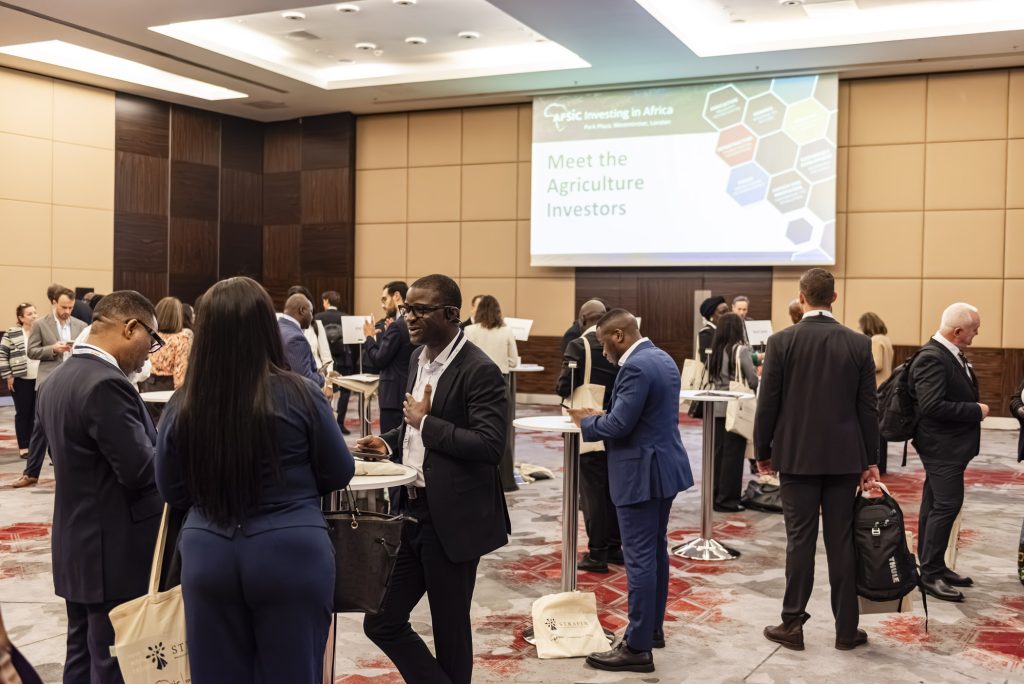
AFSIC – Investing in Africa returns to the Park Plaza Westminster Bridge on 13-14 October 2026 for its thirteenth edition, with more than two hundred investor speakers already confirmed. The published agenda maps closely onto the themes above: the shift from aid to investment, the growing weight of local capital following the reallocation of US institutional money, critical minerals and the energy transition.
Oxford Saïd comes looking for investors, entrepreneurs, DFIs, corporates and partners with long horizons, and to test what it can offer them — talent, research, teaching, convening. It is a long-dated proposition pitched to a room that is currently thinking in terms of discipline and execution.
The bet is coherent. It will be settled less by who gets admitted than by the funds raised, the companies built and the boards held by those who come out — over a decade, not a cycle.