

Trajectories — Portrait No. 11
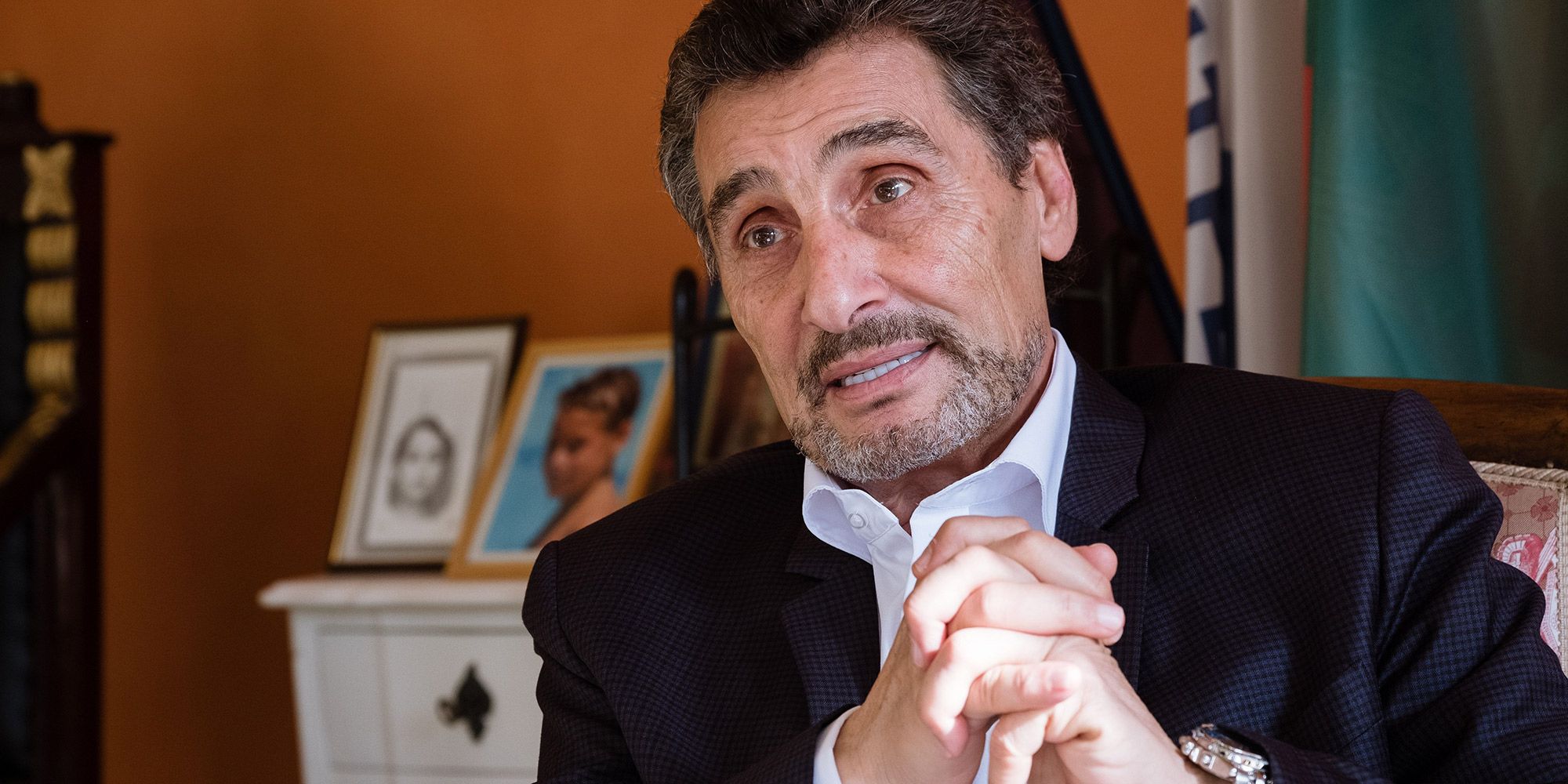
A founder’s biography is not a legal defence, and a legal file is not a verdict. Mohed Altrad does not know what day he was born; he picked 9 March with his children. From a Bedouin tribe near Raqqa to 65,000 employees in more than fifty countries and a fortune Forbes puts at $6.6bn, the ascent is among the most extreme in modern European business. It now runs alongside three legal matters: a 2022 conviction under appeal, with the appeal pushed to March 2027; a preliminary investigation opened by France’s financial prosecutor in April 2026; and inherited asbestos litigation in the United States. This portrait handles both halves, and keeps them separate.
| Born | c. 1948, Raqqa region, Syria — exact date unknown |
| Chosen birthday | 9 March |
| Given to his grandparents | age 4, after his mother’s death |
| Arrived in France | late 1960s, on a scholarship, speaking no French |
| Doctorate | computer science, Université Paris-Dauphine |
| Bought a failing scaffolding business | 1985, near Montpellier |
| Altrad Group today | 65,000 employees, 50+ countries |
| Net worth (Forbes, 2026) | $6.6–6.7bn |
| EY World Entrepreneur of the Year | 2015 |
| Novels published | 3 |
| First-instance sentence, 13 Dec 2022 | 18 months suspended, €50,000 fine — under appeal |
| Appeal hearing | March 2027, moved from September 2026 |
| Sum covered by the April 2026 preliminary investigation | €350–400m |
The portrait begins with an absence: a date of birth.
Mohed Altrad was born around 1948 near Raqqa, in the Syrian desert, into a Bedouin tribe. He has spoken publicly about the circumstances of that birth, which he describes as the product of a rape. His mother died when he was four; his father handed him to his grandparents. His grandmother opposed his going to school — a boy of his station herded livestock.
He walked to school anyway, several kilometres of it, won a Syrian state scholarship, and arrived in France in the late 1960s without the language.
The missing birth certificate is not colour. It is the structure of the whole trajectory: a man with no papers, no family, no language and no network, in a country where all four normally gate access to anything. Everything he acquired he had to construct, including his own civil identity.
He studied physics, then computing, and took a doctorate at Paris-Dauphine. He worked as an engineer, including in Middle Eastern oil, which produced the capital that made the next step possible.
1985: buying what nobody wanted
In 1985 Altrad and a partner bought a small, failing scaffolding company outside Montpellier.
Measure the distance between the man and the decision. A computer science PhD in mid-1980s France goes into research, telecoms or services. He chose metal tubes and cement mixers: thin margins, labour-intensive, a mature industry.
Readers of portrait three will recognise the move. Célestin Tawamba was a financier who chose the factory. Altrad was a computer scientist who chose scaffolding. Both took the illiquid side of the trade with full knowledge of what they were giving up.
What followed was forty years of one method: acquisition. Competitors, distressed firms, divisions large groups wanted off their books. The company moved from equipment manufacture into industrial services — scaffolding, insulation, maintenance, site access — for energy, petrochemicals and construction. Britain’s Cape was acquired in 2017. By 2025 the group employed 65,000 people across more than fifty countries, run from Montpellier rather than Paris.
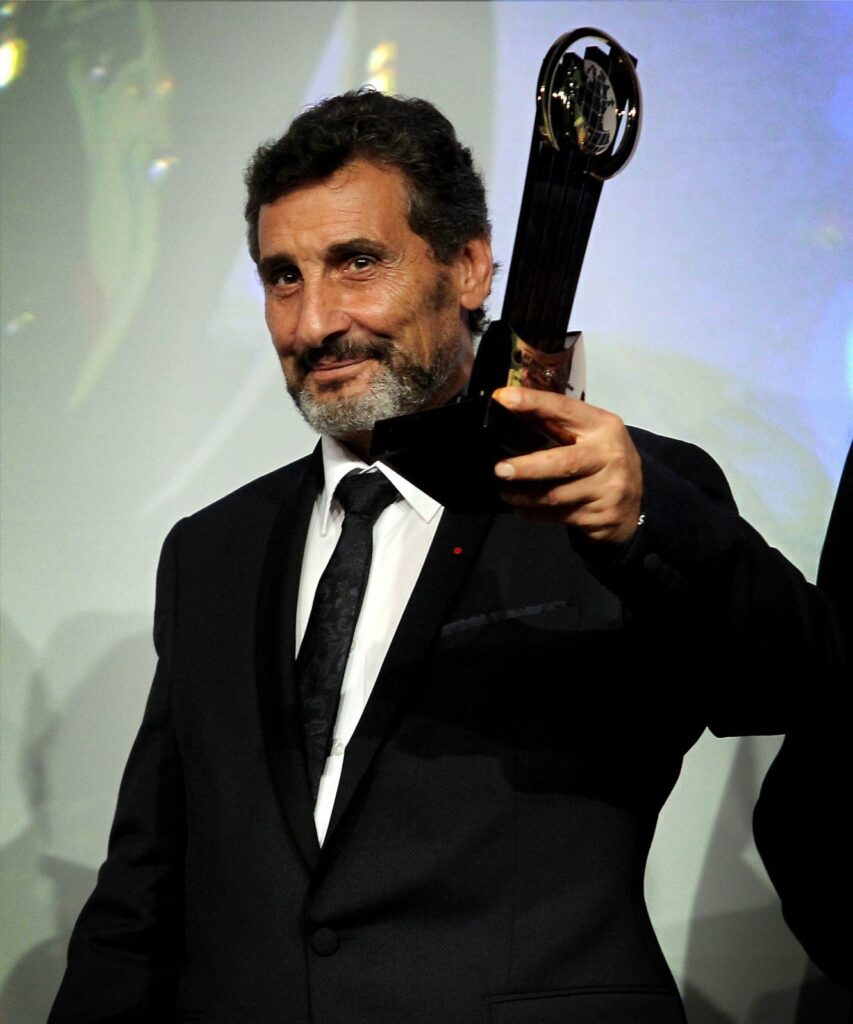
He was named EY World Entrepreneur of the Year in 2015. He has published three novels, one largely autobiographical. He owns and chairs Montpellier Hérault Rugby and has sponsored the French national side.
The legal file, stated precisely
Here an honest portrait has to slow down, because the presumption of innocence is not a courtesy.
The 2022 conviction. On 13 December 2022 the Paris criminal court sentenced Altrad to eighteen months suspended and a €50,000 fine for active corruption, influence peddling and misuse of corporate assets, in the matter linking him to Bernard Laporte, then president of the French Rugby Federation, who received two years suspended. The case concerned sponsorship arrangements between the Altrad group and French rugby.
Both men appealed immediately. A sentence under appeal is not final: as a matter of French law the presumption of innocence continues to apply until the appeal court rules. The hearing, first listed for 9–23 September 2026, has been moved to March 2027, for reasons the defendants’ counsel presented as outside their control.
The 2026 investigation. In April 2026, following a complaint from the tax administration, the Parquet National Financier opened a preliminary investigation into the Altrad group for aggravated tax fraud and laundering of aggravated tax fraud by an organised group, concerning between €350m and €400m through a Dubai structure. The group’s Montpellier headquarters were searched.
A preliminary investigation is not a charge, not an indictment, and not a conviction. It is an investigative phase that can end in no further action. At the time of writing no court has ruled on this matter.
The asbestos litigation. A third strand, civil and foreign, belongs in the record. The 2017 Cape acquisition brought with it asbestos liabilities: proceedings in South Carolina name several entities including the Altrad group and its founder personally, over the twentieth-century health consequences of Cape Asbestos’s activity. The group’s 2023 annual report noted that the claims were well disclosed at acquisition and that the company was seeking ways to support mesothelioma victims.
What the file means, whatever it concludes
Two propositions hold simultaneously, and neither prejudges anything.
An exceptional ascent confers no immunity, and its narrative is not a defence. Being born without a birth certificate in the Syrian desert has no legal relevance whatever. Courts try facts.
And an executive carrying a non-final conviction and a preliminary investigation retains the presumption of innocence, including in the press. The correct treatment is to state the exact posture of each proceeding — convicted at first instance, appeal pending, investigation opened without charge — and stop there.
What is established, and material to any business reader, is the risk. A 65,000-employee group whose founder carries three substantial legal matters is carrying key-man risk, tax risk, and inherited environmental liability at once. All three bear on valuation, on the cost of capital, and on eligibility for public tenders — irrespective of guilt.
Read from Douala or Libreville
No network is survivable; the substitute is expensive. Altrad had no capital, no family, no language. He substituted a high-level technical qualification earned in the host country. It is the same mechanism as Ursula Burns in portrait two: verifiable competence as a passport into rooms where you are not expected.
Acquisition is a discipline, not an opportunity. Forty years of successive deals requires the repeated ability to value, finance and integrate. Few firms in this region have built that capability — precisely as foreign disengagement, documented three times in this series, makes it necessary.
You buy the liability with the asset. Cape is the textbook case: an acquisition carrying decades-old health and environmental exposure that resurfaces in a foreign court. For anyone acquiring assets divested by international groups in this region — mines, cement works, oil sites — historic liability is a contract question, not a discovery to be made afterwards.
A founder’s legal risk is a corporate risk. Where the founder, the controlling shareholder and the public face are one person, his legal difficulties become the group’s automatically. Separating the roles — management, control, representation — is not imported governance fashion. It is asset protection.
Tomorrow: Kate Fotso, Cameroon’s leading cocoa exporter.