

Trajectories — Portrait No. 10
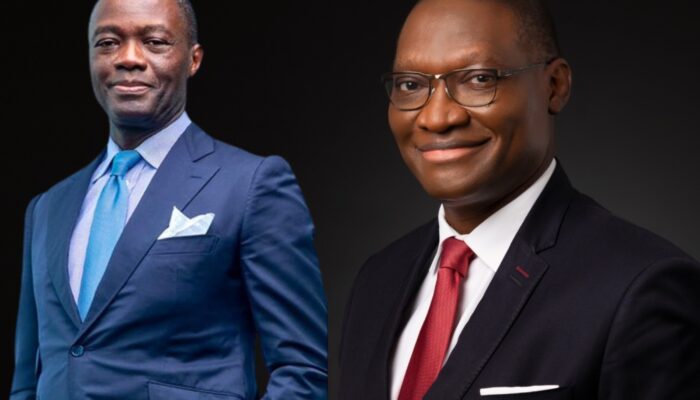
At end-June 2025, Nedbank carried its 21.2% of Ecobank Transnational at R1.8bn against a market value of R1.9bn. It sold the block four months later for $100m — roughly R1.8bn. The headline that a Cameroonian financier bought for a fifth of what the seller paid is arithmetically true and analytically empty: Nedbank had no room to negotiate, because the asset was listed and the screen said what it said. The interesting number is the one that was not paid. A 21.2% block that makes its holder the largest single shareholder of a bank operating in 35 countries changed hands at approximately the market price of the underlying shares. Alain Nkontchou paid no control premium.
| Age | 62 (press, January 2026) |
| Education | Université Pierre-et-Marie-Curie; Supélec (MSc electrical engineering); ESCP (MSc finance) |
| Research engineer, Matra Communication | 1987–89 |
| Chemical Bank / JP Morgan, VP head of trading and sales | 1989–94 |
| MD, global macro trading — JP Morgan, Credit Suisse, BlueCrest | 1994–2008 |
| Board member, Laurent-Perrier (Paris-listed champagne house) | 1999–2009 |
| Enko Capital co-founded with his brother Cyrille | 2007–08 |
| Enko AUM | $350m → $1.3bn; London, Johannesburg, Abidjan, Yaoundé |
| Joined ETI board | 2014–15 |
| ETI chairman | 2020 – June 2024 |
| Personal stake in ETI, end-2020 → June 2023 | 0.15% → 5.13% |
| Nedbank block acquired | 21.22% for $100m (c. R1.8bn) |
| Nedbank aggregate outlay, reported | c. $500m |
| Nedbank cumulative FX and fair-value losses recycled to P&L | c. R7bn |
| Nedbank basic EPS, FY2025 | −53%, to 1,681 cents |
| ETI group valuation, 2024 annual report | c. $447m |
| Nkontchou’s combined holding post-deal | ≥24.05% |
| Ecobank footprint | 35 countries, 32m customers |
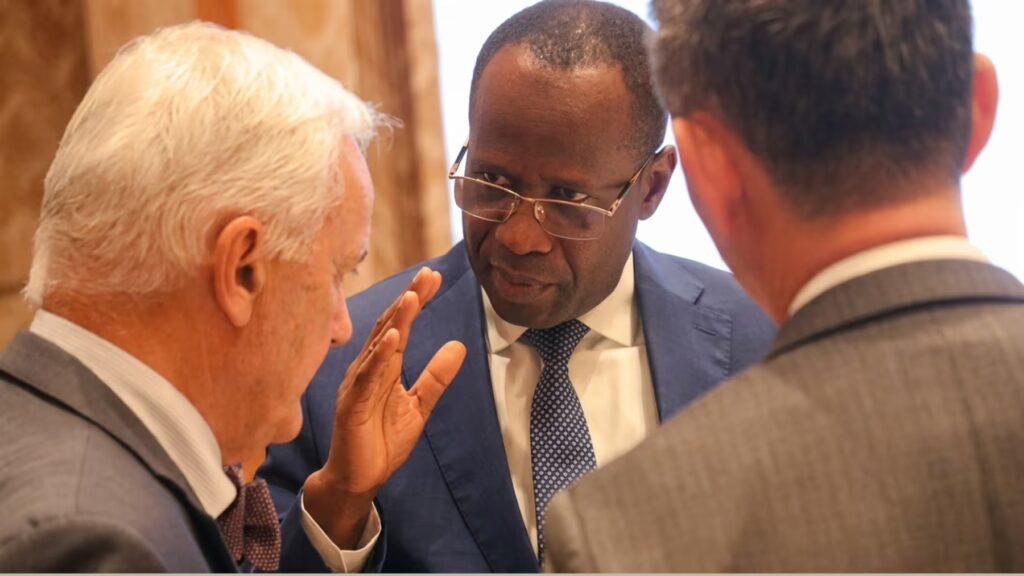
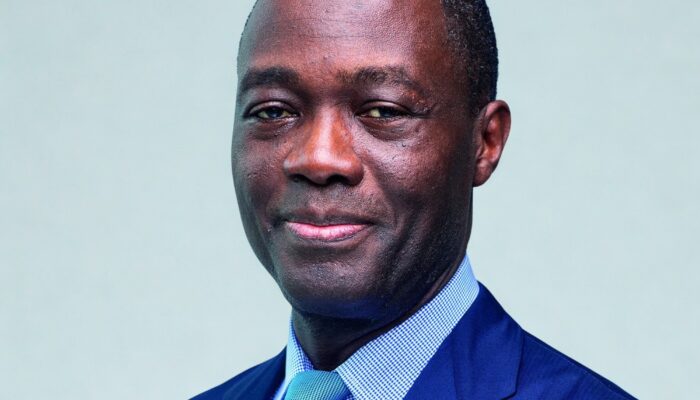
Alain Francis Nkontchou trained as an engineer. Université Pierre-et-Marie-Curie, then Supélec for a master’s in electrical engineering, then ESCP for finance and accounting, then two years as a research engineer at Matra Communication.
The sequence matters more than it looks. Global macro trading — the discipline he would spend fourteen years at the top of — is the identification of macroeconomic trends, the modelling of their transmission into asset prices, and the sizing of positions accordingly. It is a modelling job before it is a finance job.
He joined Chemical Bank, later JP Morgan Chase, in Paris and New York, running trading and sales as a vice-president by 1994. Then managing director of global macro trading at JP Morgan, at Credit Suisse in London, and at BlueCrest Capital Management, co-chairing the European market risk committee along the way. From 1999 to 2009 he also sat on the board of Laurent-Perrier, the Paris-listed champagne house — a detail worth keeping, because it shows a trader who was already accumulating governance exposure.
Leaving the desk in 2008
In 2007–08 he left proprietary trading to co-found Enko Capital with his brother Cyrille: an Africa-dedicated asset manager, headquartered in London and Johannesburg.
Consider the timing. A managing director of global macro trading in 2008 is paid extremely well and sits at the centre of the financial system. Founding a sub-Saharan Africa asset manager in the year Lehman Brothers failed is a conviction trade, not a career optimisation.
Enko built a full stack: the Enko Africa Debt Fund, launched in 2017 with $200m; the Enko Opportunity Growth Fund in listed equities; a private equity vehicle. Assets under management went from roughly $350m to $1.3bn. Offices opened in Abidjan and Yaoundé.
Set that beside yesterday’s portrait. Janngo Capital, the gender-equal venture fund, is financed almost entirely by development finance institutions. Enko is a commercial manager raising from institutional investors on return criteria. Two distinct channels for moving capital into Africa — one subsidised, one priced — and the region needs both, for different reasons.
Ten years inside the asset
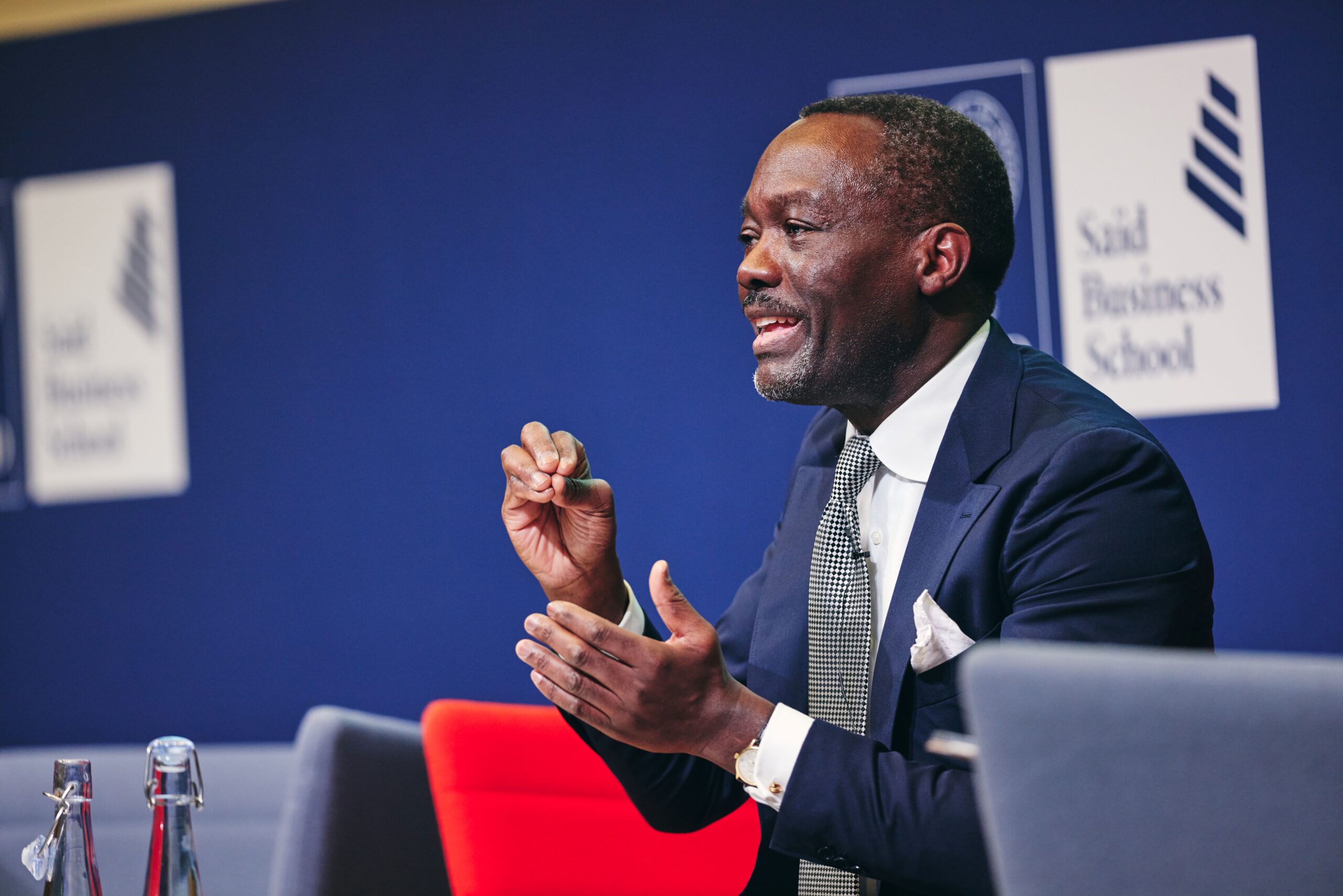
Nkontchou joined the ETI board in 2014–15 as an independent non-executive director, took the chair in 2020 from Nigeria’s Emmanuel Ikazoboh, and handed it to Senegal’s Papa Madiaw Ndiaye in June 2024. Group chief executive Jeremy Awori has publicly credited his stewardship with helping bring the bank into a period of profitability.
Meanwhile, disclosed in regulatory filings, he was buying. His holding went from 0.15% of the capital at end-2020 to 1.44% in 2021, 4.79% in 2022, and 5.13% by June 2023 — the only individual shareholder above the 5% threshold. We know the detail precisely because market rules required him to declare it.
What actually happened in the Nedbank trade
Nedbank’s exposure dates to a strategic alliance with Ecobank, with an aggregate outlay reported at around $500m by the time it held 21.2%. The relationship then met the last decade of West and Central African macro: currency depreciation, sovereign restructurings, higher capital requirements.
By 30 June 2025 the stake sat in Nedbank’s accounts as a non-current asset held for sale under IFRS 5, with a carrying value of R1.8bn and a market value of R1.9bn. The sale and purchase agreement with Bosquet Investments — Nkontchou’s private vehicle, with Enko as lead adviser and Absa as co-adviser — was signed on 15 August 2025 at $100m. Nedbank concluded the disposal on 17 December 2025 after Nigerian clearances; the UMOA Banking Commission finished its own review months later, with approval announced publicly in Lomé on 3 June 2026 at ETI’s 38th annual general meeting.
The accounting consequence for the seller was brutal and entirely mechanical. Roughly R7bn of cumulative foreign exchange losses and fair value adjustments, previously parked in other comprehensive income, had to be recycled through profit or loss. Nedbank’s FY2025 basic earnings per share fell 53%, to 1,681 cents. Headline earnings, which exclude the item, rose 2% to R17.2bn; return on equity eased to 15.4%. Over the decade, Business Day reported the investment returned R400m in dividends against R6.9bn of unrealised losses and a $293m impairment.
Two conclusions follow, and they point in opposite directions.
The buyer did not extract a discount. He paid roughly the screen price. Any narrative of a shrewd bargain against a distressed seller misreads a listed security.
But he acquired de facto influence without paying for it. Blocks conferring effective control normally trade at a premium to market. This one did not, because the depth of the market for a 21.2% stake in a Togo-headquartered pan-African bank is thin, the regulatory approval path runs through two jurisdictions, and the pool of buyers willing to underwrite that is very small. Nkontchou was, in practical terms, the market.
The more sobering figure sits in ETI’s own 2024 annual report, which valued the group at around $447m — less than Nedbank had paid years earlier for a minority of it. A bank serving 32 million customers across 35 countries was carrying a market value smaller than a mid-sized European fintech round. That is the real story of this transaction, and it is not about one man.
Two questions worth putting
The sequence. Director from 2014, chairman from 2020 to 2024, accumulating stock throughout, then buyer of the control block fourteen months after stepping down. The purchases were disclosed as required; the transaction ran through first-tier advisers, Nigerian regulators and the UMOA Banking Commission, which cleared it after a multi-month review. No impropriety is alleged, and Nedbank’s exit was its own strategic decision, announced as such and followed by a R13.9bn move on Kenya’s NCBA.
What the sequence does describe is a route: intimate knowledge of an asset is an informational advantage, and it is entirely lawful when exercised within disclosure and abstention rules. It is also, for anyone in this region contemplating a similar path, a twelve-year timetable.
The concentration. A single individual holding 24% of a banking group present in 35 countries wields considerable governance influence without a majority. ETI’s register was previously spread across institutions — Qatar National Bank, Arise, South Africa’s public-sector pension fund. Banks with a strong reference shareholder govern faster and more coherently; they also carry key-man risk. The WAEMU regulator weighed that and accepted it.
Read from Douala or Libreville
African capital is not absent; it is unassembled. What is scarce is not money but African managers holding the balance sheet, institutional credibility and banking relationships needed to execute a nine-figure transaction. Nkontchou took twenty years to assemble the three: fourteen years of trading for the capital, seventeen of asset management for the credibility, ten on a board for the asset knowledge.
Foreign disengagement is a window, and it is closing. This is the third occurrence of the same pattern in this series — a French group selling Cameroonian mills, a French company selling a Nigerian oil stake, a South African bank exiting Ecobank. The assets are moving at prices that reflect seller caution. The question for CEMAC is not whether the opportunities exist. It is who here has the vehicle to take them.
An international career only pays on return if it is converted. Many senior Africans in London, Paris and New York talk about coming back. Few do, and fewer still convert expertise into a durable institution. This trajectory shows the full route: leave, reach the top of a technical discipline, and return with an instrument rather than an intention.
Tomorrow: Mohed Altrad, from Bedouin orphan to a multi-billion-euro industrial group.