

Six months apart, the same regulator issued two decisions about two Cameroonian microfinance institutions placed under supervision in the same wave. One got a liquidator. The other got its keys back. The variable that separates them is not capital, and it is not credit risk. It is who sits at the head of the boardroom table — the least analysed and most lethal position in Central African finance.
I. Two decisions
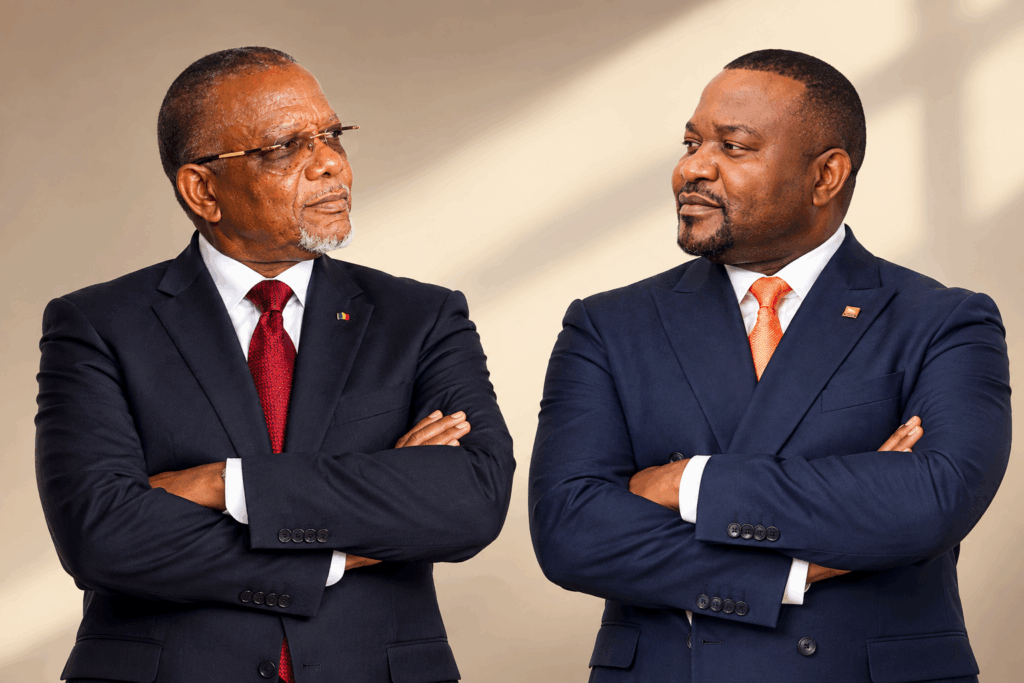
On 25 March 2026, the Central African Banking Commission withdrew the licence of the Caisse d’Épargne et de Crédit pour les Initiatives Locales. The decision, made public on 1 July, ordered the institution’s liquidation and appointed Nicholas Achiri Asangwe to realise its assets and settle its liabilities, for up to a year, renewable. CECIL was a first-category institution licensed in 2008, lending mainly to farming, trading and livestock activity. It had been under provisional administration since March 2025.
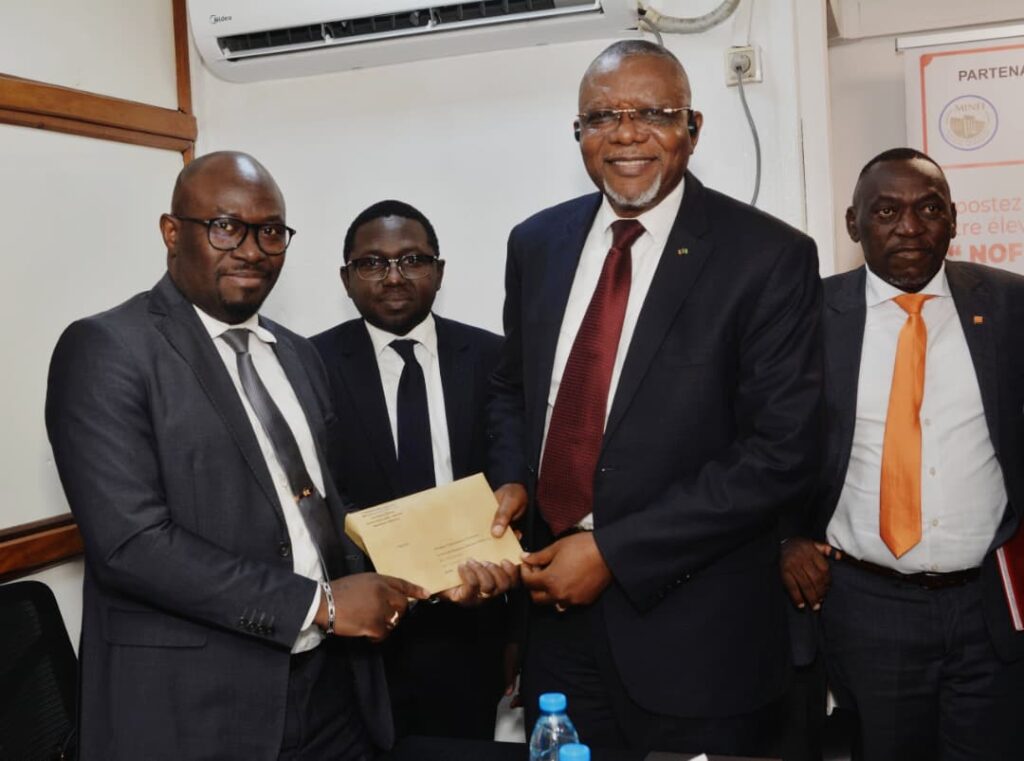
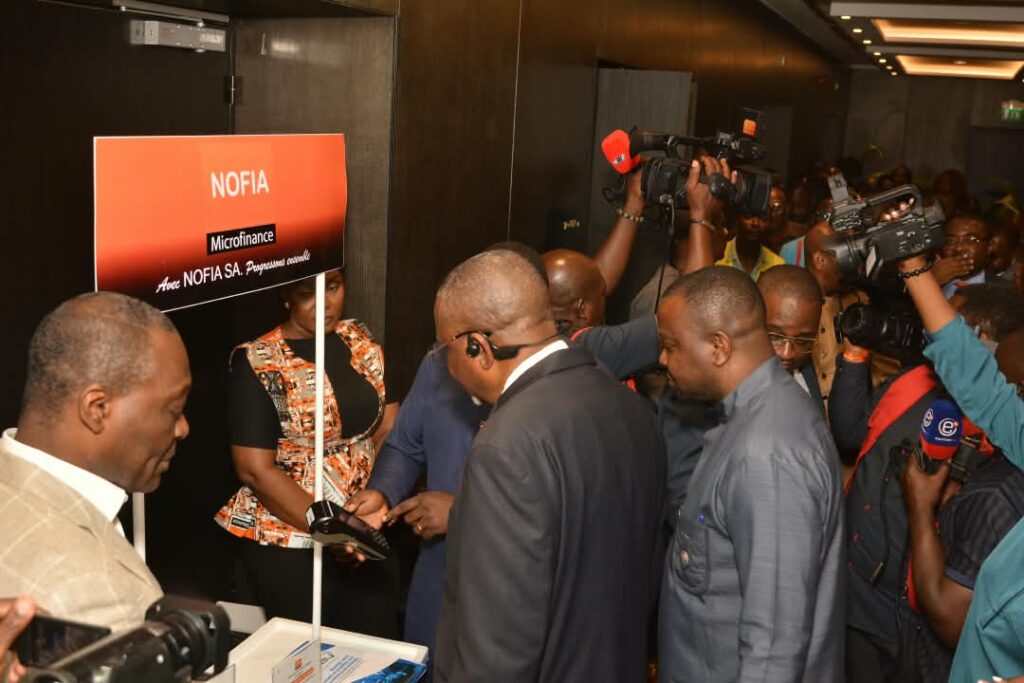
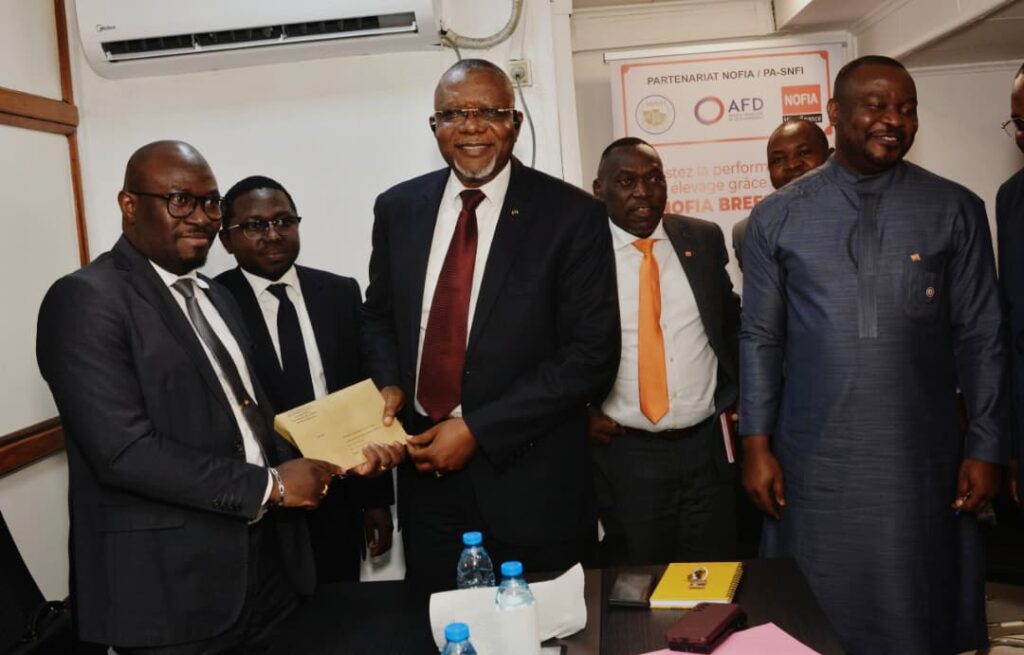
On 11 September 2026, the same regulator lifted the provisional administration of Nouvelle Financière Africaine, a second-category institution in Douala, placed under supervision in mid-2025. Share capital had gone from XAF 1.2bn to XAF 8.2bn; 43 of 56 supervisory recommendations were reported as fully implemented, against 25% a year earlier; the portfolio at risk over 30 days had been brought from 32.39% to under 4%.
Twelve months of supervision, two opposite verdicts. The interesting part is what CECIL actually died of.
It was not a ratio. In 2023, Cameroon’s Finance Minister had already suspended CECIL’s board chairman as a precautionary measure, citing repeated breaches of the regulator’s 2017 corporate governance rules. The reproach was specific: recurrent interference in the day-to-day running of the institution, in breach of the separation between the board’s oversight function and the general management’s executive function. The regularity of his appointment to the chairmanship was also questioned. Three years later, the institution was gone.
II. The sector dies at the top
Once you start looking for it, the pattern is everywhere in the Cameroonian record.
The scale of the mortality is not in dispute. COBAC withdrew seventy microfinance licences across the CEMAC zone in 2024. At the end of that year the region counted 521 licensed institutions, 384 of them in Cameroon, carrying XAF 2,061bn in aggregate assets and XAF 177.8bn in non-performing loans. Cameroon alone accounted for 81% of the deterioration in the region’s credit portfolio quality, and its microfinance deposits fell from XAF 925.4bn to XAF 914.4bn over the year even as lending grew.
The sector’s honour roll of failures — Cofinest, Comeci, Credit Fund, Apesa Fund, and more recently UNICS and CEPAC Solidarité under provisional administration — is usually explained by bad loans. That is the symptom. In a second-category institution, a bad loan book is rarely an accident of underwriting. It is the residue of decisions taken by people who were not supposed to be taking them.
This is precisely what the regulator concluded a decade ago. Until the 2015 reform, an institution that met its prudential ratios was treated as sound; supervision has since extended to governance, internal control, compliance and risk management, and enforcement intensified from 2021. As David Kengne of Microfinance Academy puts it, institutions could post respectable numbers while being hollowed out by governance conflicts.
The regulator identified the disease. It has been rather less successful at curing it.
III. Why the rules were not enough
The architecture in place is not thin. The September 2017 framework regulation was accompanied by a battery of texts adopted that October: one on corporate governance in microfinance institutions, one on internal control, one on the classification and provisioning of receivables, one capping the credit an institution may extend — to clients, but also to its own directors, executives and staff. Specialised board committees became mandatory, and the figure of the independent director was introduced.
Crucially, the chairmanship is not a private appointment. Under the 2017 licensing regulation, COBAC vets institutions, their executives and their statutory auditors, examining the governance structure, the professional competence of the proposed officers, and their honourability, including the absence of conflicts of interest, incompatibilities or disqualifications.
And still CECIL died of its chairman, three years after a government minister formally told it so.
That gap between rule and outcome is the real subject. Related-party exposure limits, credit caps and independent directors all assume a board willing to enforce them against the person who appointed it. Where the chair is the dominant shareholder, or his proxy, the architecture is decorative. The regulation can define the line between oversight and management; it cannot make a chairman want to stay behind it.
Which is why the interesting question about NOFIA is not how it raised XAF 7bn. It is who the shareholders put in the chair, and why.
IV. What NOFIA did with the chairmanship
The institution’s answer was to treat the chairmanship as a remediation instrument rather than a reward.
Clément Kemayou joined Société Générale de Banques au Cameroun as a clerk in December 1982 and spent seventeen years there, moving through the automation of branch loan repayments into audit and management control — controller, auditor, principal inspector, head of mission — before running Douala-Bali, the network’s third-largest branch. In 2000 he moved to Chad for the Commercial Bank group with a blunt mandate: build an internal audit department from nothing, in response to a COBAC injunction to a subsidiary that had none. He stayed eleven years, and had the board adopt the institution’s first internal audit charter and then its first governance charter.
Back in Cameroon from 2011, he ran human resources at CBC, then the sub-directorate covering SMEs, institutional clients and microfinance institutions, then the Littoral and South-West regions — through the bank’s seven years under provisional administration. From 2023 to 2026 he was chief executive of CECEC, a second-category institution with capital of XAF 765.55m and some 28,000 clients, whose stated aim was to establish itself permanently in Cameroon’s top five.
Read the sequence as a job description rather than a career, and the point becomes obvious. The man now chairing NOFIA has written, twice, the internal documents that define where a board stops and management begins. He is, in the narrow technical sense, the anti-CECIL appointment.
The chief executive is cut from adjacent cloth. Bogni Ngueya came to NOFIA in September 2025 as the regulator’s own appointee and left the provisional administration as general manager. His career runs through internal audit at Afriland First Bank, then compliance, then the role of chief compliance officer; then risk and compliance for mobile financial services at MTN Cameroon; then risk, compliance and internal control for Africa at a Dubai trading house. During his twelve months in charge, the institution produced or revised 136 procedures and around ten governance texts, created specialised board committees, and rebuilt its know-your-customer, financial security, risk management and regulatory reporting arrangements.
In the standard three-lines-of-defence model, the chief executive comes from the second line and the chairman from the third. Neither built his career on loan production. For an institution whose stated priority is never to return to supervision, that is the correct bias. It is also, as the numbers below suggest, a bias with a cost.
V. The variable nobody has disclosed
Here the case becomes less clean, and the sector’s oldest problem reappears in new clothes.
NOFIA’s recapitalisation was approved by COBAC on 12 December 2025. It brought in Cameroon Business and Trade (CBT) SA as majority shareholder. The exact stake, the amount subscribed and the identity of CBT’s own shareholders have not been published. At the 11 September presentation the company was represented by Félix Tsafack, whose role was not stated. Investir au Cameroun and its English edition describe Kemayou as a close associate of the cocoa industrialist Emmanuel Neossi, and note that the institution has not said whether the chairman sits for CBT, for another shareholder, or as an independent director.
That last omission matters more than the missing shareholding percentages, because it is the same omission that sat at the origin of the CECIL file. An independent chairman with a control background is an unusually strong answer to the chairman problem. A shareholder’s representative with a control background is a considerably weaker one, however impressive the résumé, because independence is not a skill. It is a position.
Nor has the institution published audited financial statements, total loans outstanding or prudential ratios alongside its recovery figures. Until it does, the twenty-eight-point fall in portfolio at risk cannot be decomposed from outside: XAF 280.04m of recoveries at 30 June 2026 accounts for only a fraction of a move that size.
VI. The regulator is raising the price of the chair
What makes this more than a governance seminar is that COBAC is in the middle of converting the chairmanship from an honorific into a liability.
Six draft regulations went to the profession in Libreville on 22 and 23 June 2026. One of them, on microfinance liquidity, would require institutions to hold a liquidity ratio of at least 100% at all times and to maintain a formalised treasury management policy covering cash flows, maturity profiles, large-deposit monitoring and receivable quality. Its article 10 makes the governing bodies explicitly responsible for the internal liquidity monitoring framework. Another would organise the blacklisting of borrowers who fail to repay. In parallel, the December 2025 regulation overhauling the Central African deposit guarantee fund raises the compensation ceiling and sets out the conditions for preventive intervention and resolution, and regulation R-2025/02 lifted the minimum share capital for banks from XAF 10bn to XAF 25bn, payable in full at creation for anyone licensed after 1 January 2026.
Taken together, these texts point in one direction: the board is being made answerable, in law, for things it used to be able to describe as management’s business. A chairman who cannot read a maturity ladder is about to become a regulatory exposure in his own right. On that trajectory, NOFIA’s appointment stops looking like a courtesy to a distinguished banker and starts looking like an early adaptation.
VII. The test
There is a version of this story in which governance is the whole answer, and it is not quite true. NOFIA holds XAF 8.2bn of share capital against XAF 6.32bn of customer deposits — more statutory equity than client resources, which no deposit-taking institution sustains for long. Entry into Cameroon’s top five by deposits requires roughly XAF 28bn, on a market where second-category deposits totalled XAF 456bn at the end of 2024 and where the national deposit base is shrinking. Converting into a bank requires XAF 16.8bn more capital than the institution has. For scale: ACEP Cameroun, one of the segment’s largest lenders, earned XAF 803.6m in 2025. Growth of that order will come from the capital markets and a committed shareholder, not from a well-drafted audit charter. Crédit Communautaire d’Afrique took seventeen years to make the same journey, under a capital threshold two and a half times lower.
But the defensive question — will this institution be back under supervision in three years — now has a serious answer, and it is the first time in a while that a Cameroonian microfinance institution has offered one at the level where the sector actually fails.
The test will not be the 2026 accounts. It will be the first meeting at which the chairman has to tell the shareholder who appointed him that a transaction will not be approved. CECIL never had that meeting. Everything else is preparation for it.