


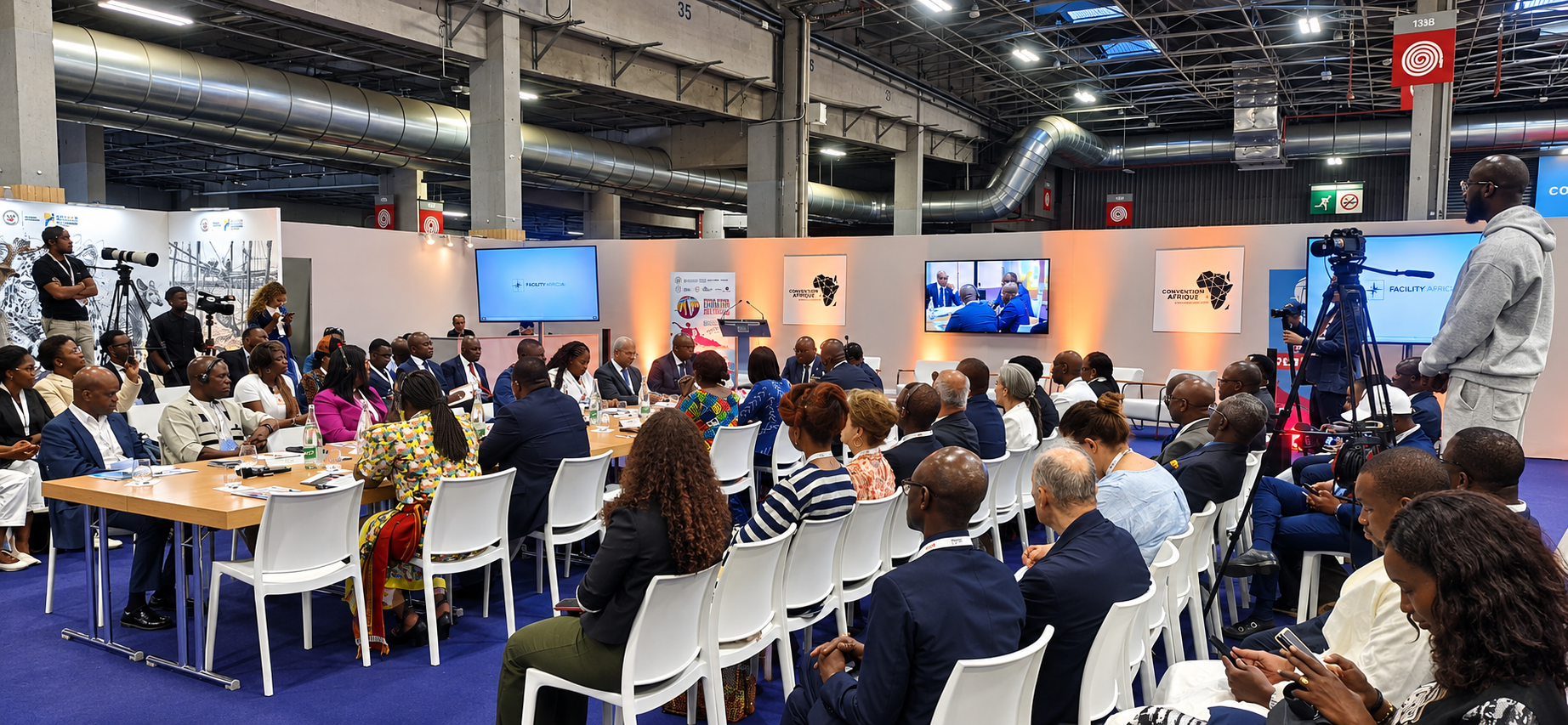
Tanzania sent fifteen companies and an ambassador. Zimbabwe’s tourism minister appeared on the speaker list. Past that, the continent’s largest annual pitch to the French travel trade was conducted almost entirely in French, at a show where the Africa Convention has just closed its fourth edition. With AFCON 2027 heading to Kenya, Tanzania and Uganda, and more than two million French travellers heading to Africa every year, the arithmetic of that absence deserves attention.
IFTM ran from 15 to 17 September 2026 at Paris Expo Porte de Versailles, Hall 1, for its 48th edition, under the theme of the value of travel and what actually creates impact. Uzbekistan was the guest destination. Organisers went in expecting roughly 1,700 brands, 34,000 visitors and around 180 destinations, against 32,022 visitors, 1,650 brands and 177 destinations the previous year. They also expected more than 800 buyers and agents through the Hosted Buyers programme, over 30 ministers and 25 ambassadors, and growth of 10 to 15 percent, with Africa and Europe showing the sharpest gains and Cambodia, Lithuania and Côte d’Ivoire arriving or returning.
That last detail is the story in miniature. The destinations flagged as returning to Paris were francophone or European. Anglophone Africa’s presence was real but thin, and it was mostly diplomatic rather than commercial.
Tanzania did the work
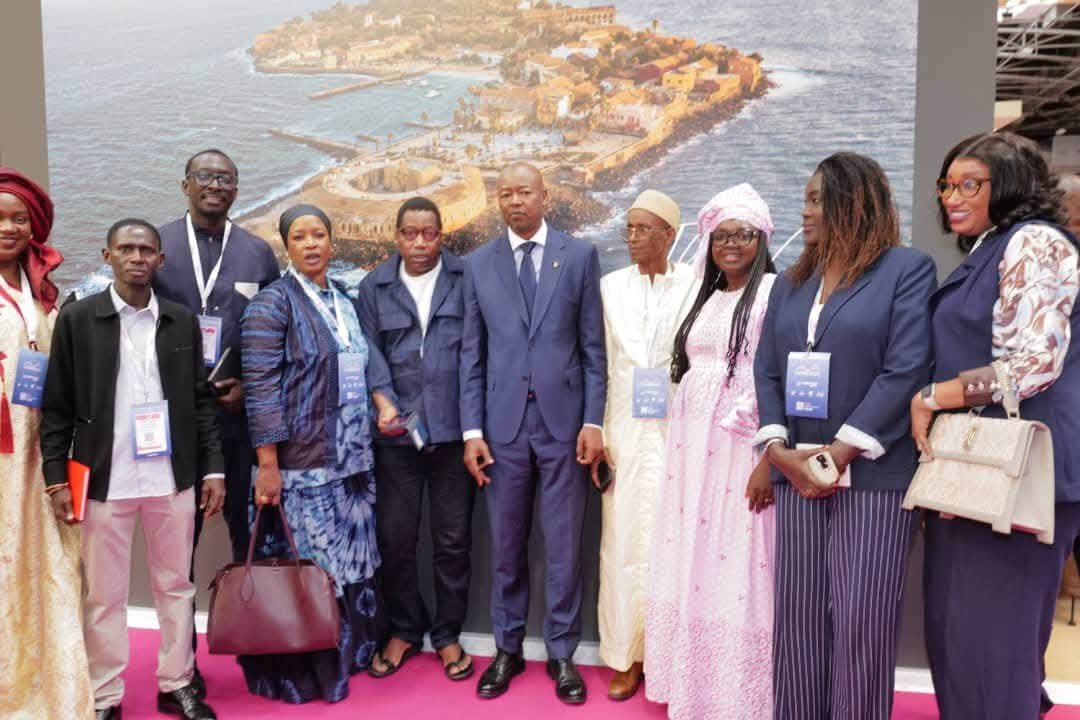
The clearest anglophone play came from Dar es Salaam and Zanzibar. Tanzania’s participation was coordinated by its embassy in France under Ambassador Saidi Yakubu, with the Zanzibar Commission for Tourism leading a delegation of fifteen Tanzanian companies covering hotels, airlines and tour operators. The stated purpose was blunt and correct: meet international buyers, sell packages, and open commercial partnerships in a market where the destination is under-distributed.
That is what a working trade-show strategy looks like. It is also, as far as public reporting goes, close to the whole of the anglophone commercial effort at IFTM 2026.
Zimbabwe was listed among the Africa Convention’s announced speakers, in the person of Tourism and Hospitality Industry Minister Barbara Rwodzi, alongside the DRC’s Didier Mazenga Mukanzu and Madagascar’s Viviane Dewa. The organisers’ own press pack, published later, lists a confirmed line-up that is francophone almost throughout: Côte d’Ivoire’s Siandou Fofana, Madagascar’s Lucie Vololoniaina, Guinea’s Moussa Moïse Sylla, Senegal’s Alpha Thiam, Angola’s ambassador Guilhermina Prata and Atout France’s Christian Mantei, with Benin and Togo pending. Anglophone ministries were not on the confirmed list.
This is not new. Anglophone tourism boards have shown up in the Paris Africa zone before, with the Gambia Tourism Board, Tanzania Tourism Board, Sierra Leone, Uganda and Ghana all appearing in recent exhibitor lists. The pattern is one of attendance rather than campaign.
The francophone benchmark
To see what a full commitment looks like, look at Morocco. Its pavilion covered 424 square metres and federated 38 co-exhibitors, including Royal Air Maroc, Air Arabia Maroc, several regions, agencies and hoteliers. It was inaugurated on the opening day by André Azoulay, adviser to King Mohammed VI, ambassador Samira Sitail and ONMT director general Achraf Fayda, with Essaouira and Dakhla pushed as the season’s headline destinations.
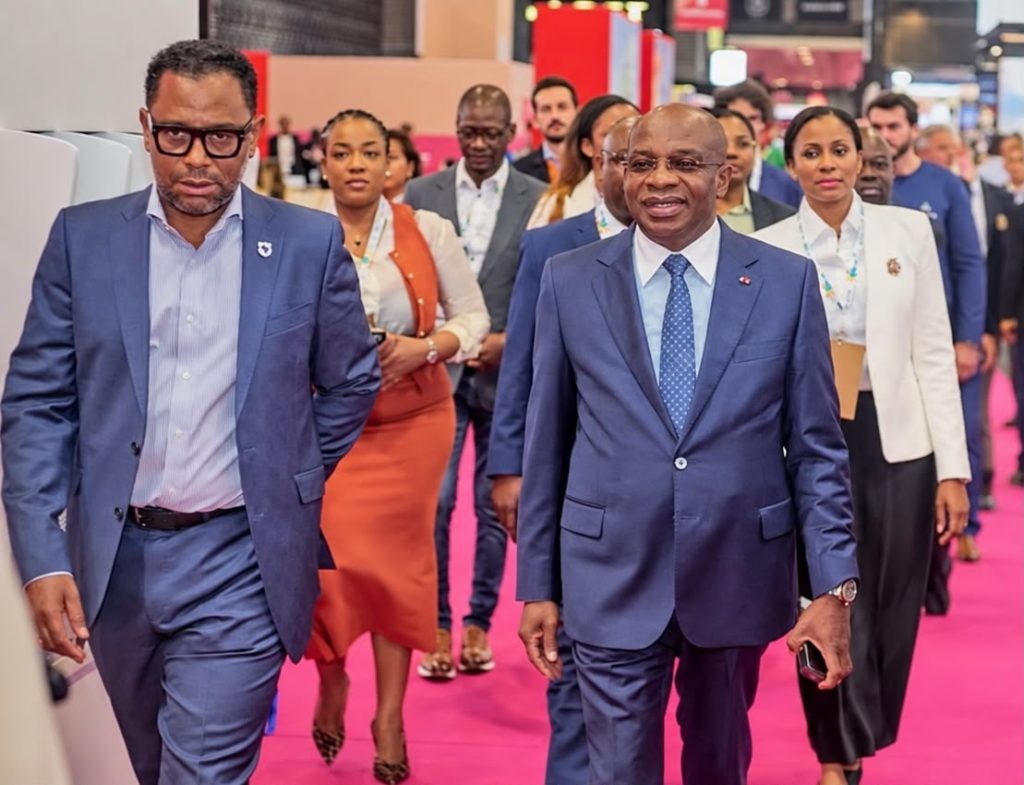
Côte d’Ivoire arrived with a delegation led by Siandou Fofana, the Sublime Côte d’Ivoire brand, a target of a top-five African ranking and five million international visitors by 2030, and more than €1.5 billion announced for modernising the product. Senegal’s culture, crafts and tourism minister Alpha Thiam opened the show as guest of honour, then co-chaired a ministerial panel inside the Africa Convention. Senegal also used the floor to trail the Dakar Youth Olympic Games, running from 31 October to 13 November, with France already accounting for 47 percent of its inbound market in 2025.
The Africa Convention itself, in its fourth edition on 16 and 17 September, occupied a 230 square-metre open space and built its two days around soft power, a Club Afrique institutional session, two diaspora meetings, a business cocktail, and a closing panel on influencers as destination amplifiers, all under the banner of Africa as the new tourism eldorado. The Africa zone had roughly doubled to close to 100 exhibitors in 2025 from around forty the year before. No official 2026 count has yet been published.
The numbers anglophone Africa is not monetising in France
The continental case is strong. Africa recorded 81 million international arrivals in 2025, up 8 percent, the fastest regional growth rate, ahead of Asia-Pacific at 6 percent and Europe at 4 percent, with North Africa pulling hardest at 11 percent. Arrivals grew another 4 percent in the first quarter of 2026. Zimbabwe’s own minister, speaking at the UN Tourism ministers’ summit in Berlin earlier this year, put the continent at around 80 million arrivals and US$55 billion in receipts for 2025, and Zimbabwe at 1,777,569 arrivals, up 10 percent. African carriers grew traffic by 7.8 percent in 2025, and sub-Saharan Africa was the region that improved most in the World Economic Forum’s travel and tourism index between 2019 and 2024.
The weakness is stated in the Africa Convention’s own press pack, which is the most honest document of the week. Africa competes well on assets and experiences. It competes badly on access conditions, distribution, connectivity, standardisation, and the local capture of tourist spending. The stated priority is to organise the value chain so that visitor money reaches African carriers, hotels, restaurants, guides, artisans, producers and communities.
Distribution is precisely what a Paris trade show sells. A destination that does not sit in front of French tour operators and agents does not get racked in French catalogues, and does not convert French demand, however good its product.
Why this matters before November
The counter-movement is already visible in the other direction. WTM London, the anglophone world’s November fixture, has confirmed Côte d’Ivoire and Angola among its newly signed exhibitors for 2026. Francophone and lusophone Africa is crossing into the English-language market. The traffic is not yet flowing back.
Two calendar items sharpen the point. AFCON 2027 will be co-hosted by Kenya, Tanzania and Uganda, and West African operators are already building packages around it. Selling East Africa to French football audiences requires French distribution, and that is built in Paris in September, not in Nairobi in June.
IFTM returns from 5 to 7 October 2027. That is two selling seasons before the tournament. For anglophone boards, the calculation is narrow and unsentimental: a stand, a co-exhibitor group, a francophone-capable sales team, and a receptive partner who can actually contract. Tanzania has shown it can be done with fifteen companies and an embassy. The rest of anglophone Africa has left the French market to be narrated by others.