

One runs Africa’s biggest bank. One governs a country at war. One holds a presidency, one a 130,000-strong empire, one the rules of world trade. None of them was supposed to be here — and that is exactly why they are. The story of five women who didn’t break into power so much as out-calculate it.
In January 2026, when Forbes published its annual ranking of the world’s hundred most powerful women, the African names on the list told a quiet but unmistakable story. The continent’s most influential figures were no longer activists pleading from the margins or heiresses to political dynasties. They were a banker, a prime minister, a president, an industrialist and the head of the World Trade Organization — women who had reached the summit not by exception but by examination, one balance sheet at a time.
Mary Vilakazi grew up in Alexandra, the township north of Johannesburg, where her mother handed her packets of sweets instead of pocket money and told her to keep the profit. It was her first lesson in margins. A chartered accountant by training, a partner at PwC by her early career, she joined FirstRand as chief operating officer in 2018 and took the helm in April 2024 — the first woman to lead South Africa’s largest financial group by market value, the house of FNB, RMB and WesBank, with some fifty thousand employees. Forbes now ranks her, at 74th worldwide, the highest-placed African woman on earth. She resists any mythology about it. “I got opportunities along the way and that is what made the difference,” she told the Sowetan — a sentence that doubles as a policy programme.
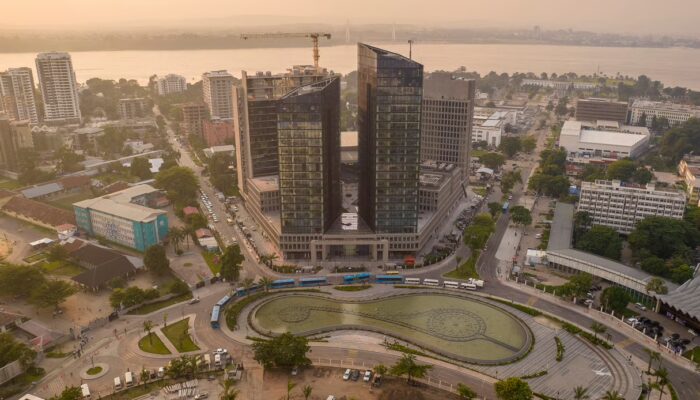
Judith Suminwa Tuluka spent her career in the unglamorous machinery of public finance — accounting, applied economics, the planning ministry — until April 2024, when President Félix Tshisekedi named her the first woman prime minister in the history of the Democratic Republic of Congo. She inherited a war in the east, a humanitarian emergency and strained public accounts. “I know the task is great and the challenges immense,” she said on the day of her appointment, with the understatement of someone who had read the files. Two years on, her government can point to one number above all: women’s share of decision-making roles in the DRC rose from 21 percent in 2021 to 32 percent in 2024. Her own summary is blunter still — without women, she told her staff, the state does not move forward.
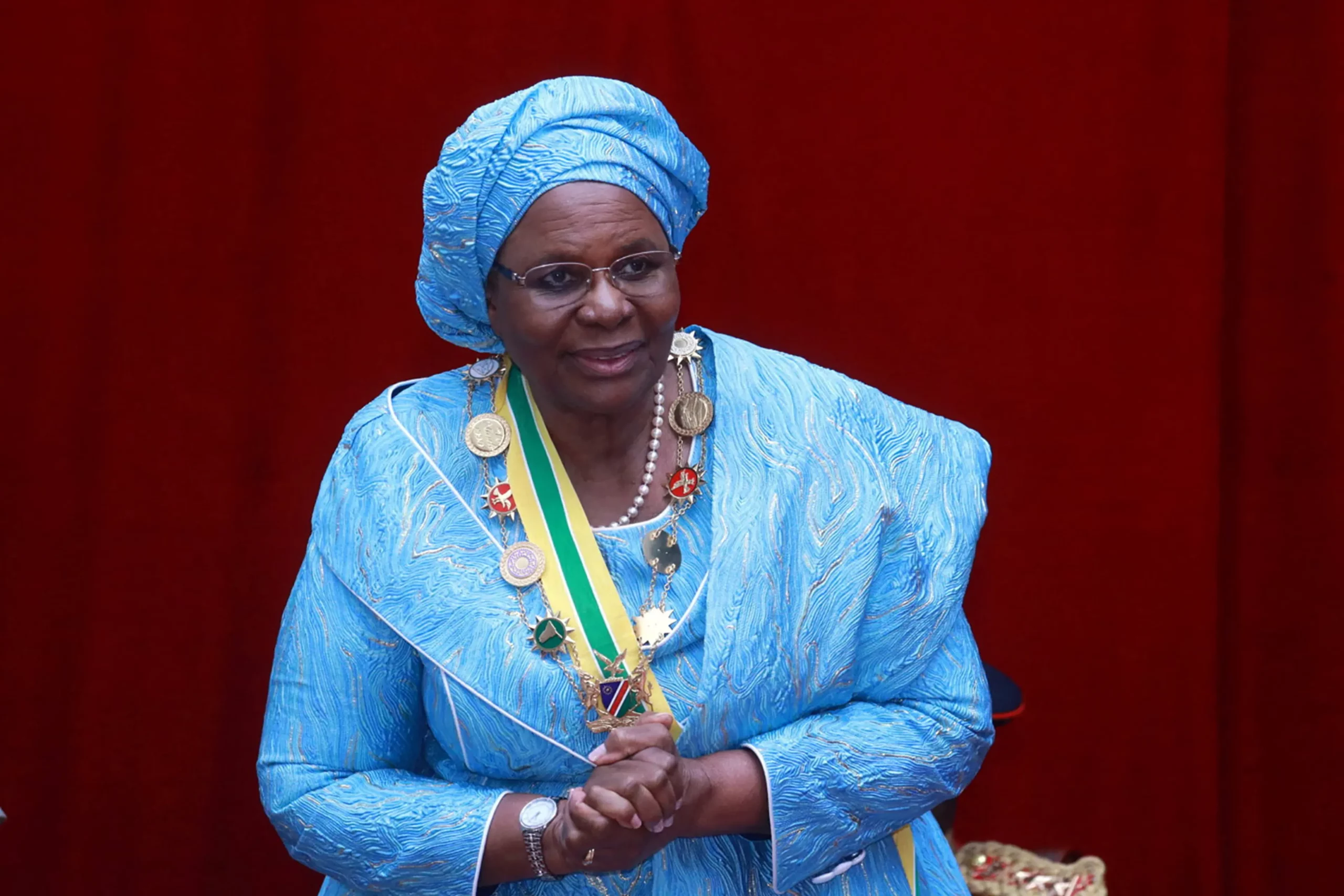
Netumbo Nandi-Ndaitwah carries Namibia’s longest memory. A veteran of the liberation struggle, then a diplomat, foreign minister and vice-president, she won the presidency with some 57 percent of the vote and was sworn in on 21 March 2025 — the thirty-fifth anniversary of independence — as the country’s first elected woman head of state. When the inauguration crowd rose to applaud her, she redirected the ovation to Ellen Johnson Sirleaf and Samia Suluhu Hassan, the women who had cleared the path. To those who read her victory as a symbol, her reply was surgical: she was not elected because she is a woman, “but because I am capable.”
Mpumi Madisa was nine years old in Sebokeng when Bidvest was founded. In October 2020 she became its chief executive — the first Black woman to run a top-forty company on the Johannesburg Stock Exchange, and at forty, the youngest. The conglomerate she leads spans services, trading and distribution: 130,000 employees, roughly 750 branches, more than a dozen countries. She has run it with margin discipline and a surgeon’s acquisition strategy, and with a maxim that has entered South African business folklore — there comes a time, she says, when you have to “teach the system how to treat you.”
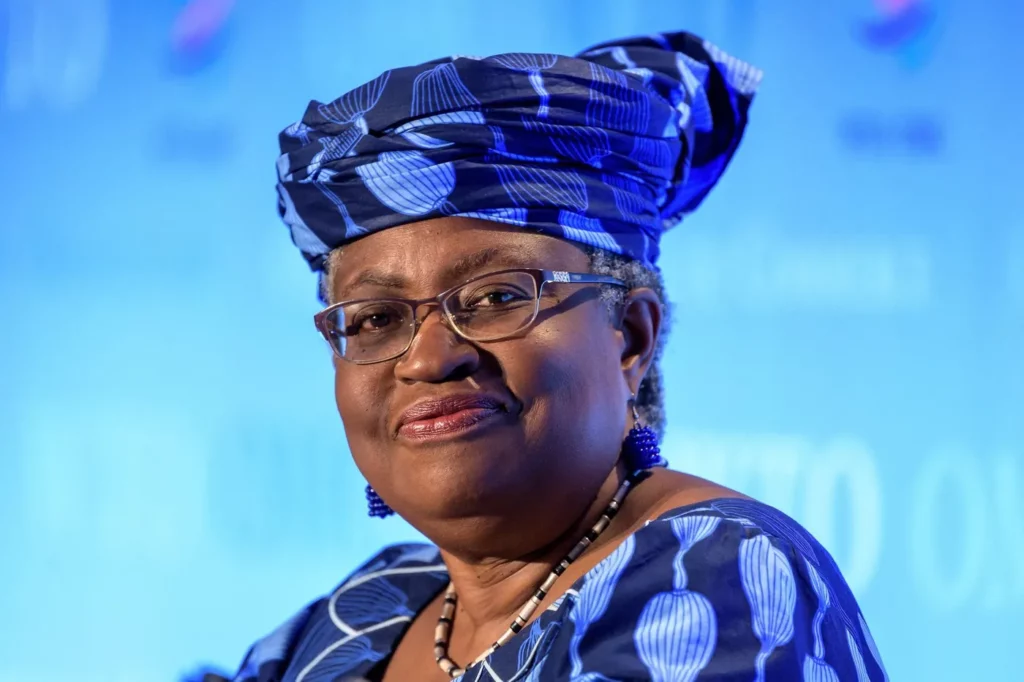
Ngozi Okonjo-Iweala is the most global of the five. A Nigerian economist trained at Harvard and MIT, she spent twenty-five years at the World Bank, rising to its number two, then twice served as Nigeria’s finance minister, taking on public debt and corruption at real personal risk. In March 2021 she became the first woman and first African to lead the World Trade Organization; her reappointment to a second term confirmed what member states already knew about her stewardship through an era of fracture. Her operating philosophy fits in a line: when you find problems, she insists, you should also find solutions. Her ambition for half of humanity fits in another — with the right tools and policies, women can “break the glass ceiling of trade.”
What binds them
Strip away the geography and the same architecture appears beneath all five careers. Each is a “first,” yet none trades on it; the firstness is treated as a fact of the calendar, not a credential. Each is fluent in numbers — accountancy, applied economics, corporate finance, development economics — in a generation of leaders whose authority rests on technical command rather than charisma or inheritance. Each rose through institutions rather than against them: a quarter-century at the World Bank, fifteen years inside Bidvest, decades within SWAPO, a long apprenticeship in Congolese public finance. And each treats her own ascent as infrastructure for the next: Madisa mentors her employees at their request, Suminwa speaks of preparing girls for the offices she now holds, Okonjo-Iweala literally wrote the book on women and leadership.
What they are building
Their ambitions rhyme across the map. In South Africa, Vilakazi champions the country’s structural reforms and presses — as she did at the B20 summit in Johannesburg — for the African Continental Free Trade Area to become real, lamenting how little Africa trades with itself; Madisa, meanwhile, is exporting a South African conglomerate to the world while reshaping the culture of its capitalism from within. In Kinshasa, Suminwa’s task is more elemental: to keep a state upright through war while funding development in its 145 territories and forcing the violence against Congolese women onto the world’s agenda. In Windhoek, Nandi-Ndaitwah has staked her presidency on unity, clean government and work for the young, in a country where unemployment touches some 44 percent of those under thirty-five — and which the world now courts for green hydrogen and critical minerals. And in Geneva, Okonjo-Iweala defends the multilateral trading system itself, insisting that commerce can be an instrument of inclusion rather than a weapon of the strong.
Taken together, the effect is compound interest. Two of them direct nearly 180,000 jobs and the financial plumbing of the continent’s most industrialized economy. One governs the mineral heart of the global energy transition. One stabilizes a young democracy at a moment when stability is Africa’s scarcest export. One writes the rules under which all the others trade. Better-run institutions attract capital; visible competence widens the pipeline; a continent long spoken for now speaks in its own voice — at the B20, at the United Nations, at the WTO.
The end of the exception
What lingers, after the five portraits, is how unexceptional they insist on being. None was appointed to decorate a board photograph; each was, at the decisive moment, simply the most qualified person available — and the results, not the symbolism, are what made their influence durable. The 2020s handed Africa’s largest bank, its largest francophone nation, a presidency, a global conglomerate and the governance of world trade to women. The test of the decade to come is the one Nandi-Ndaitwah set at her own inauguration, when she waved the applause away: that one day, no one will think to count.