

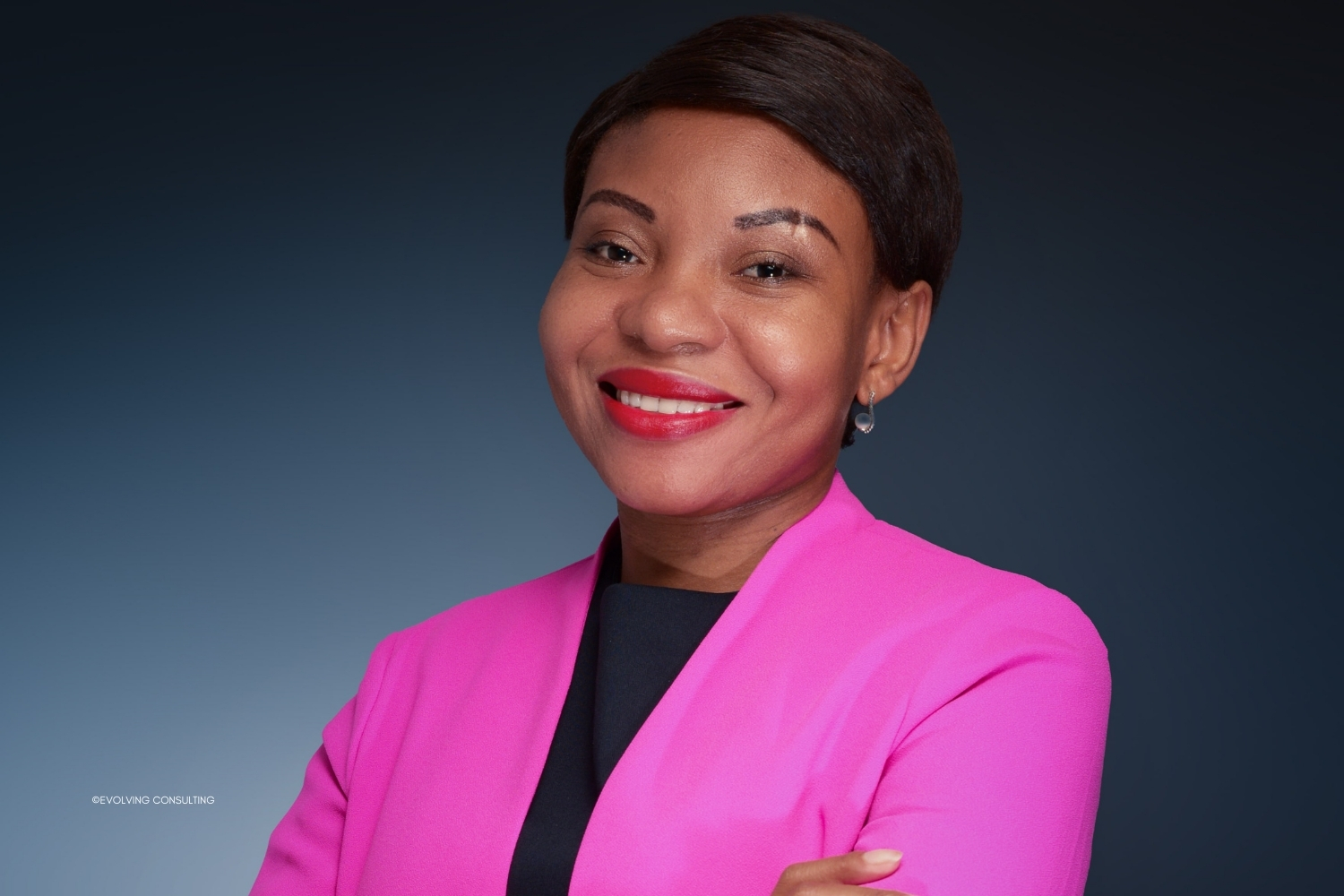
On 14 April 2026, at the Institut Pasteur in Paris, Patricia Vialle, business leader and President of the MEDEF Women’s Network, delivered an unvarnished address on women’s place in the economy. Transmission, visibility, audacity: three words that carry particular resonance when applied to the CEMAC context, where female entrepreneurial potential remains largely untapped.
A Reality That Knows No Borders
In France, over 40% of national board mandates within MEDEF — the country’s foremost employers’ federation — are now held by women. A figure that would have seemed unattainable a decade ago. Yet only 29% of French women are present across the full entrepreneurial chain, from start-up to business closure.
In Central Africa, the equation differs but the challenge is identical: women form the invisible backbone of the informal economy, yet struggle to access executive positions, structured financing, and scientific and technical professions. The glass ceiling is not a French peculiarity. It is global. And it shatters through visibility.

Transmission as an Economic Lever
Patricia Vialle distils the challenge into a single word: transmission. “It unfolds across three generations, within a shared territory,” she reminds us. Parents, grandparents, mentors, executives: every link matters.
In our nations, where family and community solidarity already constitutes a structural strength, this intergenerational logic could become a powerful accelerator. Encouraging a young girl in Douala, Libreville, or Bangui to envision herself in engineering, digital technology, agro-industry, or finance is not merely a question of equity. It is an economic calculation. A woman trained and integrated into a technical profession creates wealth, employs others, and reinvests in her community.
The Power of Role Models
A role model, Vialle insists, is not simply an example. It is a mirror. A reference point. A confidence accelerator.
In France, the MEDEF Women’s Network, launched in 2019, now comprises 40 regional branches. It promotes diverse career paths through newsletters, thematic events (health, artificial intelligence, board mandates), and initiatives such as CODE F, conducted in partnership with the Ministry of National Education.
What of the CEMAC zone? Employers’ organisations — GICAM, UPC, and others — could draw inspiration from this structure. Creating dedicated networks, identifying and giving media visibility to female executives in industry, technology, and finance, organising encounters between schoolgirls and business leaders: these simple actions produce multiplier effects. One cannot become what one cannot see.
Removing Barriers: A Collective Responsibility
Obstacles exist. They are sometimes cultural, often financial, always systemic. Patricia Vialle acknowledges this: career paths are strewn with doubts. She evokes her own daughter in scientific preparatory classes to underline a universal principle: “The moment they know we are behind them, the world moves forward.”
In Central Africa, the call carries double weight. We cannot wait for public structures to act alone. Companies, banks, schools, and employers’ organisations all have an active role to play: funding technical scholarships, opening internships in industrial environments, sensitising families. Equal opportunity is not a cost. It is an investment.
The MEDEF model proves one thing: when employers’ federations decide to place women at the core of their strategy, the economic narrative changes within a decade. Central Africa does not need to copy Paris. It needs to trust its own leaders.
The proof is already among us. Reine Mbang Essobmad, Vice-President of GICAM, embodies precisely what Patricia Vialle advocates: technical competence, executive authority, and the ability to open doors for the next generation. Her trajectory is not an exception to celebrate once a year. It must become the standard we expect.
From the boardrooms of GICAM to the classrooms of Douala and Bangui, the gap is not one of talent — it is one of structure. The CEMAC has the role models. It has the entrepreneurial energy. What it needs now are the networks, the scholarships, the media visibility, and the deliberate policies that turn individual success into collective transformation.
The next generation of female engineers, agro-industrialists, and fintech leaders is not waiting for permission. They are waiting for a path. It is the responsibility of employers’ organisations, banks, and educational institutions across Central Africa to build it — starting today.
Inspire girls today, and Central Africa will not follow tomorrow’s economy. It will lead it.