

From June 11 to July 19, the United States, Canada and Mexico will host the largest edition in the tournament’s history: 48 teams, 104 matches, 16 host cities spread across three time zones and one continental market of half a billion consumers. With a record ten African sides on the roster, the delisting of a four-time champion and a clutch of small-cap debutants, the North American World Cup looks less like a football tournament than a full-scale market restructuring. A sector-by-sector briefing, from opening bell to closing ceremony.
Supply-Side Economics: 48 Teams, 104 Matches
FIFA’s growth strategy, approved in 2017 and finalised in March 2023, is a textbook case of inventory expansion. The field grows from 32 to 48 participants, sorted into twelve groups of four. The top two in each group, plus the eight best third-placed finishers, advance to a knockout phase enlarged to 32 teams — opening with an entirely new product line, the round of 32. The headline numbers: 104 matches against 64 in Qatar, a 62% increase in supply, and a champion who must now clear eight fixtures rather than seven to collect the trophy.
The market’s composition was largely set at the draw, held on December 5th 2025 at Washington’s Kennedy Center, with the final six tickets allocated in late March 2026 through Europe’s playoffs and the intercontinental repechage — a closing auction that produced this cycle’s biggest write-down (see “Delistings”, below).
The Trading Calendar
The group stage runs from June 11 to 27. Trading opens at Mexico City’s Estadio Azteca with Mexico v South Africa— a literal rerun of the 2010 opener (1-1), and a milestone for the venue, which becomes the first stadium to host matches across three separate World Cups, after 1970 and 1986.
Key dates for the diary (Paris time):
- June 11: Opening match, Mexico v South Africa (Estadio Azteca, Mexico City)
- June 13: Brazil v Morocco (New York/New Jersey) — the first blue-chip collision
- June 15: Spain v Cape Verde (Atlanta); Belgium v Egypt (Seattle)
- June 16: France v Senegal (9pm, New York/New Jersey), followed overnight by Argentina v Algeria (Kansas City)
- June 17: Portugal v DR Congo (Philadelphia); England v Croatia
- June 24–27: Final group-stage round, with simultaneous kick-offs
- June 28 – July 3: Round of 32 (16 matches; 32 teams still solvent)
- July 4–7: Round of 16
- July 9–11: Quarter-finals
- July 14–15: Semi-finals
- July 18: Third-place match
- July 19: Final at MetLife Stadium, East Rutherford, New Jersey — capacity 82,500, kick-off 3pm local (9pm in Paris)
One caveat for investors in Africa and Europe: with three time zones in play, much of the action trades after hours. Algeria draws the worst allocation (matches between 1am and 5am Paris time), Morocco kicks off around midnight throughout the group stage, while Senegal, Ivory Coast and South Africa enjoy more liquid daytime slots.
The Twelve Groups: Portfolio Allocation
- Group A: Mexico, South Africa, South Korea, Czech Republic
- Group B: Canada, Switzerland, Qatar, Bosnia and Herzegovina
- Group C: Brazil, Morocco, Scotland, Haiti
- Group D: United States, Paraguay, Australia, Turkey
- Group E: Germany, Ivory Coast, Ecuador, Curaçao
- Group F: Netherlands, Japan, Sweden, Tunisia
- Group G: Belgium, Egypt, Iran, New Zealand
- Group H: Spain, Uruguay, Saudi Arabia, Cape Verde
- Group I: France, Senegal, Norway, Iraq
- Group J: Argentina, Algeria, Austria, Jordan
- Group K: Portugal, Colombia, Uzbekistan, DR Congo
- Group L: England, Croatia, Ghana, Panama
Africa: The Emerging Market Everyone Is Overweighting
No continent has ever placed so many assets in the index: nine direct qualifiers (Morocco, Senegal, Egypt, Algeria, Tunisia, Ivory Coast, Ghana, South Africa, Cape Verde) plus a tenth, DR Congo, secured through the intercontinental playoff. Four years after Morocco’s semi-final in Qatar shattered the continent’s valuation ceiling, African football no longer trades at a discount. A stock-by-stock review:
Morocco (Group C) — Strong Buy. The continent’s bellwether. The first African semi-finalists in history in 2022, the Atlas Lions then posted a world-record sixteen consecutive wins between June 2024 and October 2025, overtaking Spain’s previous mark of fifteen. They enter as African champions — though the title came with an asterisk worthy of a footnote-heavy annual report: beaten 1-0 on the pitch by Senegal in January’s final in Rabat, Morocco was awarded the trophy in March when CAF’s appeal jury declared Senegal forfeit over the final’s incidents. Led by Achraf Hakimi and coached by Walid Regragui, the squad targets at least the quarter-finals. The June 13 opener against Brazil in New York is the stress test; Scotland and Haiti complete a navigable group. Outlook: credible semi-final candidate.
Senegal (Group I) — Buy, with volatility. Winners of the AFCON final on the pitch before being stripped of it in the boardroom, the Lions of Teranga arrive with a grievance and, alongside Morocco, the deepest balance sheet in African football: the seasoned holdings of Sadio Mané and Kalidou Koulibaly, plus growth assets in Iliman Ndiaye, Pape Matar Sarr and Lamine Camara. The June 16 opener against France reprises 2002, when Senegal’s 1-0 upset of the holders announced the brand to global markets. With Erling Haaland’s Norway and Iraq alongside, Group I is among the tournament’s most competitive — but the expanded format means three of four can realistically advance. Outlook: round of 16 highly probable; a quarter-final within reach.
Egypt (Group G) — Buy. Back in the index after missing Qatar, the Pharaohs of Mohamed Salah drew a forgiving sector: an ageing Belgium, Iran and New Zealand. AFCON semi-finalists in Morocco, they combine defensive discipline with one genuinely world-class asset. Outlook: second place in the group is theirs to lose.
Algeria (Group J) — Hold. Twelve years after their heroic 2014 round-of-16 run against Germany, the Fennecs return for a fifth participation. The opening fixture against Lionel Messi’s Argentina, the defending champions, is a marquee event; Jordan and Austria then offer a straight head-to-head for second place. Riyad Mahrez and the new generation (Amoura, Gouiri) must first absorb the impairment of an AFCON quarter-final exit. Outlook: qualification hinges on the Austria fixture.
Ivory Coast (Group E) — Hold. The 2023 African champions, eliminated in this year’s AFCON quarter-finals, face Germany, Ecuador and Curaçao. The fixture against Curaçao’s small-cap squad should bank three points and keep a repechage third place in play; the stated target is second behind the Mannschaft. Outlook: feasible — the Ecuador match will settle it.
Tunisia (Group F) — Speculative. Qualified early and unbeaten, the Carthage Eagles make a seventh appearance without ever having cleared the group stage. The draw (Netherlands, Japan, Sweden) is unkind, but FIFA itself has flagged Hannibal Mejbri as the catalyst of a less deferential generation. Outlook: an upset is required; the third-place repechage is the realistic play.
Ghana (Group L) — Contrarian pick. A striking divergence in the data: absent from AFCON 2025 — a first since 2004 — yet dominant in their World Cup qualifying group. Against England, Croatia and Panama, Mohammed Kudus and the Black Stars will price their qualification on the duel with Croatia, 2018 finalists whose core assets are visibly depreciating. Outlook: a repechage third place is a realistic base case.
South Africa (Group A) — Hold. A fourth participation for Bafana Bafana, their first since hosting in 2010, and the honour of the opening match against Mexico at the Azteca, sixteen years after Johannesburg’s 1-1. In a group without a dominant incumbent (South Korea, Czech Republic), qualification is a credible target. Outlook: the most open group any African side has drawn.
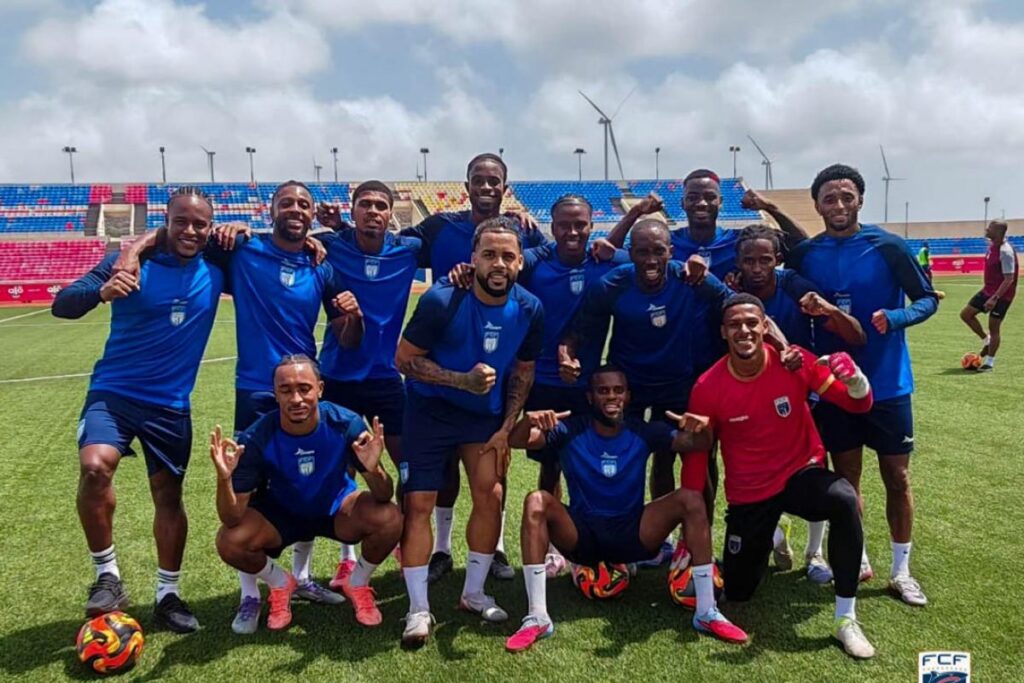
Cape Verde (Group H) — Small-cap IPO. The continent’s feel-good listing: roughly 525,000 inhabitants and a first-ever qualification, secured ahead of Cameroon. The Blue Sharks open against Spain, the world’s top-ranked side, on June 15 in Atlanta, before Uruguay and Saudi Arabia. Outlook: thin margins, but disruptive potential.
DR Congo (Group K) — Turnaround story of the cycle. The most emotional re-listing: 52 years after Zaire’s 1974 appearance, the Leopards return via an epic restructuring — Cameroon beaten on Chancel Mbemba’s stoppage-time winner, Nigeria eliminated on penalties thanks to goalkeeper Timothy Fayulu, then Jamaica seen off 1-0 in extra time in Guadalajara. Sébastien Desabre’s squad (Wissa, Bakambu, Mbemba, Wan-Bissaka) now faces Cristiano Ronaldo’s Portugal, Colombia and Uzbekistan. Outlook: limited on paper — but this asset has outperformed every model for a year.
Sector view: the 48-team format, with its eight repechaged third-place finishers, has never offered Africa better terms of trade. The continental record of two sides in the knockout phase (2022) should fall: four to six qualifiers for the round of 32 is a reasonable consensus forecast, with Morocco and Senegal best positioned for the top eight — and for matching, or exceeding, the Moroccan benchmark set in Doha.
Delistings: The Names Missing from the Index
Italy: the blue chip that keeps defaulting. The spring’s seismic event. The Azzurri, four-time world champions, will miss a third consecutive World Cup. After Sweden (2018) and North Macedonia (2022), it was Bosnia and Herzegovina that administered the haircut on March 31 in Zenica, winning on penalties (1-1 after extra time, 4-1) in a match Italy led through Moise Kean before playing with ten men from Bastoni’s 41st-minute red card. Italy’s last World Cup remains 2014 — a twelve-year drought for one of football’s most storied franchises.
Europe’s other write-offs. Robert Lewandowski’s Poland fell in a playoff final to Sweden, which had already eliminated Ukraine. Denmark and Ireland exited in the path ultimately won by the Czech Republic; Serbia and Greece had been wound up in the qualifying group stage; and Russia remains suspended by FIFA.
Africa’s casualties. Victor Osimhen’s Nigeria, beaten on penalties by DR Congo in the African playoff final, will miss a second straight World Cup. Cameroon, a heritage brand of continental football, and Gabon also failed at the playoff stage, while Mali never reached it.
The Americas. Chile, Peru and Venezuela collapsed in South American qualifying; Bolivia, granted the playoff lifeline, was stopped by Iraq. In CONCACAF, Costa Rica and Honduras — both long-standing constituents — were displaced by Curaçao, Haiti and Panama. Jamaica, Suriname and New Caledonia all fell at the final hurdle, one match short of the prize.
IPOs and Growth Stocks: The Surprises
This edition features four debutants, a record: Cape Verde, Curaçao, Jordan and Uzbekistan. Curaçao, with roughly 150,000 inhabitants, becomes the smallest nation ever to qualify for a World Cup, displacing Iceland’s 2018 benchmark — a feat engineered by the veteran Dutch manager Dick Advocaat.
The re-listings are equally striking: Haiti, back 52 years after 1974, like DR Congo; Iraq, absent since 1986; Erling Haaland’s Norway and Scotland, both unseen at a World Cup since 1998. Qatar, hosts by appointment in 2022, has this time qualified on merit for the first time in its history.
And the cycle’s most improbable arbitrage belongs to Sweden: parachuted into the playoffs via the Nations League after a failed qualifying campaign, the Swedes eliminated Ukraine and Poland in succession to claim a seat in Group F — proof that in football, as in markets, distressed assets occasionally deliver the highest returns.
The Bottom Line
A restructured format, an Africa with unprecedented index weighting, the stunning absence of Italy and a wave of small-cap entrants from every continent: the 2026 World Cup promises six weeks of price discovery, from the opening bell at the Azteca on June 11 to the settlement date of July 19 at MetLife Stadium. Argentina defends its title; Spain and France trade as favourites. But if 2022 taught global football anything, it is that consensus forecasts rarely survive first contact with Lions — whether of the Atlas or of Teranga.