Each year, a name is announced — and the world of cinema holds its breath. Whoever presides over the jury of the Festival de Cannes will not merely be an arbiter of prizes. They will be the face of an edition, the filter of a sensibility, the bearer of a particular gaze on world cinema. It is one of the most symbolically charged roles any living artist can assume.
To preside over the Cannes jury is to embody an era. It means deciding — alongside nine other perspectives — which film among those in competition deserves to enter history. It also means determining what the festival says about itself: its values, its urgencies, its commitments. Since 2016, ten personalities have assumed this honour: filmmakers from Australia, Spain, Mexico, Norway, and South Korea; an Australian actress, a French actor, a New Zealand director, an American filmmaker, a French actress. Ten destinies, ten visions — and yet, one shared founding passion.
This article profiles each of them in turn, traces their careers, measures their impact on the event, analyses their influence on the awards, and examines the qualities they share — those rare constants that define what it truly means to hold this singular office.
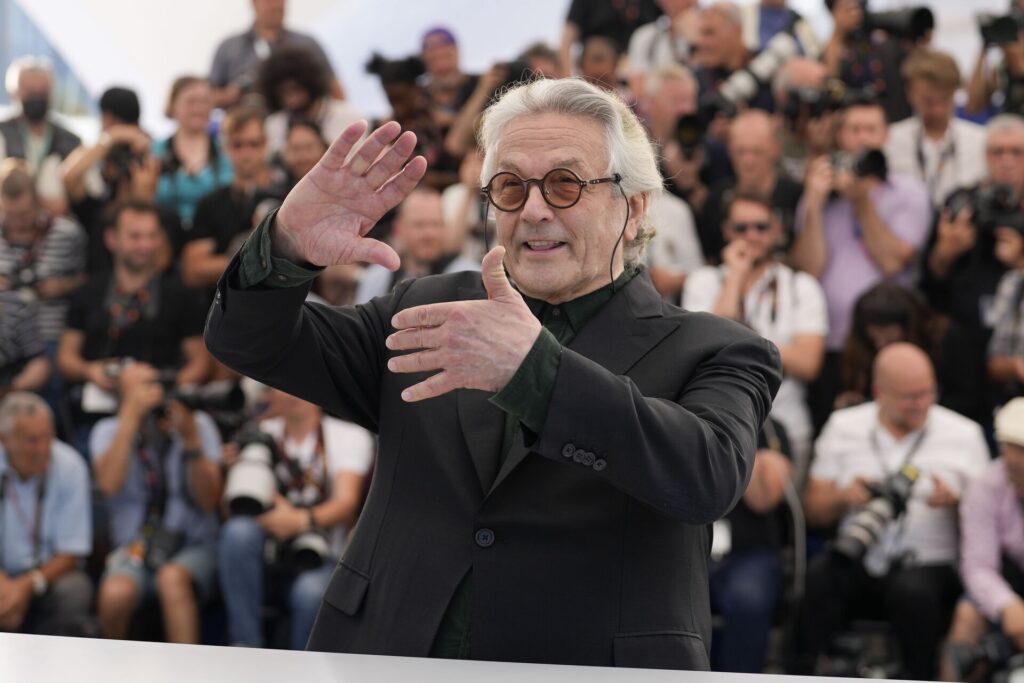
01. George Miller
2016 · 69th Festival de Cannes · Palme d’Or: I, Daniel Blake — Ken Loach
Career. Born in 1945 in Australia, George Miller is one of the most unclassifiable phenomena in world cinema. A trained physician, he burst onto the international scene with the Mad Max trilogy in the 1980s, revolutionising the post-apocalyptic aesthetic. But it is his capacity to move across genres — from Happy Feet (two Academy Awards) to the masterpiece Fury Road — that defines his genius. Director, producer, screenwriter: Miller is the total craftsman of his own cinematic mythology.
Role at Cannes. In 2016, he presides over a jury tasked with succeeding an edition in which Dheepan had taken the Palme. His jury chooses to honour Ken Loach, the tireless champion of social cinema, for I, Daniel Blake. The choice is as political as it is artistic: in a world gripped by economic crisis and the erosion of social protections, Cannes makes a powerful statement.
“I want this festival to be an act of resistance for the cinema that truly matters.”
Impact & Influence. Miller brings to his jury a rigorous, almost clinical method: a cold and systematic analysis of each film before any emotional debate. His tenure is celebrated for the consistency of a selection that reconciles artistic rigour with social conscience. By rewarding Loach, he places Cannes at the heart of a global debate on inequality — a choice that continues to resonate.
02. Pedro Almodóvar
2017 · 70th Festival de Cannes · Palme d’Or: The Square — Ruben Östlund
Career. Born in 1949 in Spain, Pedro Almodóvar is perhaps the living filmmaker whose work is most instantly recognisable. His saturated colours, his sublimated women, his narratives of passion, identity and desire make him the natural heir to Buñuel and Fassbinder. Two Academy Awards (All About My Mother, Talk to Her), a Golden Lion at Venice in 2024 for The Room Next Door: his honours are as rich as his universe is singular.
Role at Cannes. He is the first Spaniard to preside over the jury since Juan Antonio Bardem in 1964. His jury chooses to crown The Square by Ruben Östlund — a biting satire of the contemporary art world. The choice surprises and divides, but reveals Almodóvar’s deep aversion to vacuity and posturing. He presides over the 70th anniversary edition, lending it an additional symbolic charge.
“Cinema is the only universal language we have not yet finished learning.”
Impact & Influence. By presiding over the 70th anniversary, Almodóvar confers on the edition a monumental dimension — he is himself a monument. His jury is celebrated for its audacity: rewarding a film that mocks those who claim to defend art. The Cannes paradox in all its splendour.
03. Cate Blanchett
2018 · 71th Festival de Cannes · Palme d’Or: Shoplifters — Kore-eda Hirokazu
Career. Born in 1969 in Melbourne, Cate Blanchett is perhaps the most complete actress of her generation. Two Academy Awards (The Aviator, Blue Jasmine), Best Actress at the Venice Film Festival, artistic director of the Sydney Theatre Company: her career transcends categories. She has worked with Spielberg, Fincher, Malick, Jackson, Haynes — and simultaneously pursues a world-class career in theatre.
Role at Cannes. The first woman to preside over the jury since Jane Campion in 2014, Blanchett arrives at Cannes borne by a powerful feminist wave — the MeToo movement has just erupted. At the opening ceremony, 82 women mount the steps of the Palais to demand gender equality in the industry. Her jury crowns Shoplifters by Kore-eda Hirokazu, a profoundly human film about surrogate families and the casualties of Japanese prosperity.
“Cannes has always been a place of ambition and courage. This year, it must also be a place of justice.”
Impact & Influence. Her jury is one of the most politically conscious of the decade. Blanchett makes her presidency an act of feminist commitment without reducing the awards to a manifesto. She demonstrates that a female jury president can be simultaneously diplomatic and resolute — a rare combination that will shape expectations for years to come.
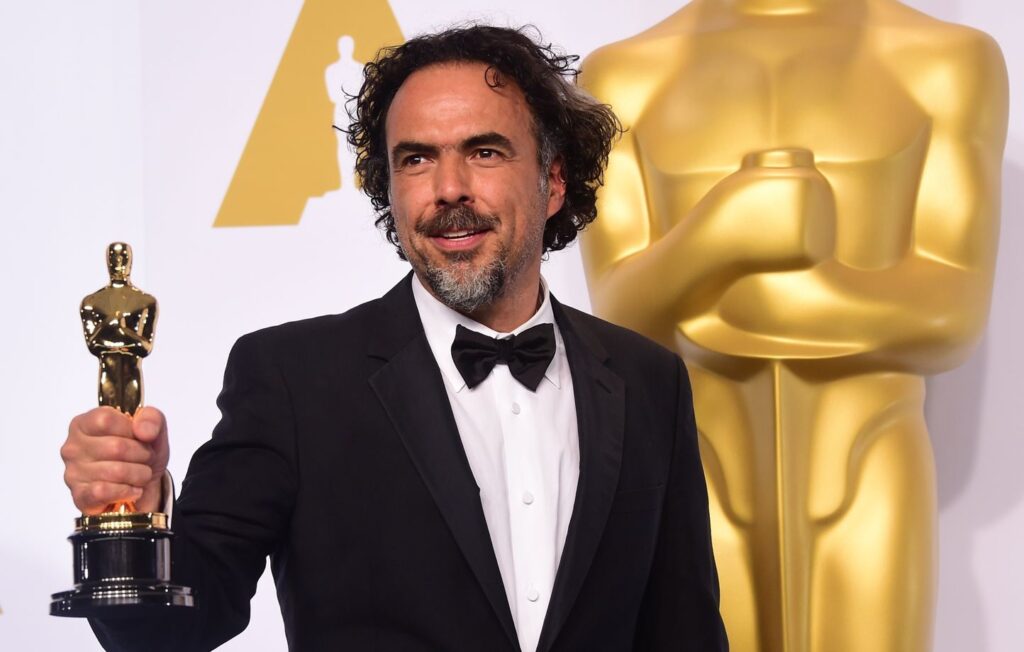
04. Alejandro González Iñárritu
2019 · 72th Festival de Cannes · Palme d’Or: Parasite — Bong Joon-ho
Career. Born in 1963 in Mexico City, Iñárritu is the architect of kaleidoscopic narratives in which destinies intersect and shatter. Amores Perros, 21 Grams, Babel, Birdman (Academy Award), The Revenant (Academy Award): his filmography is a sustained meditation on violence, loss and redemption. He is the first Mexican to preside over the Cannes jury — a nomination the festival frames as a celebration of Mexican cinema.
Role at Cannes. Iñárritu presides over what may be the most historic edition of the decade. His jury awards Parasite by Bong Joon-ho unanimously — the first Palme ever awarded to a Korean film, and the first time in sixty years that a film receives the supreme prize with such sweeping critical consensus. The decision is historic, immediate, and irreversible.
“Parasite was not the easiest choice. It was the obvious one — and that is always the best choice.”
Impact & Influence. The choice of Parasite reshuffles the cards of world cinema. Within weeks, the film becomes a global phenomenon, going on to win four Academy Awards including Best Picture — a first for a non-English-language film. Iñárritu’s jury enters history as the one that opened the world’s eyes to Asian cinema’s full potential on the international stage.
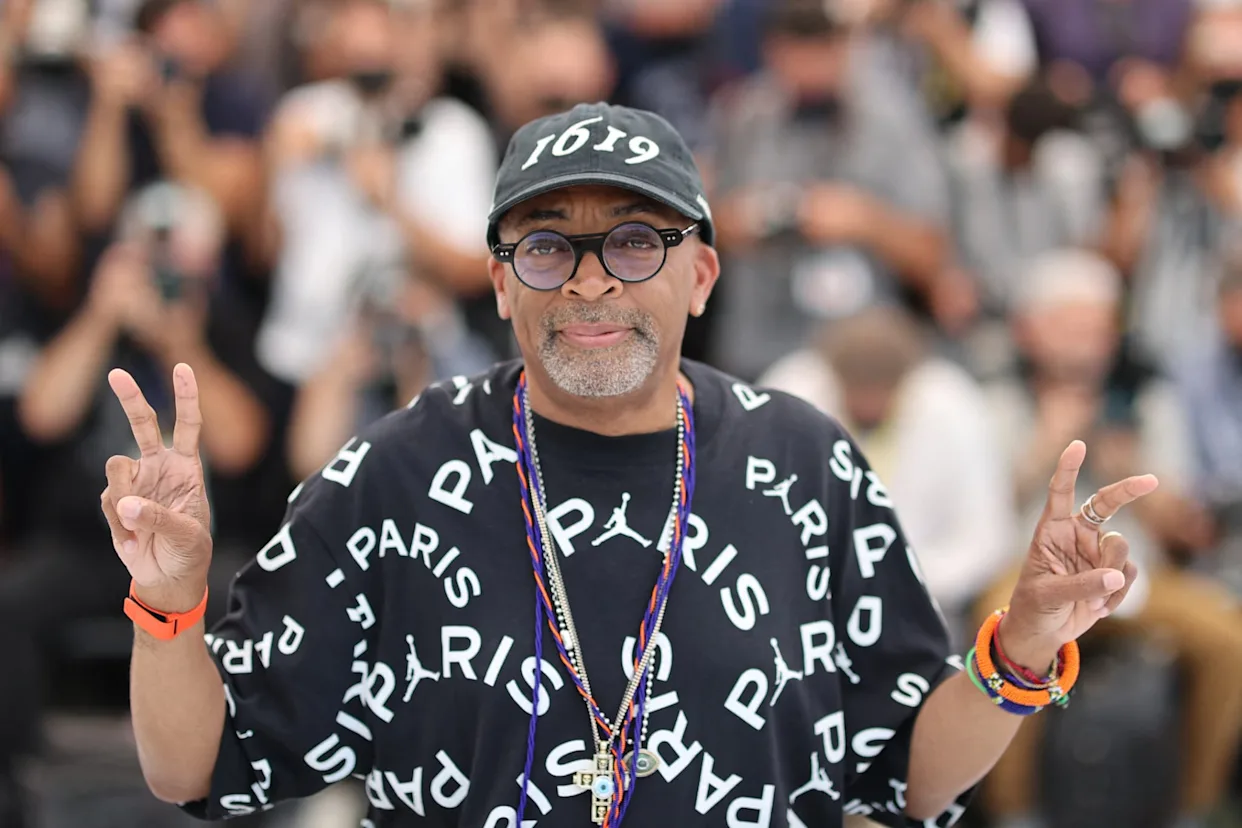
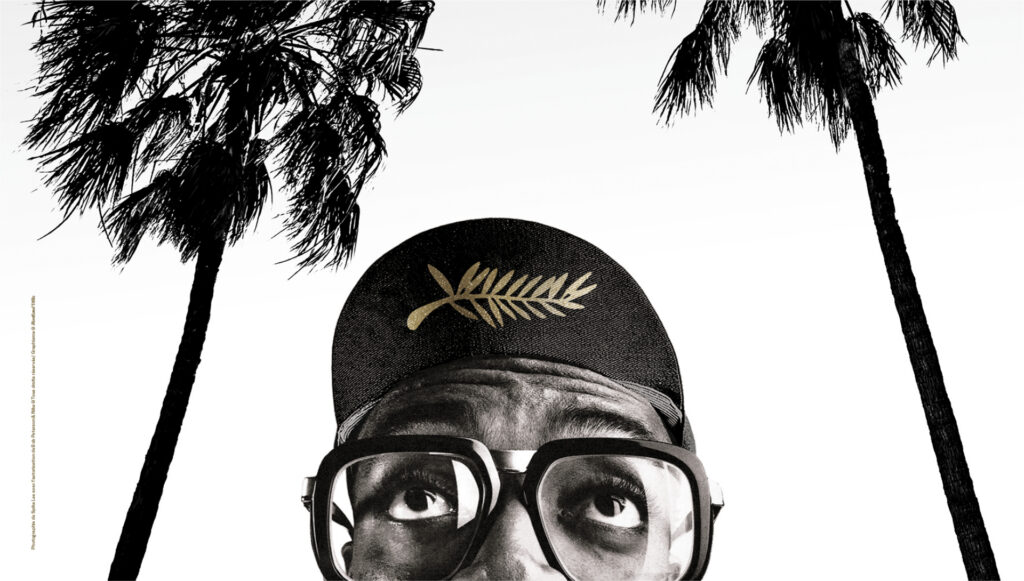
05. Spike Lee
2021 · 74th Festival de Cannes · Palme d’Or: Titane — Julia Ducournau
Career. Born in 1957 in Brooklyn, Spike Lee is one of the most radical and necessary voices in American cinema. Do the Right Thing, Malcolm X, 25th Hour, BlacKkKlansman (Cannes Grand Prix 2018): his body of work is a permanent confrontation with racial violence, Black identity and the contradictions of America. The first Black man to preside over the Cannes jury, he arrives carrying an immense symbolic weight.
Role at Cannes. After the 2020 edition cancelled by the Covid-19 pandemic, he presides over the first in-person edition of the post-pandemic era. His jury awards the Palme d’Or to Titane by Julia Ducournau — only the second Palme ever awarded to a female director, after Jane Campion in 1993. On the night of the ceremony, Spike Lee accidentally announces the results in reverse order, triggering a brief moment of panic swiftly corrected.
“When I watch a great film, my whole body reacts. This year, my body reacted many times.”
Impact & Influence. Spike Lee transforms his presidency into a tribune. He speaks of race, gender, humanity, and engaged cinema. By handing the Palme to Ducournau, his jury validates a cinema of bodies, flesh and transgression — a counterpoint to the classical art cinema of formal mastery. A memorable, electric, occasionally chaotic, always vital edition.
06. Vincent Lindon
2022 · 75th Festival de Cannes · Palme d’Or: Triangle of Sadness — Ruben Östlund
Career. Born in 1959 in Neuilly-sur-Seine, Vincent Lindon is the defining actor of both popular and auteur French cinema. Best Actor at Cannes in 2015 for The Measure of a Man, he is the muse of Stéphane Brizé, Claire Denis, and Benoît Jacquot. Over seventy films, a magnetic screen presence, an unwavering loyalty to filmmakers who count. He is the first French national to preside since Isabelle Huppert in 2009.
Role at Cannes. He presides over the 75th anniversary edition with a gravity and sincerity that set the tone. His jury awards the Palme to Triangle of Sadness by Ruben Östlund — making Östlund only the second filmmaker in history to win two Palmes d’Or. The film, a corrosive satire of ultra-wealth and global inequality, resonates strongly with Lindon’s own social convictions.
“I am not here to defend a cinema. I am here to defend cinema itself.”
Impact & Influence. Lindon gives his presidency the dimension of personal testimony: he speaks of his relationship to films, of emotion as the sovereign criterion, of cinema as an act of resistance to cynicism. His jury confirms Östlund as one of the most important filmmakers of his generation and validates a satirical, radical vision of contemporary society.
07. Ruben Östlund
2023 · 76th Festival de Cannes · Palme d’Or: Anatomy of a Fall — Justine Triet
Career. Born in 1974 in Sweden, Ruben Östlund has become in less than a decade one of the most provocative signatures in European cinema. Force Majeure, The Square (Palme 2017), Triangle of Sadness (Palme 2022): he is the first filmmaker since Bille August to win two Palmes d’Or. His films dissect human behaviour under social constraint with an almost surgical precision.
Role at Cannes. As outgoing Palme d’Or winner, he logically presides over the following edition — a rare and symbolically meaningful continuity. His jury awards the Palme to Anatomy of a Fall by Justine Triet, a judicial thriller and meditation on the couple, language and power. It is the third Palme d’Or ever awarded to a female director. In her acceptance speech, Triet criticises France’s pension reform, triggering a national controversy.
“A perfect film is not one without flaws. A great film is one that leaves a scar.”
Impact & Influence. Östlund confirms the dynamic inaugurated by his predecessor Spike Lee: the Cannes jury as a political echo chamber. By crowning Triet, he validates a French cinema willing to blend mainstream suspense with reflection on power dynamics. The 2023 awards, among the most balanced of the decade, are widely praised as a model of geographical equity and formal diversity.
08. Greta Gerwig
2024 · 77th Festival de Cannes · Palme d’Or: Anora — Sean Baker
Career. Born in 1983 in Sacramento, Greta Gerwig is the darling of American independent cinema turned global phenomenon. Lady Bird, Little Women, then Barbie — the film of 2023 with over one and a half billion dollars in worldwide receipts, making her the first female director to cross that threshold. Actress, screenwriter, director: Gerwig embodies the renewal of a profitable and feminist auteur cinema.
Role at Cannes. She is the youngest jury president of the decade. Her jury awards the Palme to Anora by Sean Baker — a film about a New York erotic dancer who marries the son of a Russian oligarch. The choice surprises many but enthuses the international press: this is genre cinema, popular in spirit, American in tone, powered by a performance of shattering force from Yura Borisova.
“I want cinema to be allowed to do anything. Even to entertain us. Especially to move us.”
Impact & Influence. With Gerwig, Cannes sends a signal: popular cinema, when made with an exigence of truth, deserves the Palme as much as the most austere art film. She broadens the festival’s image without betraying its standards. Her presidency is widely perceived as a moment of reconciliation between two cinematic cultures too often set in opposition.
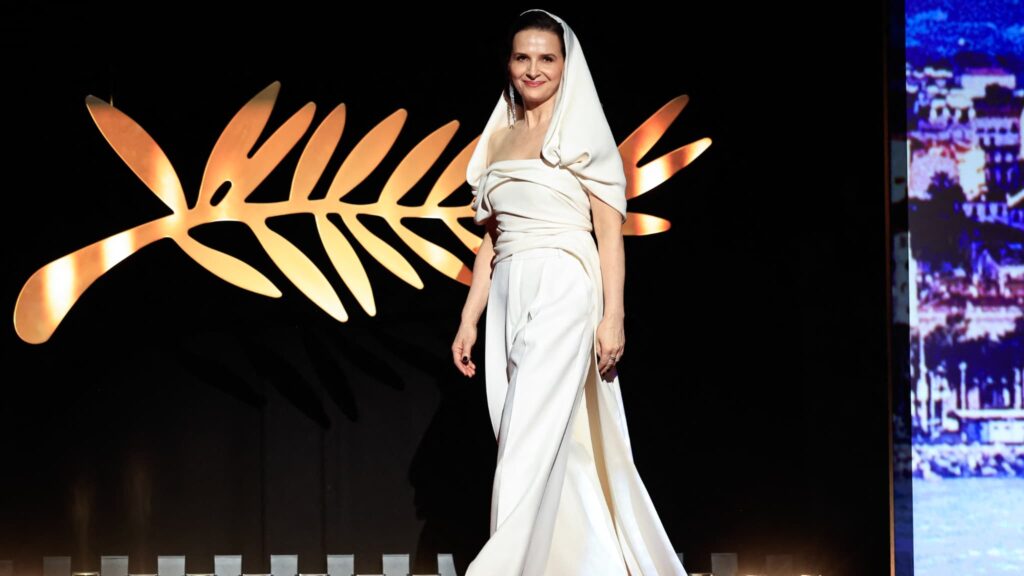
09. Juliette Binoche
2025 · 78th Festival de Cannes · Palme d’Or: It Was Just an Accident — Jafar Panahi
Career. Born in 1964 in Paris, Juliette Binoche is perhaps the most universally recognised French actress alive. Academy Award for Best Supporting Actress for The English Patient, Best Actress at Cannes for Three Colours: Blue, Golden Lion at Venice for Certified Copy: her accolades chronicle a career of uncompromising choices. She is the living embodiment of European prestige auteur cinema.
Role at Cannes. Her presidency is defined by a powerful political act: the Palme awarded to It Was Just an Accident by Jafar Panahi — the Iranian filmmaker returning to Cannes for the first time in fifteen years after years of filming bans and imprisonment by Iranian authorities. The choice is unanimously hailed as an act of resistance.
“Cinema cannot save the world. But it can refuse to stay silent when the world is suffering.”
Impact & Influence. Juliette Binoche transforms her presidency into a testimony on artistic freedom. By crowning Panahi, her jury turns Cannes into a platform for international freedom of expression. The 2025 awards are seen as one of the most politically unequivocal in years. In her closing speech, Binoche herself calls on governments worldwide to protect dissident artists.
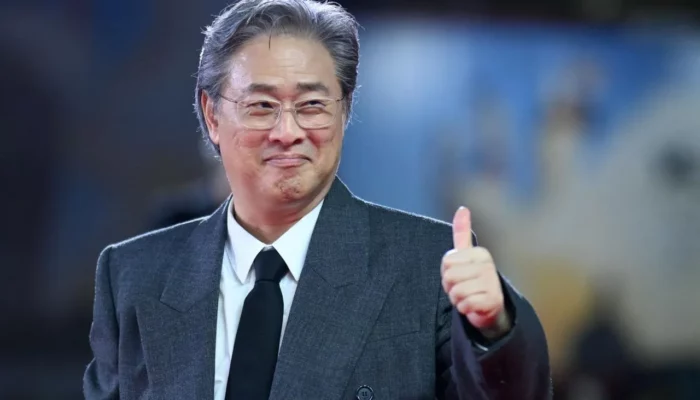
10. Park Chan-wook
2026 · 79th Festival de Cannes · Palme d’Or: To be awarded — 12–23 May 2026
Career. Born in 1963 in Seoul, Park Chan-wook is one of the most fascinating figures in contemporary world cinema. His Vengeance Trilogy — Sympathy for Mr. Vengeance, Oldboy (Cannes Grand Prix 2004), Lady Vengeance — redefined the aesthetic of the Asian thriller. Thirst (Cannes Jury Prize 2009), The Handmaiden, Decision to Leave (Cannes Best Director 2022): each film is a visual score of rare complexity and beauty.
Role at Cannes. He is the first Korean filmmaker to preside over the Festival de Cannes jury — and only the third Asian after Tetsuro Furukaki (1962) and Wong Kar-wai (2006). His nomination symbolises the ascent of Korean cinema on the international stage, consecrated since Parasite’s Palme in 2019. Thierry Frémaux and Iris Knobloch celebrate his “inventiveness, visual mastery, and penchant for capturing the multiple impulses of women and men with strange destinies.”
“Korean cinema has always existed. The world simply took time to look in our direction.”
Anticipated Impact. Park Chan-wook arrives at Cannes with an immense reserve of artistic credibility and a deep personal bond with the festival. His gaze — baroque, subversive, exacting — is expected to produce a selection that rewards the films of the most formally ambitious nature. As the first Korean to hold this role, his presidency is already, before the opening credits roll, a historic moment.
SYNTHESIS · WHAT MAKES A CANNES JURY PRESIDENT
Ten personalities, ten universes, ten different nationalities. And yet, on analysis, a composite portrait emerges — not as a rigid template, but as a set of constants that define what Cannes expects of its jury presidents.
I The Legitimacy of the Award
Each of the ten presidents had been honoured at the world’s greatest festivals before assuming this role. Whether an Academy Award, a Golden Lion, a Jury Prize or a Palme: all had been consecrated. This prior legitimacy is the sine qua non of their moral authority over the jury.
II Universalism as a Compass
None of the ten can be reduced to a national cinematic tradition. All have worked with international teams, shot in multiple countries, and championed films that escape borders. This universalism is the hallmark of the world-class filmmaker that Cannes consistently selects.
III Political or Humanist Commitment
Whether explicit (Spike Lee, Juliette Binoche) or implicit (Iñárritu, Cate Blanchett), each brings a vision of the world. The awards delivered under their presidencies all bear witness to a sensitivity to the social, political and human stakes of their era — inequality, freedom of expression, gender, identity.
IV A Personal Bond with Cannes
None of the ten arrives at the festival as a stranger. All have screened films there, received prizes, experienced defeats. This intimate connection with the Croisette guarantees a deep understanding of what the Palme represents — and a capacity to measure its full symbolic weight.
V The Ability to Unite a Jury
Presiding over a nine-person jury of antagonistic sensibilities is an exercise in diplomacy as much as in art. All the decade’s presidents have produced awards that, even when divisive, remain coherent and defensible. This collective intelligence may be the rarest — and least visible — quality of the office.
VI Geographical Diversity as a Signal
Among the ten presidents: one Australian, one Spaniard, one Australian actress, one Mexican, one American, one Frenchman, one Swede, one American woman, one French woman, one Korean. Cannes sends a clear message: the jury presidency reflects a world cinema that can no longer be reduced to Hollywood or Western Europe.
THE PRESIDENCY AS AN ACT OF CINEMA
Presiding over the Cannes jury is, in itself, a form of direction. Each president writes their own narrative: Spike Lee turns the opening into a militant moment, Greta Gerwig rehabilitates popular culture, Juliette Binoche makes a Palme into a call to resistance. And Park Chan-wook, in May 2026, will write his own chapter in this story.
What these ten presidencies tell us, collectively, is that Cannes is not merely a festival. It is a barometer. A mirror. A suspended moment in which the world of cinema — and through it, the world itself — decides what matters, what endures, what deserves to be seen and seen again. Jury presidents do not have the power to decide the history of cinema. But they have the power to point in its direction.
And for that, they require an uncommon courage: the courage to choose — in full light, before the gaze of the world, with no possibility of retreat.