


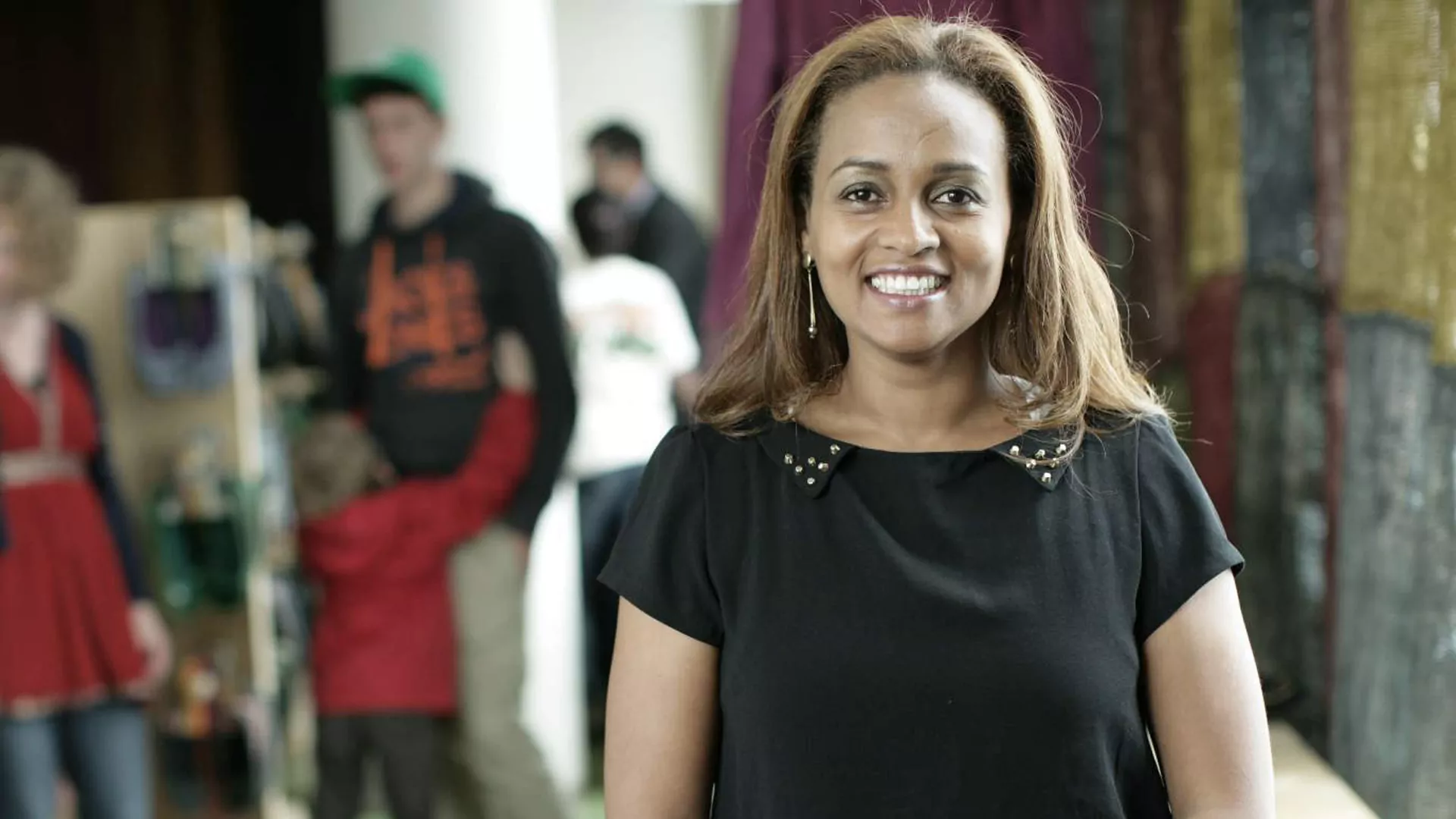
Trajectories — Portrait No. 8
In 2013, Fast Company appended an editor’s note to its profile of Bethlehem Tilahun Alemu. It removed a claim that soleRebels was the world’s only Fair Trade-certified footwear company, and noted the brand was no longer carried by Urban Outfitters. Thirteen years later, the uncorrected version is still the one that circulates. The company is real, the certification is real, the achievement is real — and almost every number published about it originates with the company itself. This is a portrait of a genuine industrial success, and of what happens to a business story when nobody independent is counting.
| Born | 1980, Addis Ababa; raised in Zenabwork |
| soleRebels founded | early 2005, on her grandmother’s plot |
| Starting loan | 580,000 birr (c. $33,000 at the time) |
| WEF Young Global Leader | 2011 |
| Forbes “Woman to Watch” | 2012 |
| Employees in Ethiopia | c. 300 (most consistently cited figure) |
| Countries of distribution | 30 / 45 / 55+ depending on source |
| Pairs sold by 2016 | 125,000 |
| Republic of Leather launched | 2014 |
| Garden of Coffee launched | 2016–17 |
| Selam Bank | announced 2021, c. $116.3m authorised capital |
| Age and roles, Forbes Africa cover | 46 — founder of soleRebels and Tefftastic, CEO of Oasis Motors |
| G20 Action Council on African Economic Integration | co-chair, 2026 |
Except where noted, these figures originate with the company or with reproductions of its communications.
Bethlehem Tilahun Alemu grew up in Zenabwork, on the poor edge of Addis Ababa, and noticed something most people do not put into words. Ethiopia had no shortage of brands. It had charity brands. The country was legible to the world through appeals for donations, not through products anyone wanted to buy.
She has framed the problem as one of narrative control — that Ethiopians must take it back from those with a vested interest in casting the country as needing help, and specifically the help they happen to be selling.
In early 2005, fresh out of college, she started soleRebels on a plot of land belonging to her grandmother, with a bank loan of 580,000 birr, around $33,000. The product was not invented: the recycled-tyre sandal, known locally as selate or barabasso, had existed for generations. What she added was the conversion of a necessity into an export.
She put it to Fast Company in 2013 in the sentence that defines the whole enterprise: they did not want to make a pity product. People should buy the shoes because the shoes are good.
That distinction — from aid to brand — is the intellectual contribution here, and it transfers directly to any CEMAC economy whose international image is made of raw commodities and cooperation agreements.
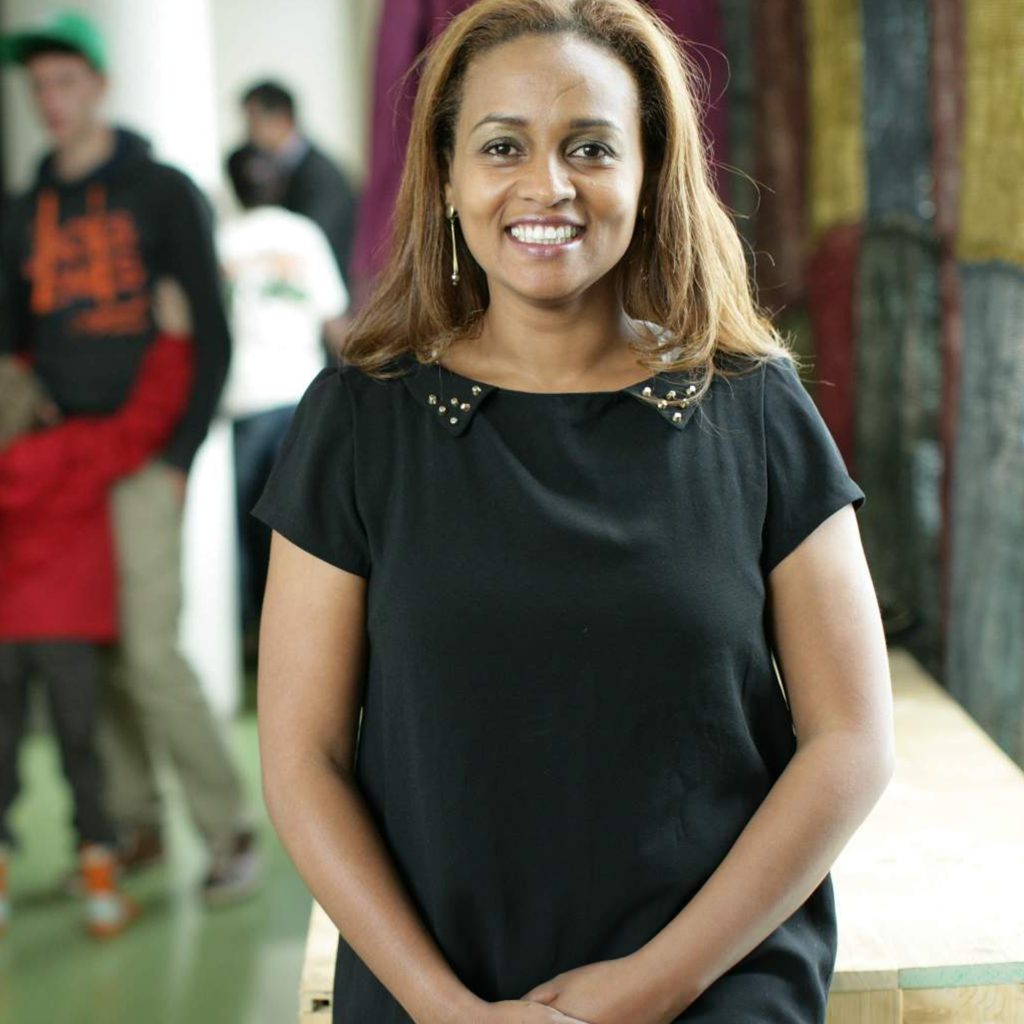
What was built
soleRebels grew through export and then retail: Whole Foods, Amazon, standalone stores in Switzerland, Singapore, Taiwan, Spain, Japan. Around 300 people are employed in Ethiopia. The company became the first footwear business certified by the World Fair Trade Organization and says it pays its artisans well above the sector average.
The recognitions accumulated fast. The World Economic Forum named her a Young Global Leader in 2011; Forbes listed her as a woman to watch in 2012; Wharton showcased her; readers of the Guardian voted her Africa’s top woman achiever in 2013; O, The Oprah Magazine included her on its Africa power list.
Oprah Winfrey’s line about her is the one that has travelled furthest: that she is transforming her community and country, one fair-trade shoe at a time. It is quoted everywhere. We could not locate its original source.
Which is, in miniature, the problem with this file.
The verification problem
Assembling reliable data on soleRebels is unexpectedly hard, and the difficulty is itself the finding.
Distribution is given as 30 countries, or 45, or more than 55, with no chronology explaining the spread. Employment appears as 300 staff in some documents and 1,200 jobs created in others. The founding year is 2005 or 2006. Her education is variously Unity University, a doctorate from Jimma, or Harvard.
More tellingly, most of the available text — institutional bios, magazine features, conference notes — reproduces a single recognisable formulation: the world’s fastest-growing African footwear brand, the first global footwear brand ever to emerge from a developing nation. That sentence has circulated unchanged for more than a decade. It comes from the company.
Occasionally an editor has pushed back. Fast Company’s note removed the claim that soleRebels was the only Fair Trade-certified footwear company, correcting it to WFTO-compliant, and clarified that Urban Outfitters no longer carried the brand. That was 2013. The corrected version did not propagate; the original did. Even Forbes Africa’s own 2026 cover story hedges, describing the company as seen as the first WFTO-certified footwear company rather than asserting it.
None of this casts doubt on the business, which plainly exists, or on the certification, which is checkable. The gap is elsewhere: there is no independent measure of soleRebels’ economic size in the public record. No audited revenue, no filed accounts, no third-party valuation.
For a financial publication, that is a fact to state rather than route around.
What the announcements promised
The second observation is verifiable, because it concerns dated public statements.
In 2014–15 the company said its international stores would create over 600 jobs in their host countries by the end of 2015. By 2018 the stated target was fifty company-owned stores in the United States by 2020, and five hundred worldwide by 2023–24. Garden of Coffee was to open more than a hundred roastery cafés in 2022. Made by Ethiopia has been credited with more than 100,000 job opportunities and over a billion dollars in export revenue.
It is 2026. None of those thresholds was reached, and the gap against the actual network — a handful of stores in a handful of countries — is not marginal.
Two easy readings should be resisted. Calling it deception ignores that these were growth projections, a genre in which optimism is standard, and that Ethiopia has since absorbed the Tigray war, a severe foreign exchange crisis and a sovereign default in 2023. No international expansion plan survives that. Calling it failure ignores that a 300-person manufacturer exporting from Addis Ababa for two decades is a rare industrial achievement on the continent.
The accurate reading is more useful to both: there is a structural gap between growth communications and execution, and it goes largely undocumented in African business because almost no publication has the resources to measure it.
From product to capital
The recent turn is the least commented and the most interesting.
In 2021 she was among the founders of Selam Bank, a mortgage lender with roughly $116.3m in authorised capital, aiming to finance more than 100,000 home loans within five years in a country where mortgage credit barely exists. She chairs it. As of late 2025 her own posts still described the bank as under formation — worth noting without over-reading, since releasing private bank capital in Ethiopia depends on conditions no founder controls.
By 2026 she is on the cover of Forbes Africa at 46, named among Africa’s most powerful women under 50, co-chairing the G20 Action Council on African Economic Integration at the invitation of Tata’s chairman, and running two new ventures: Tefftastic, built on Ethiopia’s gluten-free supergrain, and Oasis Motors, aimed at domestic electric vehicle manufacturing.
Asked by Forbes Africa how she thinks about her platform, she answered that her voice is in what she does — the companies she builds and the products she creates.
It is the same movement this series traced in portrait six: economic capital converting into institutional capital. Here it converts into finance and industry rather than governance, which in an economy without mortgage credit is an ambition of a different order than footwear.
Read from Douala or Libreville
Leaving the charity narrative is an economic act, not a rhetorical one. As long as a country is known internationally by its commodities and its aid receipts, its companies pay a perception premium in every negotiation. Building a brand is taking that back.
The value sits in the story and the certification, not only in the product. The shoe predated her. Fair trade certification, traceability, design and international distribution are where the captured margin lives — the most transferable lesson here for any exporter of cocoa, coffee or timber.
Announce less, deliver more. The gap between public targets and execution costs nothing while conditions hold. It costs a great deal when institutional investors run diligence on your past announcements. Where capital is already scarce, the credibility of a projection is an asset worth protecting.
And demand of yourself the numbers you would demand of a competitor. The absence of audited data on Africa’s successful companies hurts those companies first: it blocks comparison, deters investors, and leaves the field to estimates. Publishing accounts is a strategic choice, not an administrative burden.
Tomorrow: Fatoumata Bâ, founder of Janngo Capital.