

Two Academy Awards, a Tony, four decades on screen. And, running quietly underneath all of it, a fifty-year debt that one man has spent his adult life paying back in instalments. This is the documented record of Denzel Washington’s philanthropy — what it funded, whom it changed, what it cost, and where the legend around it has outrun the truth.
I. A letter, 1998
A drama student at Howard University comes home from a summer in England and opens an envelope.
He has just spent several weeks at Magdalen College, Oxford, on the British American Drama Academy’s Midsummer programme. He could not have afforded it. Neither could eight of his classmates. Their teacher — the actress Phylicia Rashad — had gone to her friends in the profession and asked them to cover the tuition for nine students she believed in.
The letter names the donor. It is Denzel Washington.
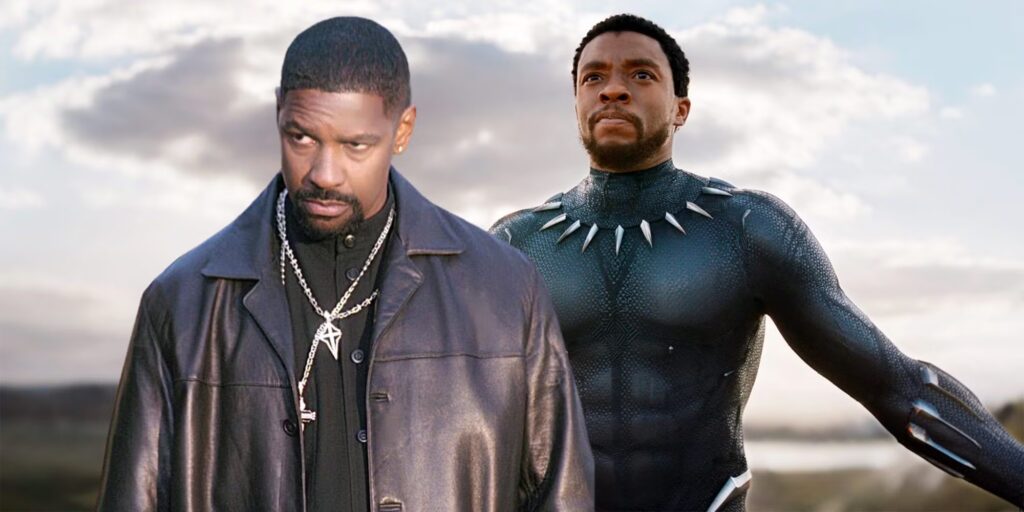
The student is Chadwick Boseman. He tells no one for twenty years. Not because the gift embarrassed him, but because he was waiting until his career made it impossible for anyone to say he was trading on the name. He finally spoke about it to Rolling Stone in 2018, days after meeting Washington for the first time at the New York premiere of Black Panther. In June 2019, from the stage of the American Film Institute’s Life Achievement Award ceremony, he said it directly to the man himself: there is no Black Panther without Denzel Washington.
Fourteen months later Boseman was dead of colon cancer at 43.
The episode has been independently verified by Africa Check and corroborated by a second beneficiary, the actress Susan Kelechi Watson, who has put the figure at roughly $5,000 per student. It is the cleanest possible illustration of how this man gives: a specific cheque, to a specific person, at the exact moment it decides a life — and then silence.
II. Mount Vernon, 1968: where the debt was incurred
To understand what Washington gives, you have to know what he was given.
He was born on 28 December 1954 in Mount Vernon, a working-class city on the northern edge of the Bronx. His father, Denzel Sr., was an ordained Pentecostal minister who also worked for New York City’s Water Department and at an S. Klein department store. His mother, Lennis, ran a beauty parlour. Money was not abundant; supervision was thin, because both parents worked.
At six, he walked into the newly opened Boys Club of Mount Vernon. He stayed for twelve years. He has said he used to pass the construction site on his way to school, impatient for it to open.
Then, in 1968, his parents divorced. His mother — reading the street correctly — put her fourteen-year-old son on a bus to Oakland Military Academy, a boarding school in New Windsor, New York. He did not want to go. Decades later he described that decision without a trace of sentimentality: he would not have survived, he said, in the direction he was heading. The friends he had been running with, by his own account, went on to serve something like forty years in prison between them.
This is the arithmetic that governs everything that follows. Washington does not fund abstractions. He funds the specific institutions that intercepted him — a youth club, a school, a university drama department, a church — and he funds them for decades rather than for a news cycle.
III. Thirty years at the Boys & Girls Clubs: the unglamorous part
Washington has been national spokesperson for Boys & Girls Clubs of America since the early 1990s. Fordham University dates it to 1992; the organisation’s own archives and most reporting say 1993. The White House citation of January 2025 credits him with more than twenty-five years in the role.
It is not a name on a letterhead.
Jim Clark, the organisation’s president and chief executive, has been explicit about what the relationship did commercially: when Washington stepped forward, BGCA was a much smaller and far less recognised national non-profit. Clark credits him with bringing the brand to life. In an American charitable market where visibility converts directly into donor revenue, that is not a soft contribution — it is a decades-long, unpaid marketing asset transferred to a youth charity, at a moment in his career when his endorsement had considerable commercial price.
The concrete traces are easy to find:
- 2006 — A Hand to Guide Me, his first book, published for the Clubs’ centenary. He wrote the introduction and assembled testimony from more than seventy public figures — Jimmy Carter, Bill Clinton, Antwone Fisher, Cal Ripken Jr., Gloria Steinem, John Wooden — on the adults who guided them. Proceeds benefit the Clubs; the copyright is held by BGCA itself.
- April 2014 — he brought fifty children from his own Mount Vernon club to Broadway to watch him play Walter Lee Younger in A Raisin in the Sun.
- 2018 — he auctioned a trip to the Los Angeles premiere of The Equalizer 2 as a fundraiser for the Clubs.
- April 2023 — he delivered the keynote at the opening of the network’s 5,000th club, in Elgin, Illinois, marking thirty years as spokesperson.
His standard line about the club — that everything anyone has seen or heard about him began with what he learned there — now appears on the organisation’s official materials. It reads like a slogan. It is closer to a thesis.
IV. The money, and where it went
Four documented commitments define the financial record.
Fordham University — $2.25 million (2011)
Washington graduated from Fordham in 1977 with degrees in drama and journalism, and served on its board of trustees from 1994 to 2000. In 2011 he endowed the Denzel Washington Chair in Theatre with a $2 million gift, plus $250,000 for a scholarship fund for drama students.
He explained the gift by reference to Robert Stone, the actor and Fordham professor who mentored him and, in his telling, gave him something to live up to. His stated aim was to give the next generation the same kind of positive influence.
There is a detail here that reads like screenwriting but is a matter of public record: the chair’s inaugural holder was Phylicia Rashad — the same teacher who, thirteen years earlier, had asked him to pay for nine students she could not fund, one of whom was Chadwick Boseman.
Wiley College — a decade, then another (2007–present)
In 2007 Washington directed and starred in The Great Debaters, playing Melvin B. Tolson, the poet-professor who built a debate team at Wiley College — a historically Black college in Marshall, Texas — into a squad that won for a decade in the 1930s and staged interracial debates in the Jim Crow South. The team had dissolved after Tolson left in 1947.
The same year the film opened, Washington committed $1 million to bring it back: $100,000 a year for ten years. The commitment was renewed in 2018 for a second $1 million; by 2021 the family foundation had paid the fourth $100,000 instalment of that second decade. The team now competes as the Melvin B. Tolson/Denzel Washington Forensics Society.
The scale matters more than the headline number. Wiley serves just over 800 students, most of them Pell-grant eligible and the first in their families to attend college. The debate squad numbers around thirty. It won the Pi Kappa Delta national championship in 2014 and again in 2016. In an institution of that size, $100,000 a year is not a gesture — it is a structural line item, and it has been there for the better part of two decades. Wiley’s president, Herman J. Felton Jr., has framed it in recruitment terms: the funding is what makes the college competitive for the best debaters in the country.
Nelson Mandela Children’s Fund — $1 million (South Africa, June 1995)
Reuters’ archive holds the footage: a press conference in Johannesburg at which Washington hands over one million US dollars to Nelson Mandela’s Children’s Fund, earmarked for street children with no home and no access to schooling. He tells the room he envies the sense of hope he has found in South Africa — a hope, he says, that no longer exists in America.
The trip was a family holiday that turned into something else. He had lunch with Mandela, flew to Robben Island, and renewed his marriage vows to Pauletta in a ceremony conducted by Archbishop Desmond Tutu. He is now a lifetime founding member of the Fund, and serves as honorary chairperson of Save Africa’s Children, a US organisation supporting children across sub-Saharan Africa affected by HIV/AIDS, poverty and conflict.
Thirty years on, the Fund he helped seed operates one of the very few dedicated paediatric hospitals in southern Africa.
Fisher House Foundation — an undisclosed but historic gift (2004–2005)
On 17 December 2004, Washington visited Brooke Army Medical Center in San Antonio, Texas — the facility that receives burn victims and the severely wounded evacuated from Iraq and Afghanistan. He took part in a Purple Heart ceremony for three recovering soldiers and toured one of the Fisher Houses on the base: free or near-free lodging for the families of hospitalised service members.
Four months later the money arrived. The foundation has never disclosed the amount, saying only — with the donor’s permission — that it ranks among the most significant gifts in its history. Denzel and Pauletta Washington subsequently joined its board of trustees.
And a fifth, which requires an asterisk
The Pauletta and Denzel Washington Family Gifted Scholars Program in Neuroscience has, since 2004, placed undergraduate, graduate and medical students in research laboratories at Cedars-Sinai Medical Center in Los Angeles, working on blood-brain barrier drug delivery, cancer vaccines, gene therapy and stem cells. Stipends run to $2,000 a month for undergraduates and $2,500 for graduate researchers. More than twenty-five Washington Scholars have completed the programme.
Honesty requires the qualifier: the programme is funded by Cedars-Sinai’s Department of Neurosurgery, led by the neurosurgeon Keith L. Black. The Washingtons lent their name and have remained personally involved — Pauletta is a founding executive member of the hospital’s Brain Trust, both have been engaged for over twenty years, and they have presented the awards in person at public schools in Los Angeles and New York. But the cheque is not theirs, and any account that implies otherwise is inflating the record.
V. What the legend adds — and what it takes away
Denzel Washington has, for twenty years, been one of the most heavily counterfeited philanthropists in the world. A serious profile has to say so.
The chequebook myth (2005). A viral email claimed he had asked what a Fisher House cost to build and written a cheque on the spot. It is false. David Coker, then the foundation’s president, noted drily that Washington rarely carries a chequebook at all. Spokesman James Weiskopf was blunter: the donation, however large, was never enough to build a house, and that was never the plan. The confusion arose because the foundation announced a planned $1 million facility on the same evening it disclosed his pledge. Two unrelated facts, welded together by the internet.
The $50 million Los Angeles wildfire donation (January 2025). Entirely fabricated. Snopes obtained a direct denial from Washington’s representative and traced the story to sites that generate content using AI software. No credible outlet ever reported it, for the straightforward reason that it never happened.
The $500,000 Jamaica donation after Hurricane Melissa (October–November 2025). This one circulated at enormous volume on TikTok, X and Instagram, and was picked up by at least one Caribbean outlet in a round-up of celebrity giving. As of publication it has not been confirmed by Washington’s representatives, by any named recipient organisation, or by a wire service or major newspaper. It must be treated as unverified.
There is a pattern here, and it is worth naming, because it is an economic pattern as much as a cultural one. Fabricated celebrity-generosity stories are cheap to produce, expensive to debunk, and extremely profitable in an attention market: they generate advertising revenue per page view, they funnel followers toward monetised accounts, and they are now trivially easy to mass-produce with generative tools. Washington is a preferred target precisely because the fabrications are plausible — he really does give, so the forgeries land.
The cost is not to his reputation. The cost is to the standard. A man who pays $100,000 a year for twenty years to an 800-student college in East Texas is doing something considerably harder, and considerably rarer, than writing a spectacular $50 million cheque in a week when the cameras are pointed at a disaster. The fake stories replace endurance with spectacle — which is the precise inverse of his actual method.
VI. La Cienega Boulevard, 21 May 2020
Late one morning in Los Angeles, Washington sees a man in apparent distress in the middle of traffic on the 800 block of La Cienega Boulevard, a fast and busy road. He pulls over. He gets the man out of the roadway. He stays with him.
Another passing motorist, recognising the actor, calls the police. Washington waits for the officers, stands between them and the man, talks to both. Before leaving, he puts spare face masks into the man’s pocket.
An officer at the scene, filmed by a photographer, later described the sequence: Washington had stopped because he was worried about the man’s safety; police established he was not a danger to himself or others; he was released, and Washington left. The LAPD confirmed there was no arrest — contradicting the caption on the video that made the encounter famous.
The footage surfaced seven days later, on 28 May — three days after George Floyd was killed in Minneapolis. Millions of Americans watched it as an image of what such an encounter could look like. Washington has never commented on it. That, too, is characteristic.
VII. December 2024: the circle closes
On 21 December 2024, a week before his seventieth birthday, Denzel Washington was baptised and received a minister’s licence at the Kelly Temple Church of God in Christ in Harlem — the church he attended as a boy, and where his family’s roots run deep enough that a deacon there described him as a brother. Archbishop Christopher Bryant, who officiated, announced his entry into the clergy; the licence permits ordination after a period of training.
Speaking to the congregation, Washington said it had taken a while, but he was there. Then he told a story from 1974. He was twenty, sitting in his mother’s beauty parlour, when a customer named Ruth Green — locally reputed to have the gift of prophecy — told him he would travel the world and preach to millions. She did not say Academy Award. She did not say film star.
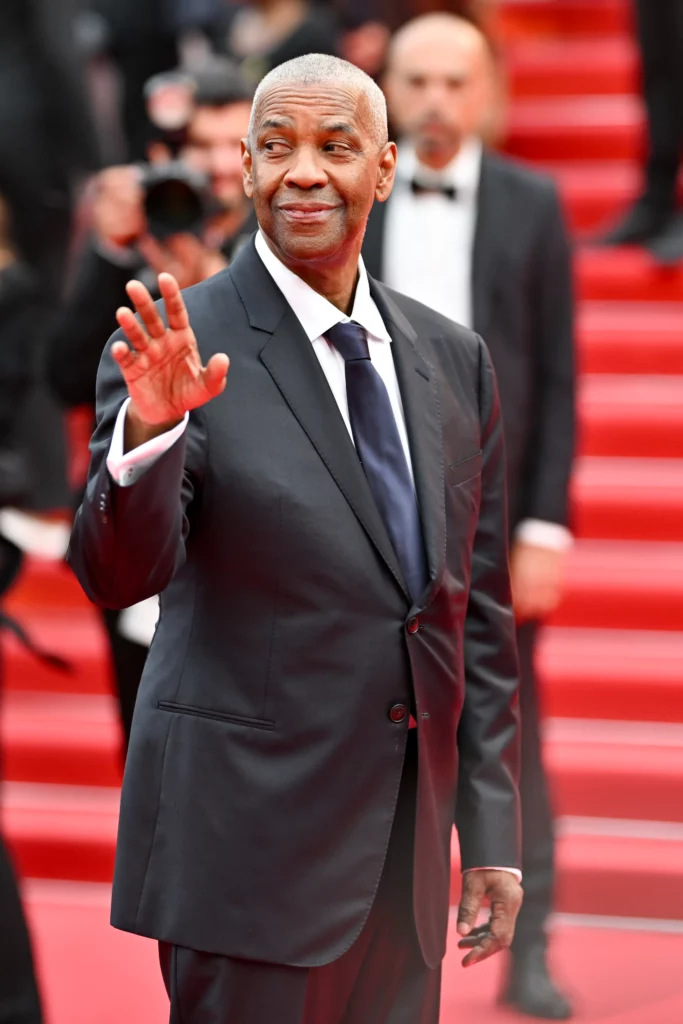
Two weeks later, on 4 January 2025, President Joe Biden placed the Presidential Medal of Freedom around his neck at the White House. He had been named a recipient in July 2022 but missed that ceremony after testing positive for Covid-19. The official citation describes a man whose standing among audiences and peers is exceeded only by his standing with the young people he inspires, and calls him a defining character in the American story. It singles out his work for the Boys & Girls Clubs.
VIII. The limits of the record
Three honest caveats, without which this profile would be publicity rather than journalism.
The total is unknowable. The Denzel Washington Family Foundation does not capture all of the family’s giving; Inside Philanthropy notes explicitly that significant gifts are made outside the formal vehicle, which makes the record impossible to audit. Every figure in this article is a documented figure. The real number is certainly higher and cannot responsibly be estimated.
The giving is institutional, not political. Washington funds youth clubs, historically Black colleges, military families, a church, neuroscience training. He does not fund advocacy, does not campaign, and has for decades declined the role of public conscience — telling reporters in 2016 that his vote was nobody’s business. He has been criticised for it. It is a defensible position, but it has a blind spot: repairing individual trajectories is not the same as changing the structures that break them. Nine Howard students got to Oxford; the reason they could not afford it in the first place went untouched.
Proximity shapes the portfolio. Almost everything he funds is something he personally passed through — his club, his university, his wife’s hospital charity, the film he directed, the church of his childhood. That is why the commitments last. It may also be why they rarely extend to causes he has no biographical connection to.
IX. The moral estate
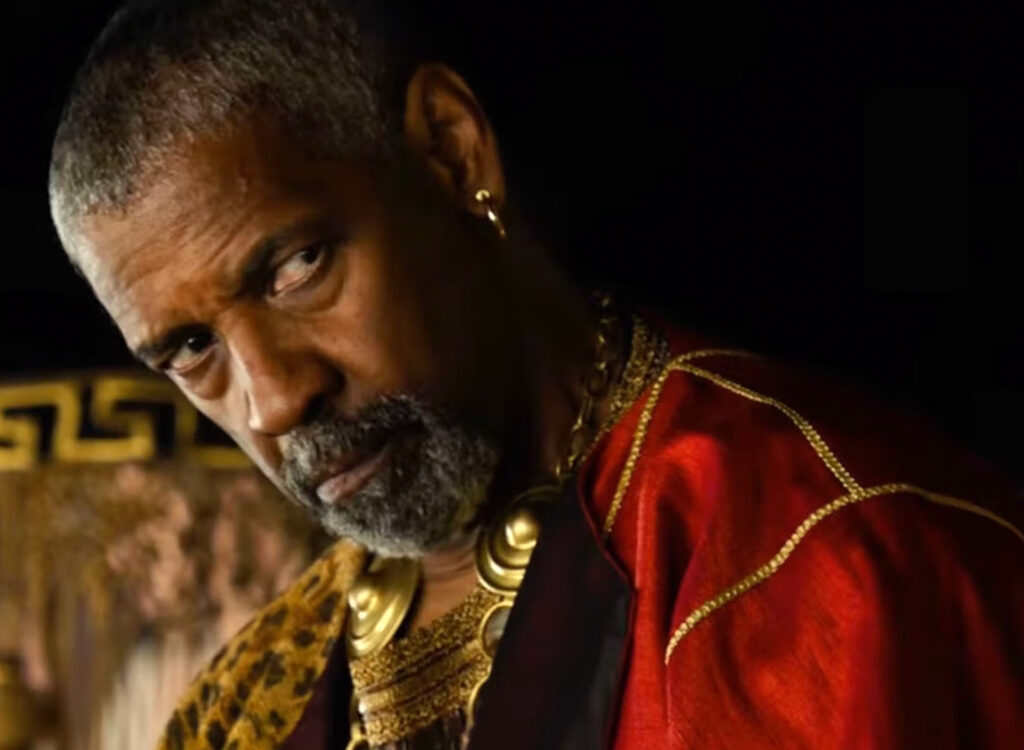
There is a line Washington attributes to his mother and has repeated for years, most recently in Harlem: man gives the award, God gives the reward. She said it to him, he claims, after one of the many times he lost an Oscar.
Read it as faith if you like. Read it also as a management doctrine, because that is how he has behaved.
What this man appears to have understood early is that a life does not turn on the size of a gift. It turns on its precision and its duration. Five thousand dollars for a Howard student in 1998 produced Chadwick Boseman. One hundred thousand dollars a year in Marshall, Texas resurrected a debate team that had been dead for sixty years and has been manufacturing first-generation graduates ever since. One million dollars handed over in Johannesburg in 1995 went into a fund that three decades later runs a paediatric hospital for a region that has almost none.
None of it led a news bulletin. All of it is still standing.
For readers in Central Africa and across the continent’s diaspora economies — where philanthropic announcements are frequently loud, frequently one-off, and frequently untraceable a year later — that is the transferable lesson. The measure of generosity is not the sum declared at the press conference. It is the number of years the payments continued after the cameras left.
Denzel Washington has been paying for thirty years. He has almost never mentioned it himself. Other people had to do it for him — and one of them, standing on a stage in 2019, had less than a year to live and used the time to say thank you.
Timeline
| Year | Commitment |
|---|---|
| 1992–93 | Becomes national spokesperson, Boys & Girls Clubs of America |
| June 1995 | $1 million to the Nelson Mandela Children’s Fund, Johannesburg |
| 1998 | Pays tuition for nine Howard University students at Oxford, incl. Chadwick Boseman |
| 2004 | Pauletta and Denzel Washington Family Gifted Scholars Program launched at Cedars-Sinai |
| Dec 2004 – 2005 | Visits Brooke Army Medical Center; makes a historic gift to Fisher House Foundation; joins its board |
| 2006 | Publishes A Hand to Guide Me for the Clubs’ centenary |
| 2007 | Commits $1 million to Wiley College’s debate team ($100,000 × 10 years) |
| 2011 | $2.25 million to Fordham University: endowed chair plus scholarship fund |
| 2018 | Renews the Wiley commitment for a second $1 million |
| May 2020 | Intervenes for a homeless man on La Cienega Boulevard, Los Angeles |
| Apr 2023 | Keynotes the opening of the 5,000th Boys & Girls Club; 30 years as spokesperson |
| Dec 2024 | Baptised and licensed as a minister, Kelly Temple COGIC, Harlem |
| Jan 2025 | Receives the Presidential Medal of Freedom |