


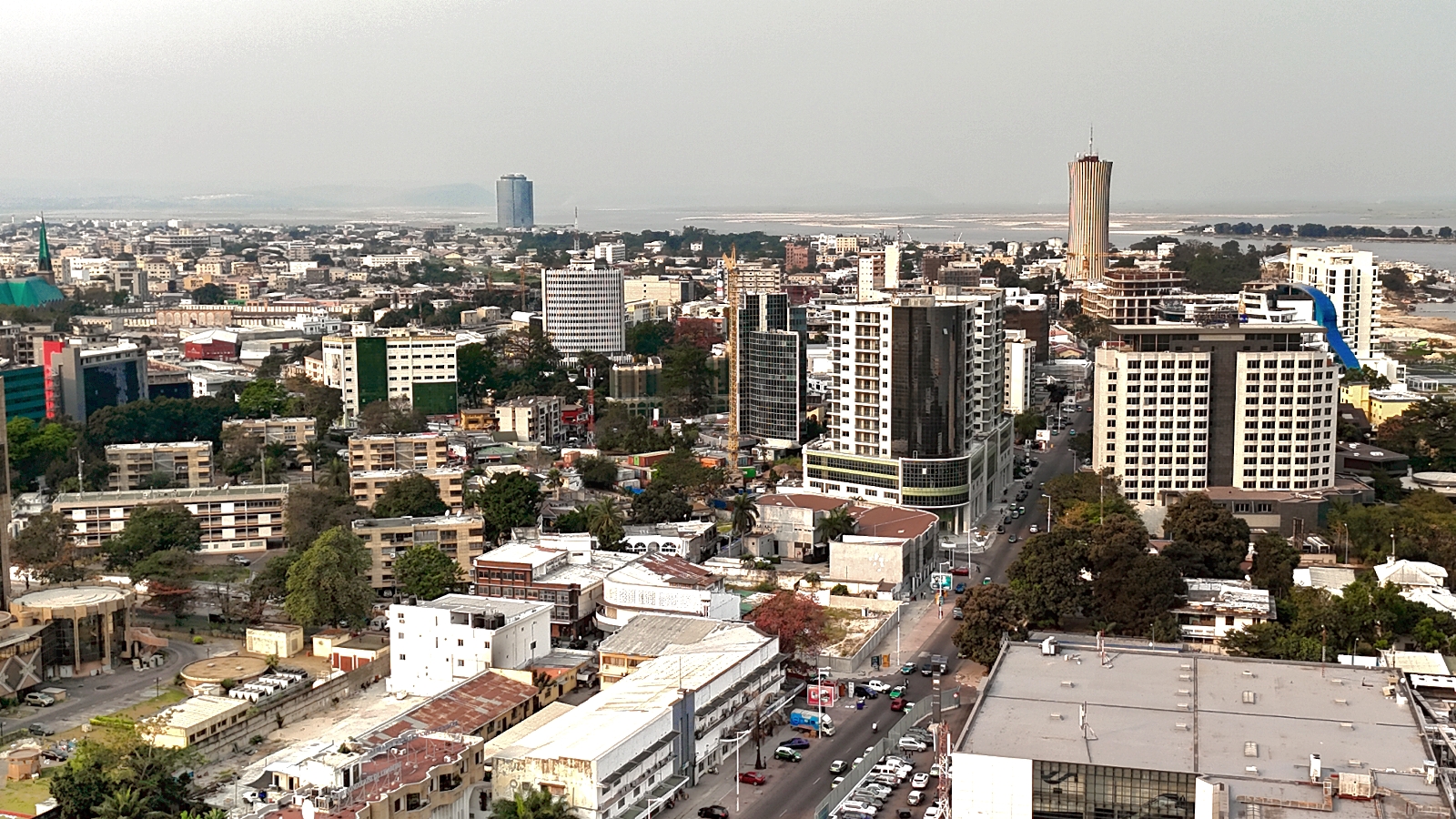
Every year, more money leaves Africa illicitly than the continent receives in development aid and foreign investment combined. That money has a face: it is the hospital that was never built, the teacher who was never hired, the road that never reached the border. In July 2026, standing on the unfinished Gabon-Cameroon transborder highway, President Brice Clotaire Oligui Nguema reduced this macroeconomic haemorrhage to a single image — the dust of the village you flee will one day catch up with you. The numbers say he is right.
One sentence, one construction site
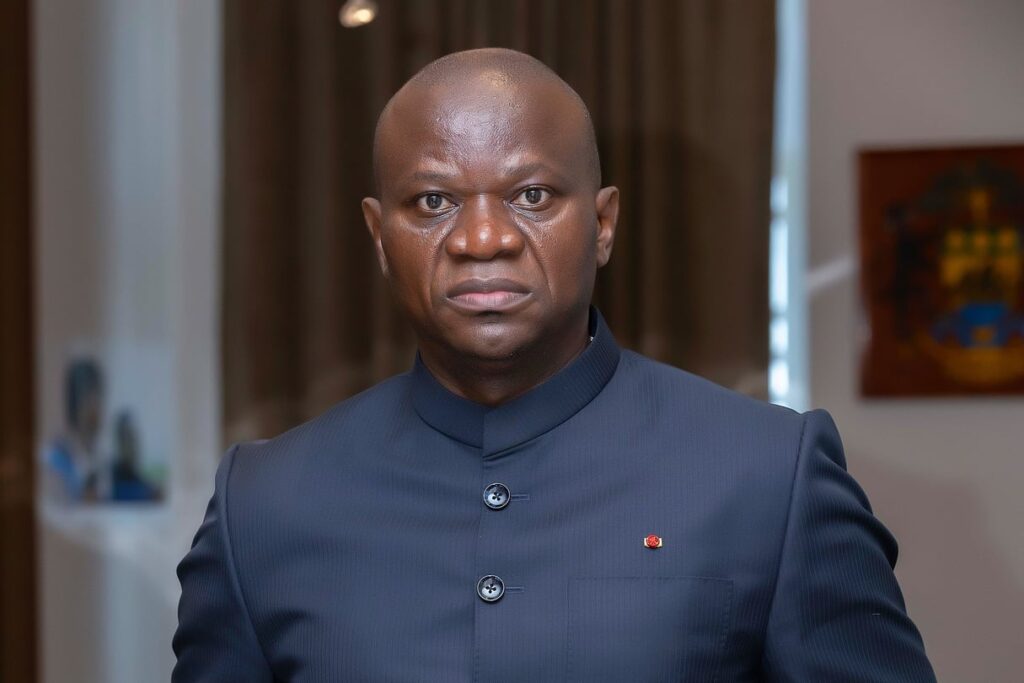
The setting was deliberately unglamorous. On 9-10 July 2026, the Gabonese head of state toured the Woleu-Ntem province and spent the night in Minvoul, a border town no sitting president had slept in since independence. Inspecting the strategic road linking Gabon to Cameroon, he delivered the words reported by journalist Raoul Bia: “The money used to buy houses in France, England or the USA must be used to build in our villages.” And, more personally: “I am obliged to work and develop Gabon — I do not want to go into exile after my term.”
Strip away the rhetoric and what remains is a balance sheet. A brutal one.
The numbers behind the sentence
According to UNCTAD’s 2020 report on economic development in Africa, an estimated $88.6 billion leaves the continent every year through illicit capital flight — the equivalent of 3.7% of Africa’s GDP. Between 2000 and 2015, cumulative illicit outflows reached $836 billion, more than the continent’s entire external debt stock ($770 billion in 2018). On paper, Africa borrows from the world. In reality, UNCTAD concludes, Africa is a net creditor to the rest of the world.
The comparison that stings most: those outflows roughly match the combined annual inflows of official development assistance ($48 billion) and foreign direct investment ($54 billion). What one hand receives in aid, the other hand exports in flight capital. And the single largest component — some $40 billion in 2015 — comes from the mis-invoicing of extractive exports: oil, minerals, timber. The very commodities on which the CEMAC economies depend.
What that money would have bought
Numbers only matter when translated into lives. Africa needs an estimated $200 billion per year to finance its Sustainable Development Goals; curbing illicit flight would close nearly half of that gap on its own. As UN Special Adviser for Africa Cristina Duarte has put it, the $88.6 billion is not merely a figure — it must be read as missed development, lost livelihoods and deepened poverty.
Gabon itself is the case study. One of Africa’s richest countries per capita thanks to oil, it nonetheless ranked 112th out of 189 on the Human Development Index in 2021. Wealth was extracted; development was not delivered. The gap between the two has an address — and for decades, that address was in Paris, London and the tax havens.
When the dust catches up
“One day it will catch up with you,” the president warned. The court record suggests the process has already begun.
In July 2021, France’s highest court definitively convicted Teodorin Obiang, vice-president of Equatorial Guinea, ordering a €30 million fine and the confiscation of assets worth an estimated €150 million — including a mansion on Avenue Foch, a fleet of luxury cars and artworks. It was the first final conviction of a serving foreign leader’s family in a French “ill-gotten gains” case.
Gabon knows this mirror intimately. Between March and July 2022, nine children of former president Omar Bongowere placed under formal investigation in France, suspected of knowingly benefiting from a property portfolio valued at no less than €85 million, which investigators believe was fraudulently assembled. A major French bank was indicted in the same case. In a final irony, France’s 2024 budget set aside €6.1 million to begin returning confiscated assets to the populations they were taken from. The villas bought to escape the village dust may end up paying for the village tarmac — after decades of waste, litigation and humiliation that building at home would have spared everyone.
The builders’ ledger
The Minvoul speech invents nothing. It reconnects with a ledger kept by an older generation of African leaders — one written in outcomes, not offshore accounts.
Thomas Sankara capped his presidential salary at $450 a month, sold the government’s Mercedes fleet and put his ministers in Renault 5s, and drove a campaign that planted some ten million trees against the desert. When he was assassinated in 1987, his estate amounted to a car, four bicycles, three guitars, a fridge and a broken freezer. His economics can be debated; his hands cannot.
Julius Nyerere wrote integrity into law with Tanzania’s 1967 Leadership Code, barring officials from private business and multiple incomes. When he voluntarily left power in 1985 — a rarity at the time — he retired not to Geneva but to his native village of Butiama, where he farmed his own fields until his death.
Seretse Khama provides the economic proof. When diamonds were discovered in Botswana a year after independence in 1966, the revenue was channelled — through a 50/50 state joint venture — into health and education. The results are measurable: average annual growth of around 9% between 1970 and 2000, graduation out of the UN’s Least Developed Countries group in 1994, roughly 90% primary school enrolment, and a standing, year after year, as Africa’s least corrupt country in Transparency International’s index. His successor-but-one, Festus Mogae, received the 2008 Mo Ibrahim Prize — the award created precisely to honour African leaders who develop their countries and leave office on time.
And Nelson Mandela, after 27 years in prison, served a single term and stepped down. None of these men needed exile. All of them could walk among their people, as Oligui Nguema put it, without fear of stones.
The exile balance sheet
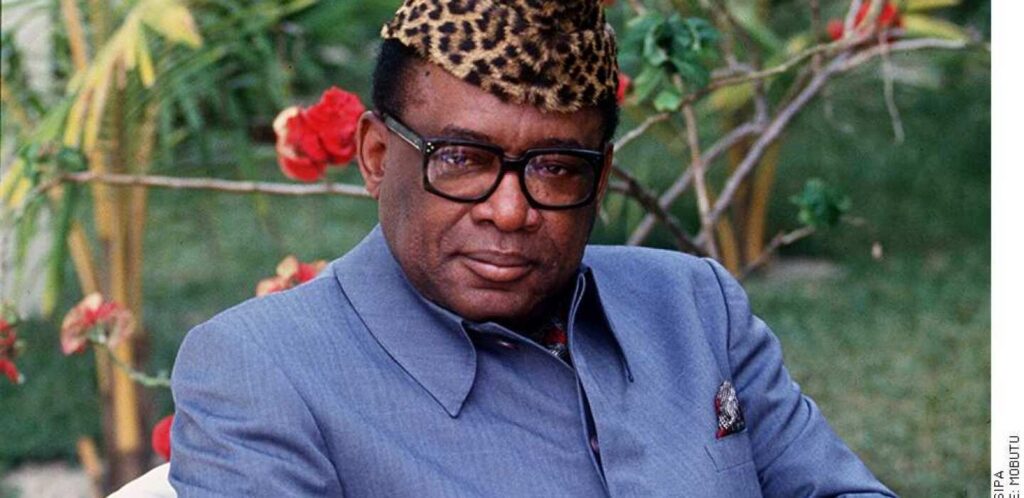
Set against that ledger stands the other one. Mobutu Sese Seko died in Rabat in 1997, far from a country in ruins. Blaise Compaoré, who overthrew Sankara, has lived in exile in Côte d’Ivoire since Burkina Faso’s streets drove him out in 2014. Ben Ali died in Jeddah; Idi Amin in Saudi Arabia. Men who took everything ended with nothing that matters — no land, no honoured grave, no name children speak with pride. Exile, in the president’s blunt formulation, is not an accident of history. It is a verdict on a term of office.
The test
Words commit their author, and the region will keep score in facts: transparent public procurement, asset declarations, independent courts, kilometres of road actually delivered — and exemplary conduct at the very top, without exception or exemption. Oligui Nguema has already warned his own government that “the hand of the State will not tremble” against embezzlers of public funds. For the CEMAC zone, the stakes are concrete: every CFA franc that stays home is a deposit in a Libreville or Douala bank, credit for a local firm, asphalt on a border road. The region’s problem has never been a shortage of wealth. It is a haemorrhage of wealth.
The dust of the village is not a curse to flee. It is the raw material of everything still to be built — and the only soil on earth where our names stand a chance of outliving us.
