


Commercial Bank Cameroun spent seven years under provisional administration. NFC Bank spent twelve. IDEV never came out at all. On 11 September 2026, NOFIA S.A. walked out after twelve months. The interesting question is not whether that is impressive. It is why it worked — and whether it holds.
At a glance
| Institution | Nouvelle Financière Africaine (NOFIA S.A.), Douala |
| Status | Category-2 microfinance institution, licensed 15 October 2009 |
| Under provisional administration | September 2025 – 11 September 2026 |
| Regulator | Commission Bancaire de l’Afrique Centrale (COBAC) |
| Share capital | XAF 8.2bn (€12.5m), up from XAF 1.2bn (€1.8m) |
| Deposits | XAF 6.32bn (€9.6m), from 74,824 accounts |
| PAR30 | Below 4%, down from 32.39% |
| Network | Around fifteen points of presence nationwide |
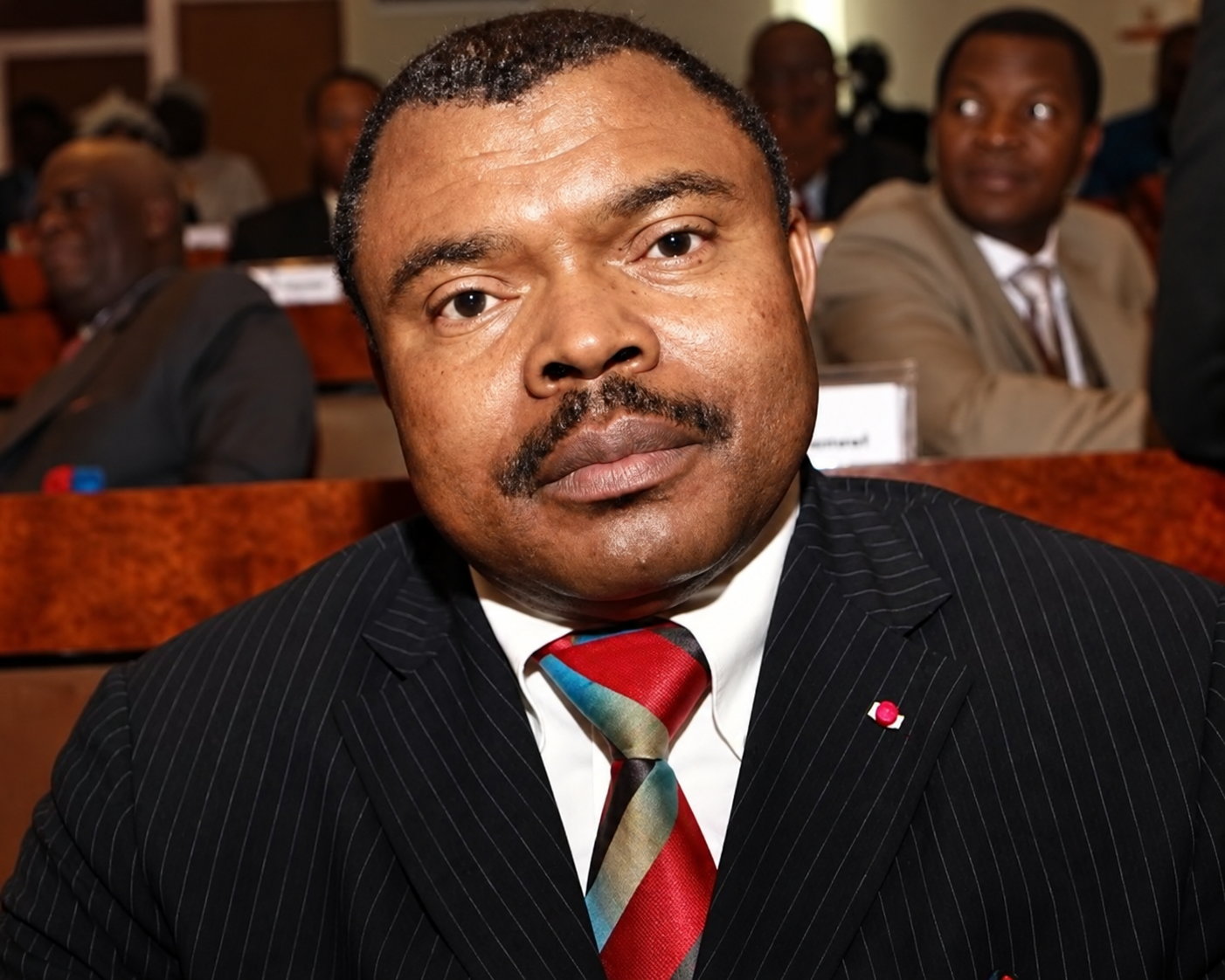
| Chairman | Clément Kemayou |
| Chief Executive | Bogni Ngueya |
I. The graveyard
Central African microfinance is not short of cautionary tales. It is short of recoveries.
At the end of 2024, the CEMAC zone counted 521 licensed microfinance institutions, 384 of them in Cameroon — close to three-quarters of the regional total. Together they carried XAF 2,061bn (€3.14bn) of assets. They also carried XAF 177.8bn (€271m) of non-performing loans, and Cameroon accounted for the overwhelming majority of them. The sector’s bad-loan ratio climbed from 13.8% in December 2014 to 17.1% a decade later — deteriorating faster than the banks, whose ratio moved from 11.6% to 16.2% over the same period.
The consequences arrived in sequence. Over the past two years COBAC has placed UNICS, CECIL and CEPAC Solidarité under provisional administration, and sent IDEV straight into liquidation. Each time, the same scenes outside branch offices; each time, the same unanswered question from depositors.
The rescues, when they happen, are slow. Commercial Bank Cameroun emerged from provisional administration in September 2016 after seven years, and only because the Cameroonian state recapitalised it. NFC Bank was placed under administration in 2012 and released in June 2025 — thirteen years, again with state money behind it.
Against that record, NOFIA’s twelve months is the outlier. It also had no state balance sheet behind it. That is what makes the case worth dissecting rather than merely announcing.

II. What was actually broken
NOFIA was built in 2009 by David Manfouo, a Bamboutos-born businessman and RDPC member of parliament since 2007, whose group had already spread from dry cleaning (Élégance Pressing) into hospitality and food retail (Belavie) and agro-industry. Microfinance was the financial extension of an industrial conglomerate — a common structure in Cameroon, and one that carries a specific hazard.
For fifteen years the institution grew, opening branches in Douala, Yaoundé, Bafoussam, Dschang, Mbouda, Bangang, Bertoua and Kousseri, and signing an access-to-credit partnership with the Cameroon Women Business Leaders Association in 2017.
Then the supervisor moved. COBAC decision D-2025/134, dated 25 June 2025, imposed provisional administration for six months and appointed Bogni Ngueya as administrator, with a mandate to keep essential operations running while restoring normal conditions of exploitation. The institution dates the effective start of the regime to 5 September 2025, with the administrator taking office on 16 September; the official notice reached the national press in mid-October. The initial six-month term was extended.
The diagnosis, in the regulator’s categories, covered financial vulnerabilities, governance, internal control and risk management. Translated: the institution was under-capitalised relative to the losses embedded in its loan book, and it lacked the machinery to prevent the same thing happening again.
This distinction matters, because it dictates the shape of a rescue. Recapitalising an institution that has not fixed its control environment simply buys time before the next round of losses. Fixing controls without recapitalising leaves you technically well-governed and economically insolvent. Both have to happen, and roughly at once.
III. Four things that made the difference
1. The money came first, and it came big
The single most consequential act of the twelve months was the capital increase approved by an extraordinary general meeting in December 2025 and executed in the first half of 2026: share capital lifted from XAF 1.2bn to XAF 8.2bn, an injection of XAF 7bn (€10.7m) and a multiple of nearly seven.
Scale matters here in two directions. Against the regulatory floor — XAF 300m for a category-2 institution — NOFIA is now capitalised at roughly twenty-seven times the minimum, an unusually thick cushion for its size. Against the institution’s own deposit base of XAF 6.32bn, capital now exceeds customer deposits, which is close to unheard of in retail finance and reflects how much loss absorption the restructuring required.
The sequencing is the lesson. In the CBC and NFC Bank cases, capital arrived late and from the state, after years of attrition. Here it arrived early and from private subscribers, which is what compressed the timetable. Everything else in the recovery — writing down bad loans, rebuilding the control function, retaining staff — is only affordable once the equity is there.
2. The right kind of people, in an unusually literal sense
COBAC did not appoint a turnaround generalist. It appointed a compliance officer. The board that took over did not hire a commercial banker as chairman. It hired an auditor. Both choices are legible, and both are addressed in the next section.
3. Compliance was treated as infrastructure, not paperwork
The most quantified part of the record is also the least glamorous: 136 procedures finalised, plus around ten major governance instruments. A new control architecture assembled component by component — new directors, specialised board committees, a management team of one CEO and two deputies, a Compliance unit, a reinforced Permanent Control department, a Risk Management unit, an Information Systems Security unit, strengthened KYC and financial-security procedures, and rebuilt regulatory reporting.
The independently verifiable metric here is the implementation rate of COBAC’s own recommendations: 25% at 30 September 2025, 77% (43 of 56) by mid-2026. That is a scoreboard kept by the supervisor, not by the institution, which is precisely why it carries weight.
4. The workforce was stabilised before the balance sheet was
Under the 2026–2030 restructuring plan, NOFIA re-engineered its HR framework — job evaluation on a Hay-inspired methodology, reorganisation of business units, staff redeployment, and a revised pay structure aligned progressively on Cameroon’s National Collective Agreement for the Commerce Sector. Staff turnover fell from 12% to 2%.
This is the most underrated line in the file. In lending institutions, credit memory lives in people. High turnover during a restructuring destroys the institutional knowledge of exactly the loans you are trying to recover, and it is the mechanism by which distressed lenders quietly get worse while appearing to reorganise. Cutting turnover to 2% during a period of maximum uncertainty is a genuine operational achievement.
IV. The auditor and the compliance officer
If there is a single explanation for the speed of this recovery, it is probably the two curricula vitae now running the institution. Between them, they have spent most of their working lives on the control side of banking.

Clément Kemayou, Chairman
He was hired on 9 December 1982 as a junior clerk at the Nkongsamba branch of Société Générale de Banques au Cameroun. He would stay seventeen years.
Born in Kékem and originally from Baloumgou in Cameroon’s West region, Kemayou belongs to the generation of African bankers who made their careers by learning computing before it was a job description. Within a few years he had automated loan repayment processing in the branch network — previously a manual exercise available only at head office and in Douala. In 1987 he was recalled to headquarters, reportedly the first time the bank had moved a provincially recruited officer to the centre on the strength of his work.
Audit followed: controller, auditor, principal inspector, then head of inspection missions. He helped design Société Générale’s first-level permanent supervision system and built the software that ran it. Then operations, as manager of the Douala-Bali branch, the network’s third largest, where he cut reporting cycles from sixty days to twenty.
In 2000 he left for the Commercial Bank group and was posted to Chad with an uncompromising brief: build an internal audit function from nothing, in response to a COBAC injunction against a subsidiary that had none. He stayed eleven years, wrote most of the operating procedures, and had the board adopt the subsidiary’s first internal audit charter and first governance charter. Most of the internal audit directors at Chadian banks over the following decade came out of his team.
He returned to Cameroon in 2011: human resources at CBC, then deputy director for SMEs, institutional clients and microfinance institutions, then regional director for Littoral and South-West. Those years coincided with CBC’s seven-year provisional administration. He has spoken publicly about it since, without varnish — describing staff working in extremely hard conditions to protect the franchise and stem client attrition, and observing that failure, unlike success, teaches those willing to learn from it.
From 2023 to 2026 he ran CECEC, a category-2 microfinance institution, where he pushed a customer-geolocation project explicitly designed to fix debt recovery — an acknowledgement of one of the sector’s structural weaknesses: you cannot collect from a borrower you cannot find.
A CNAM-trained banker with forty-four years across two banks, two countries, audit, compliance, operations and microfinance — and one provisional administration survived from the inside. It is difficult to construct a more precisely fitted profile for the job he now holds.

Bogni Ngueya, Chief Executive
He arrived in September 2025 as the regulator’s appointee. He stays as chief executive. That transition is the most discussed governance decision of this exit, and it deserves both halves of the argument.
His career is built entirely on the governance–risk–compliance axis. He entered banking through internal audit at Afriland First Bank — Cameroon’s largest financial institution — rising to head the Compliance department within the Risk and Compliance division, and then to Chief Compliance Officer. In August 2017, in Accra, he was part of the Cameroonian delegation whose national chapter was named most active of the year by the Association of Certified Compliance Professionals of Africa, ahead of some thirty countries.
He then moved to MTN Cameroon as senior manager for mobile financial services risk and compliance — that is, MTN Mobile Money, the country’s largest payments infrastructure — and subsequently to Dubai, as Africa director for risk, compliance and internal control at ROBUSTRADE DMCC. He has also worked within the BGFIBank group in Gabon, where he trained at the BGFIBusiness School in banking, control and audit. He holds a professional degree in accounting and finance from the University of Douala and an MBA from IAE Paris-Sorbonne. Public sources put his experience at close to eighteen years; the institution’s own biography says more than sixteen.
The case for the appointment: nobody knows the file better, there is no learning curve to finance, and there is no discontinuity in executing a 2026–2030 plan he authored.
The case against: the person who assesses the work of the provisional administration and the person who continues it are now the same. Independence of judgement about one’s own year of work is a real governance question, not a rhetorical one.
The mitigation is structural, not personal: a renewed board with specialised committees, an experienced chairman who spent four decades in audit, and a supervisor that will keep scoring the remaining thirteen recommendations. Whether that holds will be visible in what the board pushes back on over the next twenty-four months.
For what it is worth, the chief executive’s own framing on the day of the exit avoided triumphalism: the results matter, nothing is finished, foundations have been laid and it now falls to the new governance to convert them into durable results. The stated sequence is consolidate, transform, relaunch.
V. What a due-diligence file would still be missing
An investor conducting diligence on NOFIA today would find the headline recovery convincing and the disclosure incomplete. Both statements are true simultaneously.
Verified and hard to dispute. The recapitalisation is documented by legal notice and validated in general meeting — XAF 7bn of new equity is not an accounting rearrangement. The recommendation implementation rate is scored by the supervisor. And the lifting of the provisional administration is itself the single most meaningful third-party validation available: COBAC does not return the keys to an institution whose plan it does not believe. The alternative outcome, in several recent Cameroonian files, has been liquidation.
Requires context. The fall in PAR30 from 32.39% to below 4% is the file’s most striking number and its least self-explanatory. Two caveats apply. First, PAR30 — the portfolio with a payment more than thirty days overdue — is not the same instrument as COBAC’s prudential classification of non-performing loans; setting NOFIA’s sub-4% against the CEMAC sector’s 17.1% compares different rulers. Second, a twenty-eight-point drop in twelve months is never achieved by collection alone. It combines, in proportions the file does not break out, actual recovery, write-offs, restructuring and rescheduling, and the mechanical dilution of new lending in the denominator. The XAF 280m (€427,000) recovered by 30 June 2026 is a real result but cannot by itself account for the movement.
Absent from disclosure. The file gives capital, deposits, account numbers, PAR30, recoveries, procedures written and recommendations implemented. It does not give total assets, gross loan portfolio, net equity, the result for the year, headcount, or any prudential ratio — solvency, risk coverage, liquidity, large-exposure limits. Those, not nominal share capital, determine whether a financial institution is sound. XAF 8.2bn of subscribed capital says nothing until you know how much accumulated loss has already consumed it.
Commercial recovery: real, modest. Between August 2025 and June 2026, accounts rose by 6,847 (+10.1%) and deposits by XAF 504m (+8.7%). Stopping deposit flight during a public administration regime is not trivial and should be counted as a win. But the average balance per account slipped from roughly XAF 85,600 to XAF 84,500. Confidence is returning as account openings, not yet as entrusted savings. Reversing that ratio is the commercial test of the next eighteen months.
And the ownership question. Neither the identity of the subscribers to the capital increase nor the resulting shareholding structure has been made public. It is not known whether David Manfouo remains the majority shareholder, has been diluted, or has been replaced. In a sector where the porosity between shareholders and the loan book is among the most frequent causes of failure, this is not a formality. It is the most consequential outstanding disclosure in the file, and it will be asked for before any institutional money moves.
VI. The arithmetic of ambition
Management has put two numbers on the table. Both are worth measuring against the market.
Top five within two to three years
At 31 December 2024, according to Cameroon’s National Economic and Financial Committee, category-2 microfinance institutions held XAF 456.16bn (€695m) of deposits. The top five — Express Union Finance (9.24%), First Trust (8.77%), Community Credit Company (7.56%), Advans Cameroun (6.30%) and Crédit du Sahel (6.18%) — accounted for 38.05% between them.
The entry ticket to that group is therefore around XAF 28bn (€42.7m) of deposits. NOFIA holds XAF 6.32bn, or about 1.4% of the segment. Reaching fifth place means multiplying deposits by roughly 4.5 — approximately 65% annual growth sustained for three years, or 110% a year over two. And the threshold moves: the incumbents are not standing still.
The stated ambition refers to the top five institutions “by importance”, which may invoke criteria other than deposits — total assets, equity, territorial coverage. On capital alone NOFIA already ranks well. On the metric that matters for a deposit-taker, the gap is an order of magnitude.
A banking licence within four to five years
Here the regulatory ground has just shifted, and it has shifted against new entrants.
COBAC regulation R-2025/02 of 10 December 2025 raised the minimum share capital for CEMAC banks from XAF 10bn to XAF 25bn (€38.1m), effective 1 January 2026. Institutions already licensed before that date were given a phased path — XAF 14bn by end-2026, 18bn by end-2027, 22bn by end-2028, 25bn by 31 December 2029. That schedule does not apply to new entrants. Any institution licensed after 1 January 2026 must pay up the full XAF 25bn immediately.
NOFIA has XAF 8.2bn. The gap is XAF 16.8bn (€25.6m), with no phasing available. The capital would have to be roughly tripled, having just been multiplied by seven.
The precedent is instructive and not discouraging. Crédit Communautaire d’Afrique, licensed as a category-2 microfinance institution in July 2001, raised its capital to XAF 10bn in December 2016, obtained COBAC’s favourable opinion in March 2017, and received its banking licence from the Minister of Finance on 30 May 2018 — seventeen years after founding, eighteen months between the capital call and the decree. CCA-Bank is today Cameroon’s fourth bank by deposits and posted XAF 19bn of net profit in 2024.
So the path exists. But CCA cleared a bar 2.5 times lower than the one standing today, and it took a decade and a half to reach it. Closing a XAF 16.8bn gap in four to five years requires either a substantial institutional investor or an earnings capacity that an institution with XAF 6.32bn of deposits cannot generate internally. That is a capital-markets project as much as a management one, and it should be presented as such.
The operating base underneath
Between those two horizons sits the business. NOFIA operates around fifteen points of presence — thirteen branches and three counters, including recent openings at Deido and Foumbot — and intends to exceed twenty in the coming months.
Its revenue model is not purely intermediation. The institution runs its own transfer service, NOFIA Express, and distributes Western Union, MoneyGram, Ria, WorldRemit, AfrikPay, MTN MoMo and Orange Money, while collecting bill payments for Canal+, Camwater and SOCADEL. That fee franchise is a genuine asset for an institution in rebuild: it generates income without consuming capital, which is exactly the constraint it is operating under.
The corporate culture has been codified under the acronym FIRST — Fierté (pride), Innovation & Integrity, Responsibility & Respect, Solidarity, Transparency. Acronyms of this kind are worth precisely what the behaviour they produce is worth, and on that there is no early evidence, only time.
VII. Why this case matters beyond one institution
Cameroon licensed 385 microfinance institutions for 2026. They channel XAF 659.4bn (€1bn) of credit a year — 57.6% of all microfinance lending in the CEMAC zone — into a segment of the economy that the banks largely do not serve: informal traders, very small enterprises, SMEs, salaried households outside the formal banking net. The sector is not a curiosity. It is the financing infrastructure of a large part of Cameroonian economic life.
It is also, as the numbers make plain, structurally fragile. COBAC’s response has been to change what it supervises. Until the 2015 reform, oversight was largely a matter of ratios; since then it has moved to where failures actually originate — governance, internal control, credit risk discipline. The OWALI 2025–2029 strategic plan formalises that direction, alongside a single-licence regime across CEMAC since January 2025, sharply higher bank capital thresholds, and a new mechanism to bar defaulting borrowers from the banking system.
The open question about that doctrine has always been whether it can save institutions or only bury them more efficiently. Cameroon’s recent record offered mostly the second answer.
NOFIA is the first substantial counter-example in some time: a private-sector recapitalisation, a control architecture rebuilt to supervisory specification, and an exit in twelve months rather than twelve years. If it holds, it becomes a template — and templates are what a regulator supervising 385 institutions with limited resources most needs.
Whether it holds will be visible in four places, and none of them is a press release:
- The first accounts published under normal governance, with prudential ratios and net equity. That is the only objective measure of restored solvency.
- The deposit trajectory over twelve months. Customers vote daily and their vote cannot be dressed.
- PAR30 through 2027. Portfolios cleaned by restructuring characteristically deteriorate again eighteen to twenty-four months later, when rescheduled loans fall due a second time. The real credit test is not yet due.
- Disclosure of the shareholding. Without it, every other number sits on an unknown.
Two-thirds of the 2026–2030 plan remains unexecuted: 27 of 89 activities fully completed, 13 of 56 supervisory recommendations still outstanding. The provisional administration is over; the restructuring is not. On that point at least, the institution’s own leadership and its sceptics are saying the same thing.