

Trajectories — Portrait No. 7
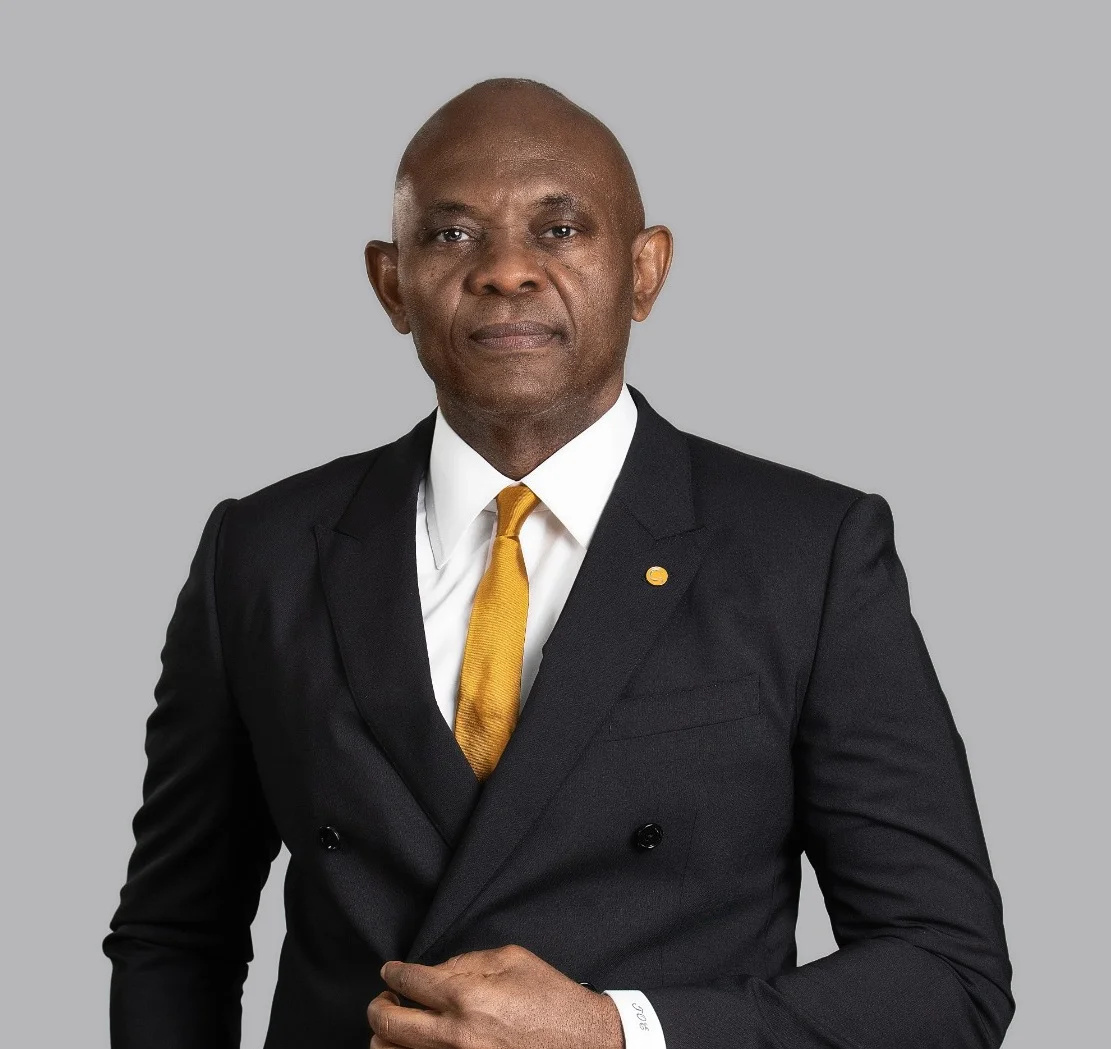
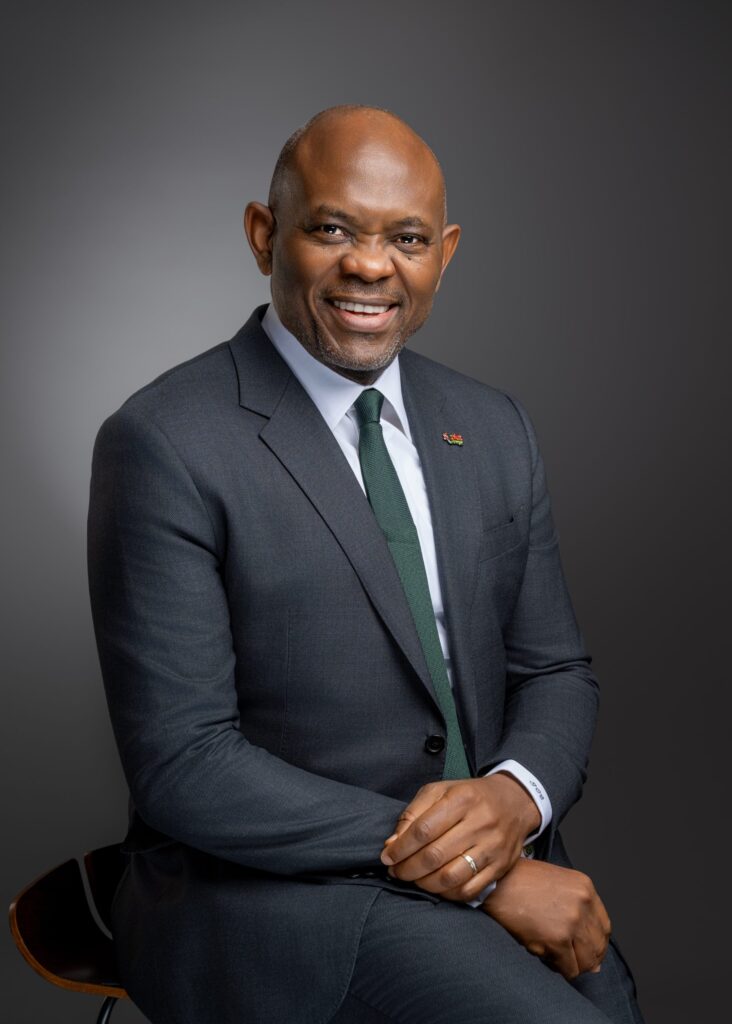
A tenure cap moves a person. It does not necessarily move power. On 21 August, Nigeria’s twelve-year limit on non-executive directors ends Tony Elumelu’s chairmanship of UBA — the second time the same central bank has removed him from the same bank. His successor is the former group chief executive of Elumelu’s own holding company. Five months later he takes the chair at Seplat Energy, where his group is now the largest shareholder. The trajectory is remarkable. The doctrine he built around it deserves separating from it.
| Born | 22 March 1963, Jos, Plateau State |
| Took over the bank that became Standard Trust | 1997, aged 34 |
| Merged with UBA | 2005, during Nigeria’s bank consolidation |
| Removed as CEO by CBN tenure rule | 2010 |
| Heirs Holdings and the Tony Elumelu Foundation founded | 2010 |
| Foundation commitment, 2015 | $100m — 10,000 entrepreneurs in 10 years |
| Businesses funded to date | 27,000+, across 54 countries |
| UBA chairmanship | 2014–2026 (12-year cap reached) |
| Leaves the chair | 21 August 2026; Emmanuel Nnorom succeeds |
| UBA footprint | 20 African countries, 21m customers |
| Seplat stake acquired by Heirs Energies | 20.07%, c. $500m, financed with Afreximbank |
| Seplat share price since | +80% |
| Net worth estimates | $2.1bn–$3.2bn |
Anthony Onyemaechi Elumelu was born in Jos in 1963 and started at the bottom of Nigerian banking.
The break came in 1997. At 34 he assembled an investor group to take over Crystal Bank, a failing institution, and renamed it Standard Trust. The bet was not on building a bank but on recovering one — a damaged licence and a damaged balance sheet, bought cheap.
It returned to profit. Then the regulator handed him the decisive opening.
In 2004 the Central Bank of Nigeria raised minimum bank capital from ₦2bn to ₦25bn. Of eighty-nine banks, roughly twenty would survive. Standard Trust merged with the older, larger United Bank for Africa in 2005, and Elumelu ran the combined institution.
That sequence is the most transferable thing in this profile, and it is worth stating plainly for a region where several countries are now raising bank capital requirements: a recapitalisation mandate is not something you endure. It is something you play. The banks that anticipate it choose their partner and run the merged entity. The banks that wait are absorbed.
Removed, twice
In 2010 the CBN capped chief executive tenure in banking. Elumelu left UBA at 47.
He founded Heirs Holdings and the Tony Elumelu Foundation that same year, and returned to UBA in 2014 — no longer as an executive, but as chairman of the board.
On 6 July 2026, UBA announced he would leave that chair on 21 August, at twelve years: the same central bank caps non-executive tenure too. The same man, removed from the same institution, by the same authority, sixteen years apart.
One detail of the succession is worth noting without over-reading it. Emmanuel Nnorom, a long-serving non-executive director of UBA, is also the former group chief executive of Heirs Holdings and a former chief executive of Transcorp. African financial press read the appointment as continuity rather than a change of direction.
Nothing improper follows from that. Governance rules address tenure, not prior professional association, and Nnorom has sat on the UBA board for years. But it illustrates a general point worth carrying into any market: tenure caps move people. What actually determines control is the shareholding structure and the board’s professional lineage.
From banking to barrels
What Elumelu built outside UBA now matters more than what he chaired inside it.
Heirs Holdings controls Transcorp, Nigeria’s largest listed conglomerate — power generation at Ughelli and Transafam, hospitality through the Transcorp Hilton in Abuja — alongside insurance, health, real estate and technology.
Energy defines the recent period. After acquiring the OML 17 oil block, Heirs Energies bought Maurel & Prom’s 20.07% of Seplat Energy in December 2025 for around $500m, financed in part by Afreximbank, becoming the largest shareholder in Nigeria’s leading independent producer. Elumelu joined the board in January 2026 and takes the chair in January 2027. The share price has risen about 80% since.
Readers of this series have seen this shape before. In portrait three, a French group sold its Cameroonian mills to a local industrialist. Here a French company sells its Nigerian oil stake to a local group. The withdrawal of Western operators from West Africa is releasing assets; the question in both cases is whether local capital can finance the purchase.
The answer here is explicit and it is not about the entrepreneur. It is about the lender. Without Afreximbank, this asset goes to an off-continent fund.
Three things to say about africapitalism
Elumelu is best known for a doctrine he has promoted for fifteen years: that Africa’s private sector — not aid, not the state — should be the engine of the continent’s development.
Three objections belong in any honest account of it.
It cannot be falsified. Africapitalism holds that long-term private investment produces collective prosperity. Any profitable investment can be presented as confirmation. A proposition that cannot be disproved is not an economic theory; it is a communications frame. That does not make it wrong. It means it is not demonstrated by the returns of the person asserting it.
The foundation’s arithmetic needs care. The Tony Elumelu Foundation reports more than 27,000 businesses funded across all 54 African countries, against a $100m commitment announced in 2015 for 10,000 entrepreneurs over ten years. Those two numbers do not divide into each other: later partnerships with international institutions co-fund the expansion. Individual seed amounts are modest relative to what a growing business needs, though training and mentoring come with them, and successful applicants remain a small fraction of those who apply. The programme is real and its demonstration effect is large. It substitutes for neither venture capital nor bank credit.
Proximity to the state cuts both ways. Several of the group’s major assets came from privatisations — the Transcorp Hilton, sold in 2005 with the certificate of discharge issued in 2021, and the Ughelli plant — through processes run by Nigeria’s National Council on Privatisation. No impropriety is alleged here. But a group that grows partly by acquiring public assets and operating regulated concessions necessarily maintains a close relationship with the state, and that relationship is a risk factor as much as an advantage.
Read from Douala or Libreville
A regulatory reform is a window, not a constraint. Nigeria’s 2004–05 consolidation eliminated two-thirds of the sector and Elumelu emerged running a pan-African group. Several CEMAC states are now raising minimum capital. The question facing any bank chief executive there is not whether they survive it, but whether they choose their partner or get chosen.
Tenure caps move people, not always power. A time limit is necessary. It is not sufficient. Control follows ownership and relationships.
The financing of Western divestment is decided in African banks. Majors and European groups are exiting; the assets are in play. An economy without a development bank able to carry a nine-figure transaction watches those deals pass.
And separate the record from the doctrine. Elumelu built a substantial group and a foundation that has reached tens of thousands of entrepreneurs. He also built a philosophy that renders both automatically virtuous. Both facts can hold without the second following from the first, and holding them apart is a discipline — for entrepreneurs and investors alike.
Tomorrow: Bethlehem Tilahun Alemu, founder of soleRebels, and what happens after the magazine cover.