


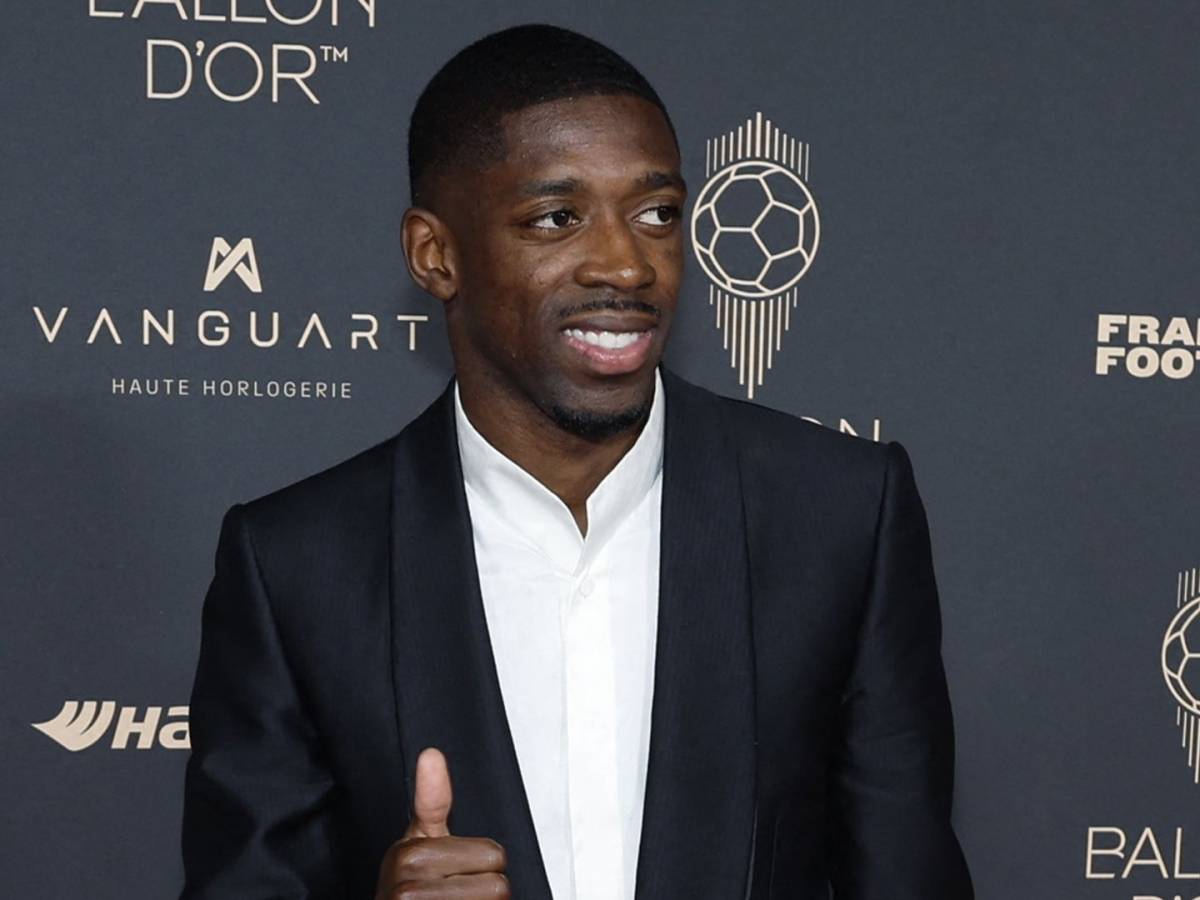
For the best part of a decade, Ousmane Dembélé was football’s most tantalising unfinished sentence — all gift, few moments. Then came a June night in Boston, three goals, and the unmistakable sense that a career had finally caught up with its talent.
On 26 June 2026, against Norway, Ousmane Dembélé did something he had never done in a France shirt: he scored a hat-trick. He opened the scoring inside seven minutes, then kept going, fed by a surgical Kylian Mbappé, until he had three goals before half-time. France won 4-1, Désiré Doué adding the fourth. By the final whistle, Dembélé had joined a club of just three: he became only the third Frenchman to score a World Cup hat-trick, after Just Fontaine in 1958 and Mbappé in 2022.
The numbers around the moment make it sharper still. Four goals leave him level with Mbappé as the tournament’s leading scorer. France finished the group stage with three wins, ten goals scored and two conceded — their best opening to a World Cup since the triumphant summer of 1998. Top of their group, Les Bleus now meet Sweden in the round of 32 on 30 June. Asked about his own performance, Dembélé did what he always does and deflected: the win mattered, the focus stays. The debate over whether he should even start is, mercifully, finished.
The long road from Évreux
To understand why three goals felt like more than three goals, you have to go back to Vernon, in Normandy, where Dembélé was born in 1997 to a Malian father and a Senegalese-Mauritanian mother. He grew up in Évreux, in one of the town’s tougher neighbourhoods, learning the game on local pitches and in futsal halls against bigger, older boys. Those who coached him remember a slight, unremarkable child with one extraordinary feature. “He was skinny, small, not muscular, not very fast,” one of his youth coaches told FIFA. “But technically… I’d never seen a kid so gifted, and I haven’t since.”
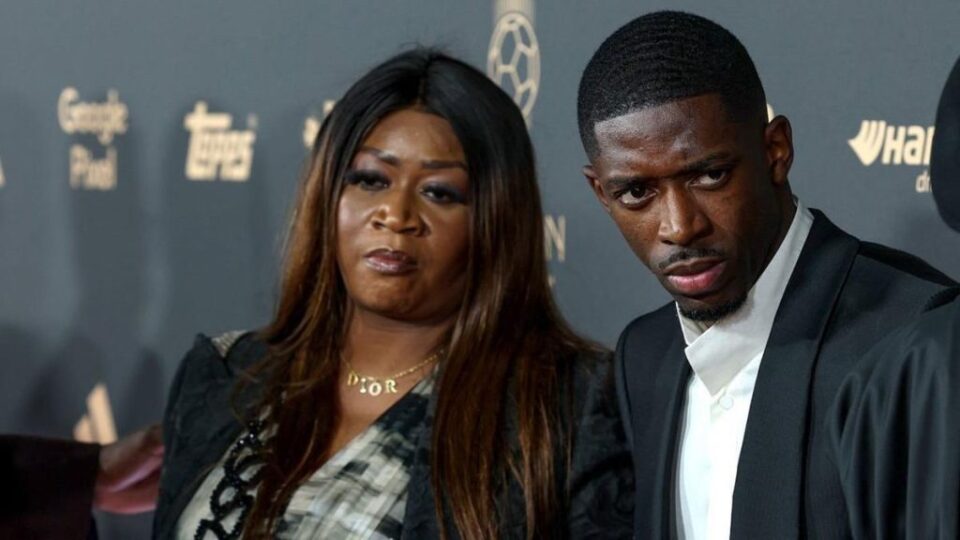
Rennes spotted him at thirteen. His mother, Fatimata, moved the whole family to Brittany to make it possible — a sacrifice he has never forgotten. One full professional season there, in 2015-16, was enough to announce him: twelve goals, five assists, and the league’s young player of the year award. Dortmund came next, and with it a German Cup, a goal in the final, and a reputation as one of Europe’s brightest prospects.
Then came the leap that nearly broke him. In 2017, Barcelona paid around €105 million for him — up to €145 million with add-ons — to replace Neymar, making him the second most expensive footballer in history at the time. But the Catalan years were swallowed by injury: close to 120 matches missed across six seasons, the equivalent of two whole campaigns. Three La Liga titles came and went, yet the verdict hardened. Too fragile, too inconsistent, perhaps a talent quietly going to waste.
His return to France in the summer of 2023 changed everything. At Paris Saint-Germain, moved infield by Luis Enrique, freed of the injuries and handed real responsibility after Mbappé’s departure, Dembélé erupted. The 2024-25 season became his rebirth: thirty-five goals and sixteen assists in fifty-three matches, comfortably the best of his career. The fragile boy from Évreux had become, at twenty-eight, the best player in the world.
The trophies finally came
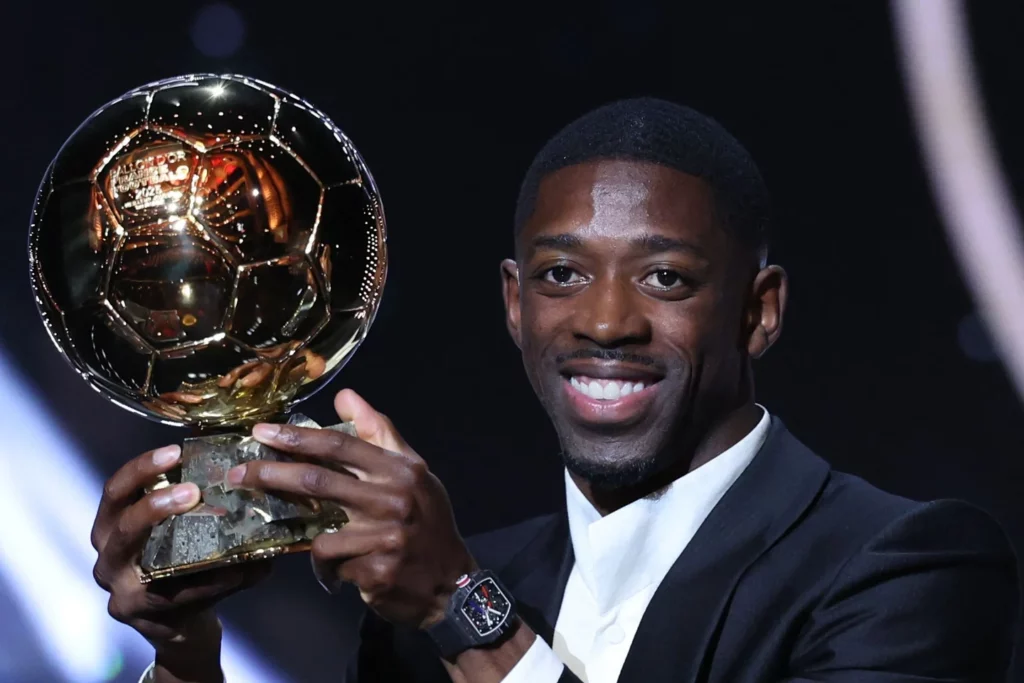
On 22 September 2025, Dembélé lifted the Ballon d’Or, finishing ahead of Lamine Yamal and Raphinha, and adding FIFA’s The Best award and UEFA’s player of the season for good measure. The individual honours crowned something that had, first and foremost, been collective.
With PSG he has won almost everything, twice over. The 2024-25 season delivered a historic quadruple, including the club’s first ever Champions League, sealed with a thunderous 5-0 against Inter. A year later, in Budapest, PSG beat Arsenal in the final — 1-1, then 4-3 on penalties — to keep their crown, with Dembélé scoring the equaliser from the spot to force extra time. In doing so, Paris became the first French club to win two European Cups, and only the second team to defend the title in the modern era, after Real Madrid.
With France, the story runs just as deep. World champion in 2018 at twenty-one, a beaten finalist in 2022, he had long searched for the decisive edge in a national shirt that he found so easily in club colours. The hat-trick against Norway looked very much like the night those two stories finally met.
The price of a phenomenon
The figures are striking. As of June 2026, Transfermarkt values Dembélé at €100 million, placing him among the fourteen most valuable players on the planet and fourth among Frenchmen — remarkable for a 29-year-old whose injuries had long suppressed his price. PSG bought him for roughly €50 million in 2023 by triggering his release clause; his market value has since doubled.
Under contract until June 2028, he earns an estimated €18 million gross a year — around €350,000 a week — which makes him the best-paid player in Ligue 1 and one of the twenty highest earners in the game. With endorsements, chiefly a deal with Adidas, his annual income approaches €20 million, and his personal fortune is put at about €35 million.
What he has returned is harder to pin to a single number, and honestly so: a player’s worth is never just a ledger line. At PSG it has come in trophies, above all those two consecutive Champions Leagues, with the substantial UEFA prize money and commercial glow that follow. His season and his Ballon d’Or helped make Paris the most valuable squad in the world. And in pure footballing terms, thirty-five goals and sixteen assists in a single campaign is a contribution to fifty-one goals. To France, the return is measured differently still — in prestige, in results, in the lift a World Cup hat-trick gives a whole country. That part resists arithmetic, and it may be where his value truly lies.
The quiet generosity
If one thread runs through his life, it is a discreet loyalty to where he came from. UEFA, reviewing the season, described him on the pitch as “an altruistic focal point” who brings out the best in those around him. The phrase fits off it too.
After the 2018 World Cup, by several accounts, he gave his entire bonus to build a mosque in his mother’s village. In 2020 he joined a fundraiser for healthcare workers and charities during the pandemic. In early 2023, while still at Barcelona, he stepped in to help his boyhood club, Évreux FC 27, when financial trouble threatened it — a donation reported at around €100,000, and not his first. “Ousmane has always supported the club,” its directors said, calling it “the path of humility.” Évreux has since approved naming a street after him. Most recently, at the start of 2026, he funded sanitation projects in his ancestral village in Mauritania and announced a visit to discuss further development work with local leaders.
A PSG forward rescuing a fourth-tier club; a Ballon d’Or winner worrying about a village’s clean water. Behind the superstar there is still the kid running to the bakery in Évreux. That, in the end, may be his finest achievement — to have changed everything without ever changing himself.
What comes next
The hat-trick in Boston is unlikely to be the end of anything. France face Sweden on 30 June in the round of 32 of a World Cup spread across the United States, Canada and Mexico, and Dembélé arrives at it, at last, as the player he always carried inside: decisive, a leader, a Ballon d’Or winner who has lost none of his humility. From Évreux to Boston, the road runs on.