


Kenya had never won a Grand Prix at the Cannes Lions. This year it did — with a dairy brand that gives its cows the right to call in sick. The idea fixed a stubborn economic problem for smallholder farmers, and crowned a breakthrough week for creativity across the continent.
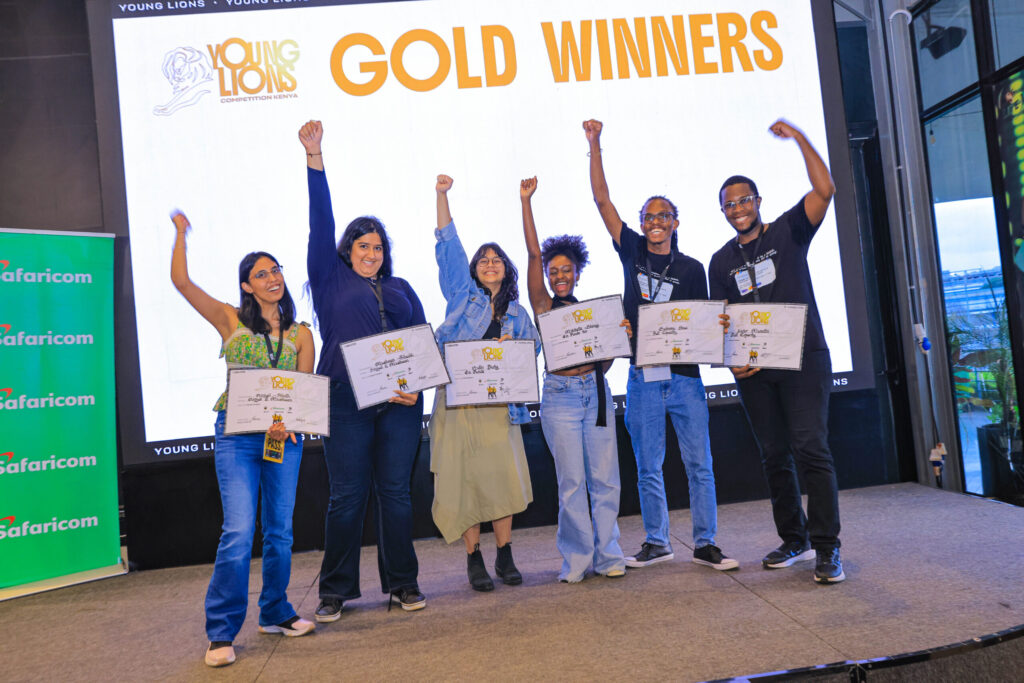
On 26 June 2026, the Cannes Lions International Festival of Creativity closed its latest edition by awarding its final and most coveted trophies. Among them was a first: Kenya took home its debut Grand Prix, winning the top prize in the Sustainable Development Goals Lions, the category that rewards work advancing the United Nations’ global development agenda.
The winning campaign, Paid Sick Leave for Cows, was created by the Nairobi agency The Partnership Agency for the dairy brand Too Good. It rose above 289 entries by doing more than raising awareness — it rewired the economics behind a public-health problem.
The premise sounds whimsical; the problem it solves is anything but. Kenya has one of the highest rates of milk consumption per person in sub-Saharan Africa, and around 80% of that milk comes from smallholder farmers. When a cow falls ill and is treated with antibiotics, its milk cannot legally be sold for several days while the residue clears — a sensible rule that leaves farmers with an impossible choice: lose days of income, or sell milk that isn’t safe to drink. One sample in four, it emerged, tested positive for antibiotics.
Rather than lecture farmers, Too Good repaired the system that trapped them. Its campaign reclassified dairy cows as workers entitled to sick leave: a farmer reports an ailing animal by WhatsApp and is compensated for the milk that cannot be sold. Some $27,000 was returned to producers, protecting their livelihoods and public health in a single move.
The jury, chaired by Kazoo Sato of Earth Centric Design, judged each finalist against three questions: does it drive real change, can it transform the system at the root of the problem, and will its impact outlast the campaign itself? For the panel, Paid Sick Leave for Cows passed all three. What set it apart, jurors noted, was its ability to turn an apparent trade-off into shared value — for people, business and animals alike — through a model that can be replicated well beyond Kenya.
The victory did not stand alone. Throughout the festival, the continent confirmed its ascent on the global creative stage. Leo was named Regional Network of the Year for sub-Saharan Africa, while South African agencies — Joe Public in Johannesburg, Accenture Song and Publicis Africa among them — collected Lions across entertainment, strategy and craft. African expertise shaped the verdicts, too: Gugu Mthembu, chief marketing officer of South Africa’s Telkom, chaired the Creative Business Transformation jury.
Africa’s resonance even reached the stage from South America. The Glass: The Lion for Change Grand Prix went to Brazil for Nigrum Corpus, a multimodal medical textbook that treats racism as a disease and retrains medicine to recognise and care for Black bodies. Endorsed by Brazil’s highest medical authority and the WHO, it could, its creators estimate, reach some two billion people.
For business leaders, the message from the Croisette is unambiguous. Creativity is no longer a finishing touch but a genuine lever for growth and transformation. By turning a health constraint into a new income stream for its farmers, Kenya proved that the most powerful innovation is not always technological — sometimes it is simply a different way of looking at a problem. This year, Africa showed the way.