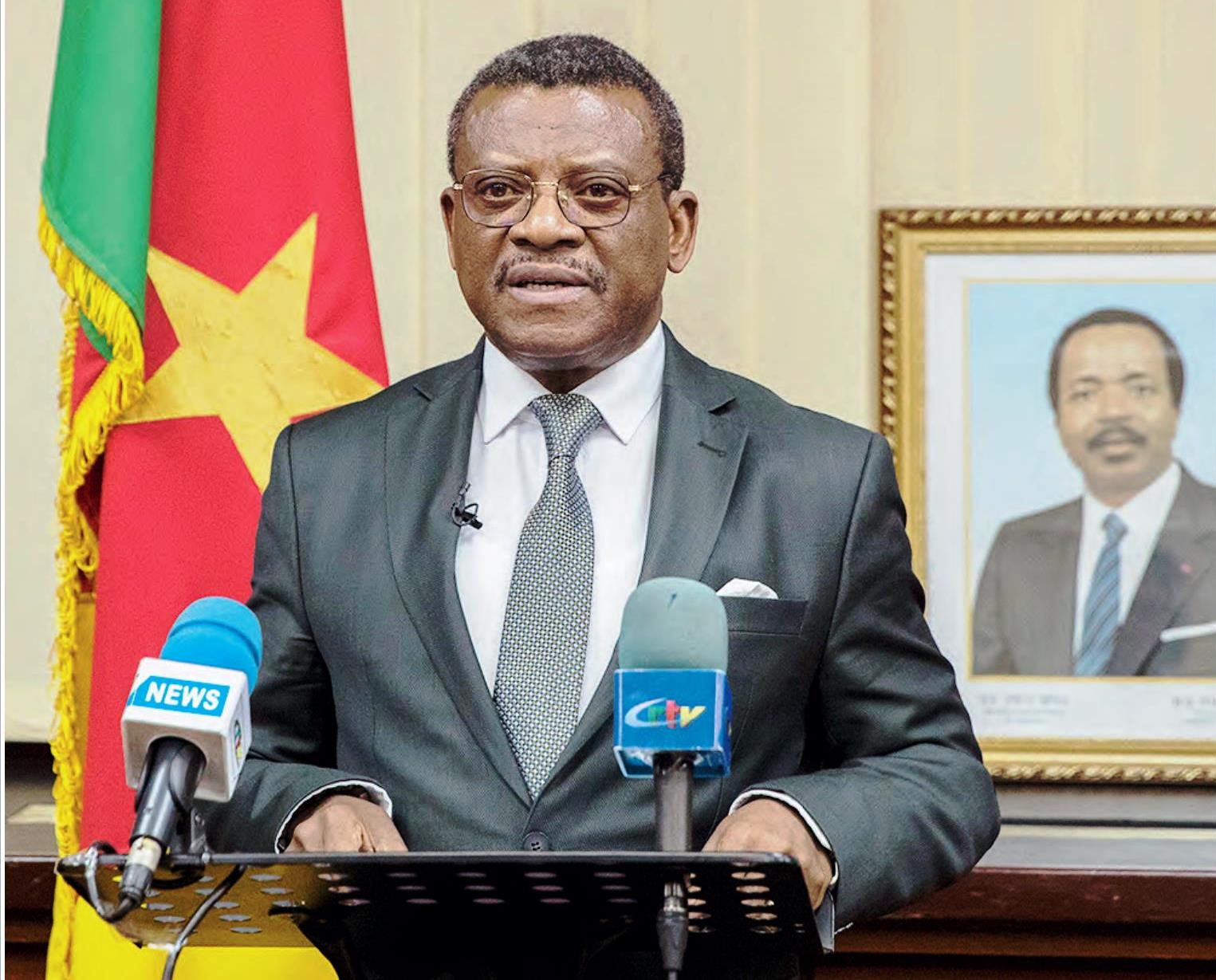
The saga of the scanning project at the Port of Douala has taken a new and unexpected turn, one that is as embarrassing as it is for the Cameroonian government. This Thursday, January 29, 2026, Prime Minister Joseph Dion Ngute ordered the management of the Port Authority of Douala to maintain the contract with the Société Générale de Surveillance , directly contradicting instructions given a week earlier by the Presidency. This institutional cacophony reveals the power struggles at the highest levels of government.
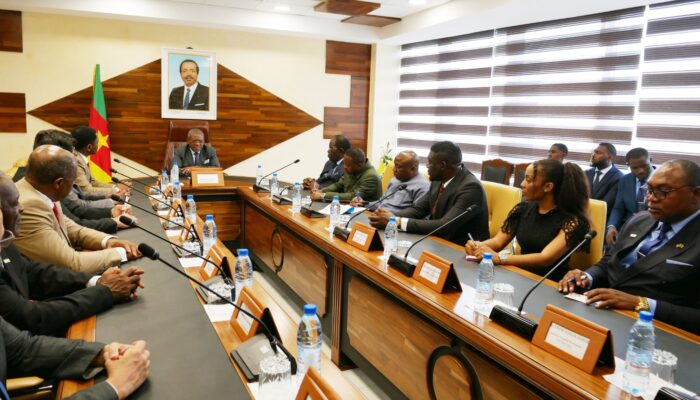
Following a meeting at the Étoile building in Yaoundé with all stakeholders, Joseph Dion Ngute issued a categorical ruling. The scanning contract signed with SGS must be maintained. According to the head of government, it is not within the purview of the Port Authority of Douala to unilaterally terminate a commitment made by the Cameroonian state.

The Minister of Transport, Jean Ernest Massena Ngalle Bibehe, clarified the government’s position. The initial contract, signed in 2015, stipulated a ten-year term starting from the installation of the fourth scanner. Since this scanner was installed in 2022, the agreement was therefore valid until 2032. However, the Port Authority of Douala maintained that the contract had expired, hence the dispute
The problem in this affair lies in one date: January 22, 2026. Seven days before the Prime Minister’s instructions, the Port Authority of Douala officially announced that it had received firm directives during a meeting at the Presidency’s General Secretariat. Technical advisor Jean Mauger Ayem reportedly chaired this meeting, during which clear instructions validated the replacement of SGS by the new operator, Transatlantic D
How can two state bodies issue such opposed instructions a week apart? This embarrassing question highlights either a total lack of coordination between the presidency and the prime minister’s office, or an underground war for control of a lucrative market.
Because behind these institutional contradictions lies a colossal financial stake. Scanning goods at the port of Douala represents tens of billions of CFA francs. Each container passing through the scanners generates substantial revenue. Controlling this market means having access to a considerable financial windfall.
Transatlantic’s involvement further complicates matters. This new operator had reached an agreement with the Port Authority of Douala to replace SGS. However, according to Minister Ngalle Bibehe, this agreement was illegal. The Port Authority lacked the authority to conclude such a contract without the approval of its technical supervisory body, its financial supervisory body, and the Prime Minister
This affair reveals an embarrassing reality of Cameroonian institutional functioning. When the presidency and the prime minister’s office give contradictory instructions, who is to obey? The Autonomous Port of Douala finds itself caught between two authorities that are supposed to speak with one voice.
Economic operators, for their part, remain in complete uncertainty. Should SGS continue its operations? Can Transatlantic set up shop? The investments already made by the two companies risk turning into endless legal battles if this cacophony persists.
Beyond the specific case of scanning, the entire credibility of the Cameroonian state is tarnished. How can serious investors be attracted when the country’s highest institutions publicly contradict each other on contracts worth tens of billions?
The saga of the Port of Douala is likely far from over. Caught between presidential directives and the Prime Minister’s injunctions, the Port’s management will have to choose sides. Whatever the outcome, this choice will reveal the true balance of power at the highest levels of the Cameroonian state.
In a state where the presidency and the prime minister’s office give contradictory instructions, who really holds the power of decision in Cameroon?