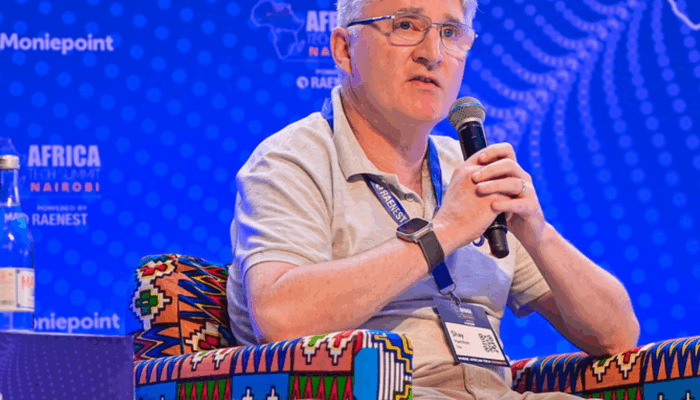



The money hasn’t left Africa. It has simply become much harder to convince. Institutional investors are no longer asking whether the continent holds promise; they want to know how that promise is being captured, measured and converted into liquidity. Two fund managers — Anza, based in Johannesburg, and Farmties Capital — agreed to describe what actually happens in a fundraising room today. Their diagnoses converge, and neither is flattering: a compelling thesis opens a door. It does not sign a cheque.
1. The end of the frontier bet
For the better part of a decade, a story was often enough. Demographics, urbanisation, leapfrogging technology — assemble the narrative, raise the fund. That period is over. Both firms are clear that LP appetite for Africa has not disappeared; it has matured. What has changed is the nature of the scrutiny. Investors are no longer assessing a conviction. They are auditing an execution capability.
Farmties Capital reports markedly heightened selectivity, organised around three preoccupations: capital preservation, demonstrable execution capacity rather than intended capacity, and visible pathways to liquidity. The allocation consequence is direct — appetite is shifting away from earlier-stage equity and towards private credit and revenue-linked strategies, particularly where impact and commercial outcomes reinforce one another instead of competing.
“LPs are no longer asking whether Africa has potential.” — Anza
The follow-on question, as Anza frames it, is how that potential is being systematically captured — and “systematically” is doing the work in that sentence.
Anza points to a checklist that has now standardised across the market: clear differentiation and genuine thesis depth; exit visibility; blended capital structures capable of crowding in commercial LPs without diluting return discipline; and real local presence paired with global connectivity to acquirers and follow-on capital.
The underlying message is identical from both vantage points. African risk is no longer an exotic proposition to be sold. It is a parameter to be documented.
2. Investor-readiness is a discipline, not a deck
This is probably the most uncomfortable point for a large number of managers. The two firms phrase it differently, but they are saying the same thing: the thesis earns the first meeting, the infrastructure earns the commitment.
“LPs expect clarity on governance, fund economics, risk frameworks and portfolio construction.” — Farmties Capital
And they expect it from day one, not once diligence begins. Three disciplines emerge as the real markers of maturity.
Data room discipline. Real-time access to governance documents, valuation policies, impact frameworks, compliance manuals and portfolio data is no longer a competitive edge; it is a precondition. An incomplete data room is now read as a governance signal, not an administrative delay.
Documentary consistency, figure by figure. The PPM, the financial model, the impact thesis and the track record must align numerically and strategically. Use of proceeds and return drivers need to be expressed in specific language rather than stated intent. An inconsistency between two documents costs more than a modest performance record that is well explained.
Proactive risk disclosure. Currency, regulatory and liquidity risk: raising these before being forced to builds credibility. An LP should be able to grasp three things within minutes — why the fund exists, which gap it fills, and how it creates return asymmetry.
3. Where the market is heading
Asked where the opportunity is moving, both firms describe the same structural story from two different floors of the capital stack.
Farmties observes growing interest in private credit, structured finance and hybrid models that pair debt with downside protection. Sector attention is concentrating on climate-resilient activity: agribusiness, food systems and supply-chain infrastructure. LPs are focusing on real-economy impact, unit economics and trade opportunities, with materially stronger expectations around measurable ESG integration.
Anza adds a structural point about the capital stack itself: blended structures are becoming decisive in early-stage African venture, de-risking commercial LP participation and rewarding managers who genuinely understand how to stack capital rather than simply list their funders.
Two further factors deserve more attention than they usually receive. The first is artificial intelligence, which Anza flags as an increasingly decisive determinant of fund performance — now embedded in deal sourcing, due diligence, LP engagement and portfolio monitoring. The second is currency arbitrage, emerging as a competitive advantage in African markets where FX management often separates a flattering gross return from a disappointing net one.
The takeaway
Strip away the vocabularies — capital preservation on one side, risk-adjusted strategy on the other; structured finance here, blended capital there — and what remains is a portrait of a single investor: more selective, considerably more literate in African market structures, and far less willing to treat impact and unit economics as separate conversations.
Investor-readiness now means showing your work everywhere at once: in governance, in the data room, in risk disclosure, in the narrative. And above all, proving rather than promising. The manager who raises next is not the one who tells the African story best. It is the one who can demonstrate that the fund turns that potential into a repeatable, de-risked return.
This fireside chat was conducted ahead of AFSIC – Investing in Africa 2026, the continent’s flagship investment conference, which brings together fund managers, LPs and DFIs. 13–14 October 2026 | Park Plaza Westminster | London | www.afsic.net
The participants Saskia Nysschens, COO, Anza — an authorised Financial Services Provider (FSP 53884) based in Johannesburg, investing blended capital, equity and debt into early-stage African startups across food technology, clean technology and digital technology in Southern and East Africa. Oluwadara Adekunle, Founder, Farmties Capital — an investment firm dedicated to boosting trade between Africa and global markets, particularly North America, focused on revenue-generating agricultural SMEs through tailored financing, technical assistance and market access.