


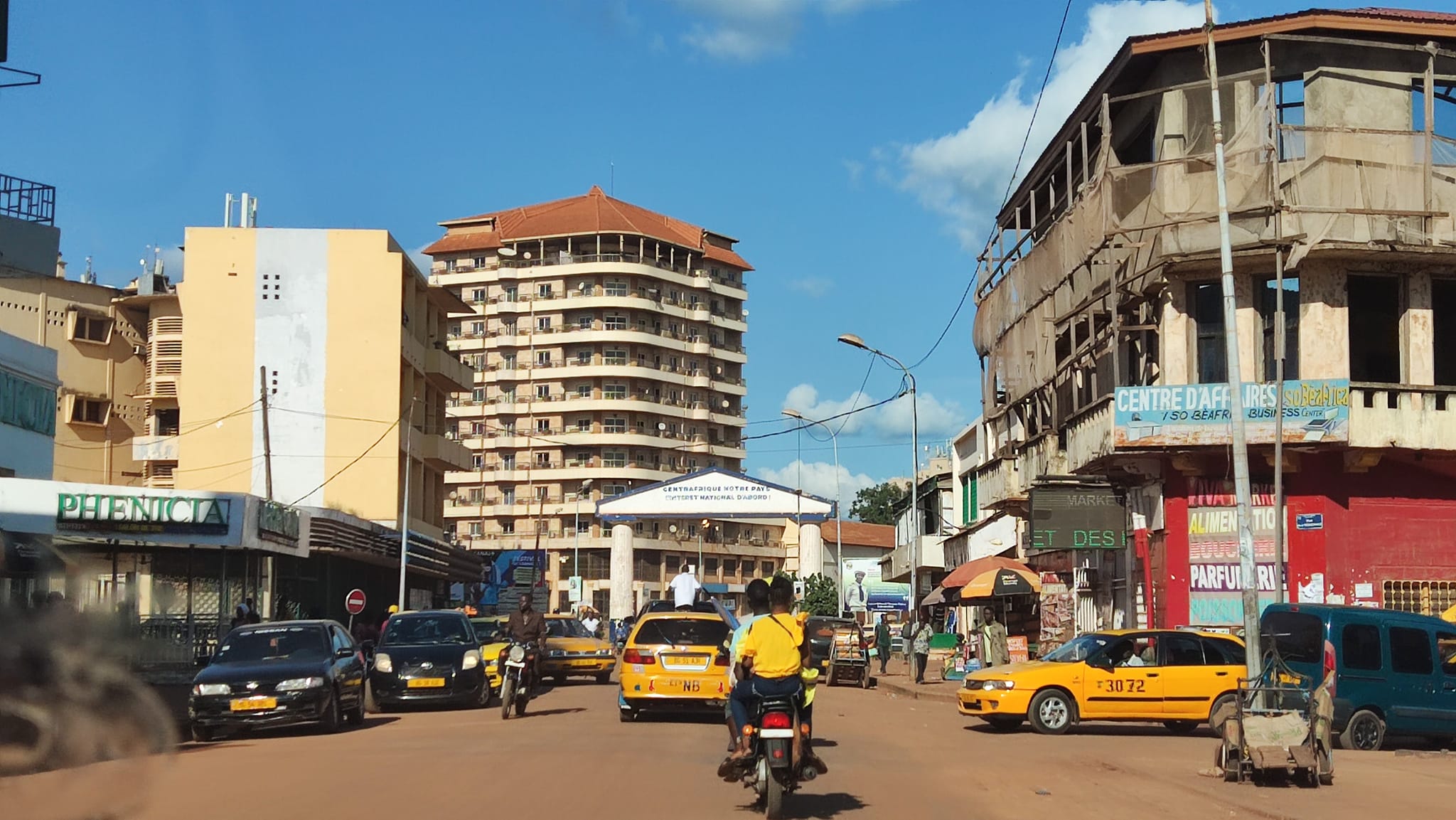
Financial mobilization and economic partnership initiatives have been multiplying in the Central African Republic for several months. Following the Casablanca International Roundtable, which secured financial commitments for the 2024-2028 National Development Plan, the country is seeking to translate these promises into tangible achievements. The Investment and Partnerships Forum, recently held in Bangui, is part of this dynamic of turning words into action.
The Forum’s Commissioner General, Maxime Kazagui, former minister and government spokesperson, gave an enthusiastic assessment of the two days of discussions held on October 22 and 23, 2025. In his executive report dated October 30, he described the event as a “successful and historic business meeting” that benefited from “active participation, constructive contributions, and great collective energy.” The FIP’s explicit ambition was to go beyond Casablanca by transforming “these commitments into concrete projects, strengthening dialogue between the government, the private sector, and technical and financial partners.”
For forty-eight hours, Bangui became “the capital of economic dialogue and strategic partnership,” according to the report. Organizers reported hearing “testimonies from committed stakeholders, new ideas, concrete experiences, and above all, a shared commitment to action to accelerate growth, create jobs, and build a more resilient and inclusive economy.”
The first day, dedicated to “confidence and recovery,” provided an opportunity to review the Casablanca Roundtable and present the commitments and agreements signed. Participants highlighted the post-TRI roadmap, described as a “true compass for turning promises into achievements.” Discussions focused on the business climate and priority reforms, “with a particular emphasis on Public-Private Partnerships (PPPs), transparency, and institutional credibility.” The issue of financial inclusion also took center stage, with presentations from Ecobank and Orange Money on their role “in boosting the real economy and promoting financial inclusion.”
The second day focused on “productive growth and the drivers of sustainable development.” Sectoral ministries presented “priority value chains – agriculture, mining, and forestry.” A strategic dialogue on “key success factors for Special Economic Zones (SEZs)” took place, including the participation of the private sector represented by GICA. Discussions also covered “human capital development, skills enhancement for MSMEs, and the structuring of local subcontracting.” The National Investment Guarantee Fund (FNGI) was discussed “as one of the solutions for business access to financing and financial inclusion.”
Three main messages emerged from these discussions. First, “the need to strengthen trust among stakeholders – investors, the government, and the private sector – through transparency, stability, and adherence to commitments.” Second, “the urgent need to train, structure, and support our local businesses,” because “the success of Central African development will depend on the growth of a competitive national private sector, integrated into regional and international value chains.” Third, “the shared conviction that sustainable growth must be inclusive,” with each investment project “creating opportunities for young people, women, and entrepreneurs, and contributing to balanced development across the country.”
International participation was significant. Canada, France, Cameroon, the United Kingdom, Chad, Tanzania, and the DRC sent delegations. International institutions such as the World Bank, the IMF, BADEA, UNDP, AfDB, and the US Embassy participated, alongside national institutions like ACFPE, CAPMEA, CCIMA, GICA, GUFE, and UNPC. More than forty speakers from the private sector, banks, education, expertise, consulting, and representatives of groups and associations addressed the participants during the workshops and conferences.
The report indicates that “around ten partnership projects were established during the Forum and will be presented as they progress.” To ensure the continuity of this momentum, several measures are planned: “the implementation of a mechanism to monitor the recommendations of the FIP, jointly managed by the Ministry of Economy, Planning and International Cooperation and private sector stakeholders,” “the consolidation of the financial and technical partnerships initiated in Casablanca,” and “the preparation of the 2026 FIP Forum, which will allow for an assessment of progress made and the strengthening of synergies between stakeholders.” Maxime A. Kazagui emphasizes that “this forum is therefore not an end in itself, but a starting point for a new phase of implementation and investment.”
In his remarks, the Commissioner General gave “special recognition to His Excellency, the President of the Republic, for his leadership and vision for economic transformation.” He also commended the Prime Minister and the entire government, “particularly the Minister of Finance and Budget, who believed in this project from its inception, as well as the Ministers of SMEs and Trade, who supported him.” He thanked the technical and financial partners, “especially SCI Capital and I-Compete, as well as the World Bank, the IFC, the AfDB, BADEA, UNDP, and all the other institutions present.”
Kazagui concluded his report by stating that “the success of this Forum is first and foremost due to the highly engaged guests, participants, and speakers who contributed their ideas and insights.” He added that “the FIP has demonstrated, following the events that preceded it, that the Central African Republic is moving forward confidently toward development based on productive investment, partnership, and collective effort.” The challenge now is to translate this new round of discussions into concrete achievements on the ground—the perennial challenge of this type of economic forum, where stated intentions must be translated into actual investments and job creation.


