

In six days, on 13 October, London once again becomes, for forty-eight hours, the place where part of Africa’s financing gets negotiated. The thirteenth edition of AFSIC – Investing in Africa opens at the Park Plaza Westminster Bridge with the fullest programme in its history, just as the money bound for the continent is concentrating on fewer countries and fewer deals.
There is something ironic about the setting. It is opposite the British Parliament, on the south bank of the Thames, that those looking for capital for Lagos, Nairobi, Casablanca or Douala meet those who have capital to place every autumn. AFSIC, whose acronym recalls its origins (Africa Financial Services Investment Conference), outgrew pure finance long ago. People talk mining, energy, health, agriculture and education there. Above all they come for one simple reason: to meet in two days the counterparts it would otherwise take six months and ten plane tickets to see one by one.
The organiser, Africa Events Limited, bills the gathering as the largest annual Africa investment conference held outside the continent. The phrase is its own and should be read as such. Its 2025 figures, on the other hand, offer something firmer: 54% of participants came from Africa, 38% from Europe and 5% from North America. This is not a London circle holding forth about Africa. It is African business travelling to where the investment committees sit.
What each camp is coming for
Three groups will cross paths in the corridors of the Park Plaza, and they do not want the same thing.
Entrepreneurs want cheques, not business cards. Last year more than 350 deals seeking funding were showcased on site, worth over $10 billion in total according to the organiser. The market they are addressing has changed shape. In the first half of 2026, AVCA data show that African private capital deployed $3.7 billion, 65% more than a year earlier, but across only 211 transactions, 16% fewer. Three deals above $250 million absorbed 40% of the total. The average ticket stands at $32 million, the median at $5 million.
The reading is straightforward: the money exists, and it goes to deals that are already mature. For a mid-sized company in Abidjan, Douala or Kampala, the real question of these two days is whether mid-range tickets are coming back. A whole session is devoted to them, under a title that sounds like a promise: Africa’s SME Revolution.
Fund managers are looking for backers. Fundraising reached $1.3 billion over the half-year, down 9%. Yet the number of funds closed almost doubled, from 7 to 13, and the average time to close fell from 2.7 to 1.8 years. The programme bears the mark of that anxiety. One panel is titled Why US Institutional Capital Is Reassessing Africa Now, and one networking session is reserved for American investors. The organiser itself lists among the running themes of this edition the shift from aid to investment and the rise of local capital, now that US institutional money has reviewed its allocations to the continent.
Governments come to defend their signature. Foreign direct investment into Africa fell back to about $70 billion in 2025, from $94 billion in 2024, a year inflated by a handful of outsized transactions. UNCTAD puts this in perspective: it is the third-highest level since 1990, a third above the long-term average. But it adds two less comfortable findings. The value of new projects dropped by almost a third, and flows remain concentrated in a small number of countries and sectors, led by energy, infrastructure and critical minerals. Capital from the Gulf and Asia is taking a growing share.
Hence the importance of the country summits, the political heart of the conference. Each delegation has a few hours to argue that it deserves a place in the narrow circle of chosen destinations. Sovereign ratings and local-currency bond markets, both on the agenda, will show whether the pitch has changed register.
The institutions and faces that will carry weight
One point first, out of fairness to the reader. The full list of named speakers can only be consulted in the conference app, which is reserved for registered delegates. Back in April the organiser announced more than 200 investors confirmed as speakers and is counting on over 350 in all. Its press releases highlight no head of state and no minister. AFSIC is not a political summit. It is a gathering of practitioners, where influence is measured by the size of a balance sheet rather than by protocol rank. What is public is enough to draw the map of power for these two days.
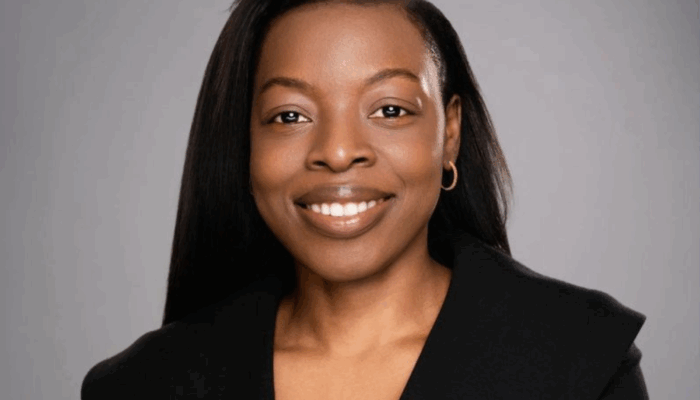
The development financiers. British International Investment, the UK government’s development finance arm, sponsors the Meet African Dealmakers evening and is bringing investors and business leaders together around a subject it considers overlooked: financing for Black-owned and led businesses in Africa. The institution will publish a mapping of that market for the occasion. Its Managing Director and Head of Africa, Chris Chijiutomi, has written the article that accompanies the session. Alongside it among the sponsors: Proparco, the private-sector arm of the French AFD group, TDB Group, the trade and development bank for eastern and southern Africa, and UNDP.
African banks and groups. United Bank for Africa and Heirs Holdings, Tony Elumelu’s investment holding company, are flying their colours, as are Rand Merchant Bank and Zimbabwe’s First Mutual. Their presence as sponsors does not tell us who will take the stage. It does tell us that the continent’s big groups no longer come to London only to ask for capital. They also come to offer it.
The fund managers. Kuramo Capital, Verdant Capital, Niofar Capital, the Dutch aquaculture specialist Aqua Spark, and South Africa’s Knife Capital and Grindstone Ventures, which arrive with a new 500 million rand fund aimed at start-ups. Eleven “Meet the Investors” sessions are scheduled, by family: debt, private equity, venture capital, infrastructure, energy, agriculture, impact, green finance, development finance institutions and US investors, not forgetting the intermediaries who put deals together.
Financial centres and state agencies. Casablanca Finance City, the Kigali International Financial Centre, Brand South Africa and the Zimbabwean agency ZIDA will be making their case. Morocco’s private equity association, AMIC, refers to a Morocco summit in preparation during the conference. More unexpected is a first investment summit devoted to Somaliland, led by the London firm Africa Legal Risk Control and its chief executive Omer Ahmed, built around the port of Berbera and critical minerals. The territory is not recognised as a state by almost the entire international community, which will give the session a reach beyond finance.
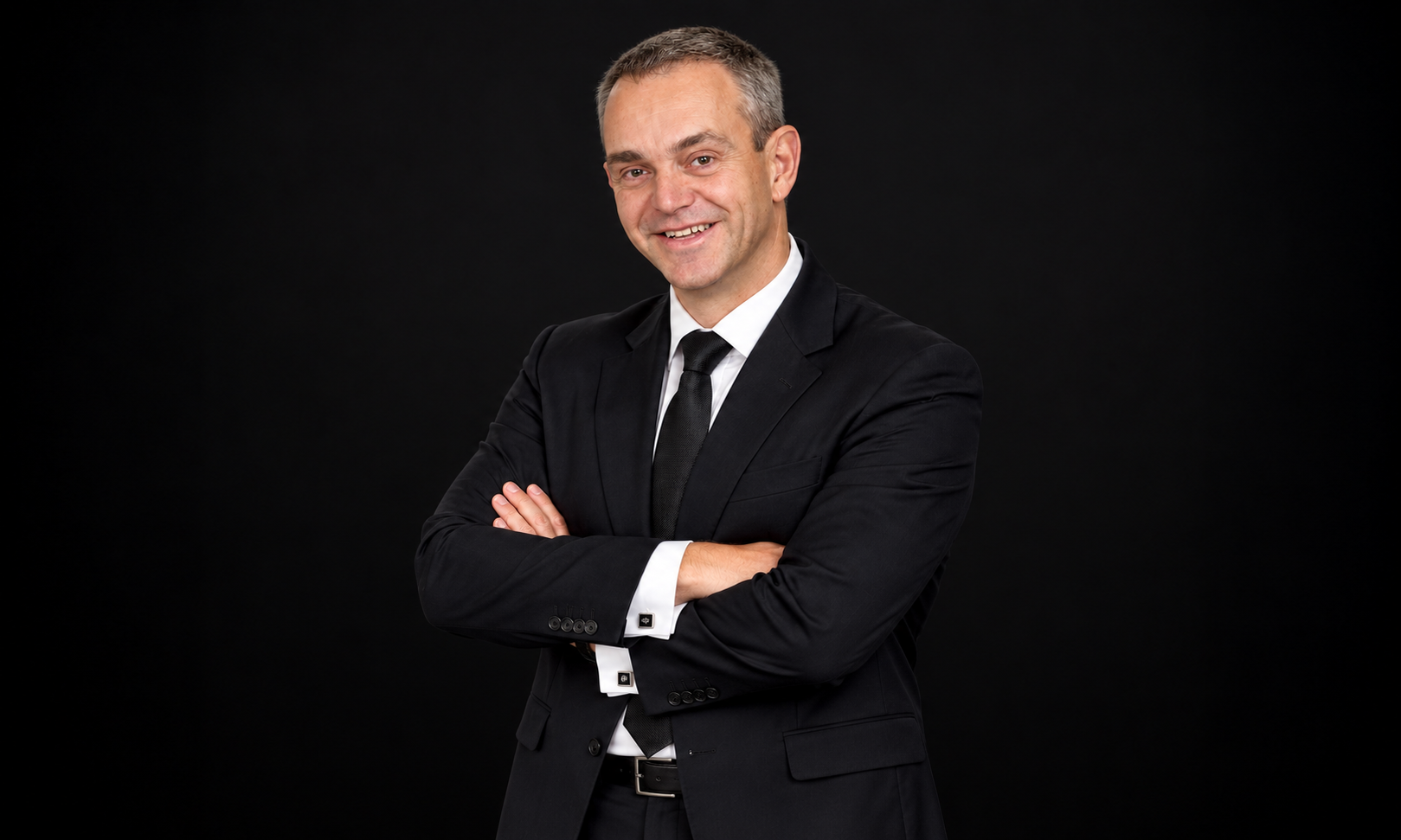
The host. That leaves the man through whom the introductions pass: Rupert McCammon, AFSIC’s founder and managing director, whose career goes a long way to explaining the philosophy of the conference.
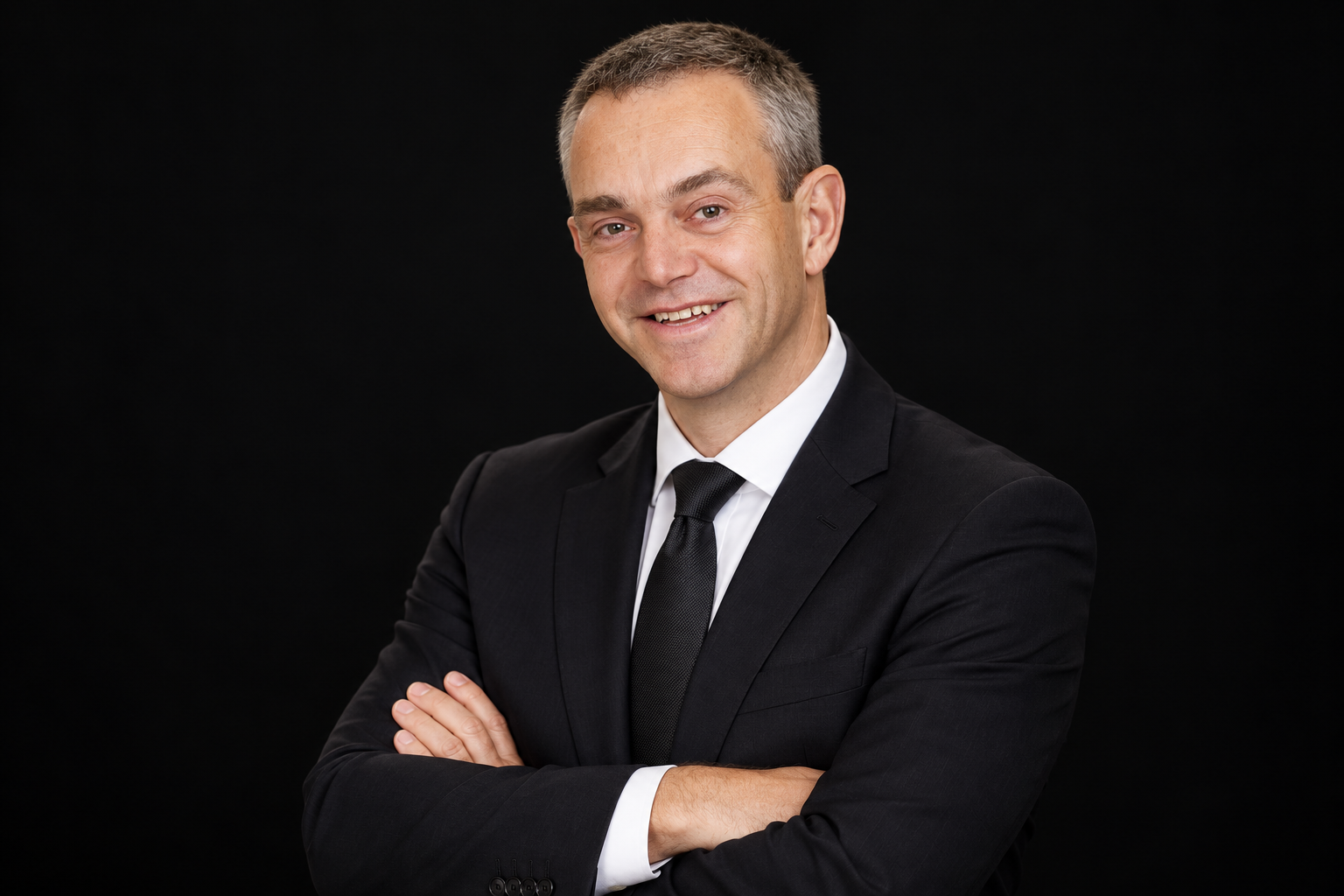
Rupert McCammon, from the Botswana Stock Exchange to Westminster
AFSIC’s founder is not a trade-show organiser who came to Africa by opportunity. According to his official biography, Rupert McCammon graduated from Cass Business School in London in 1991 with a first-class degree in banking and international finance. In the mid-1990s he was responsible for managing the Botswana Stock Exchange and the country’s only stockbroking firm, at a time when that exchange ranked among the best performing in the world. In 1998 he founded Capital Group, a financial services group he expanded in 2005 with a UK-regulated entity focused on the continent’s infrastructure, energy and resources. The business is now called African Investments Limited.
The conference was born in May 2013, a long way from Westminster: the first edition was held in Brighton, on England’s south coast, and addressed only banks, insurers and microfinance institutions. It moved to London in 2016. “Since then the event has blossomed,” he said soberly in a 2017 interview, when AFSIC was only in its fifth year. His two digital matchmaking platforms won a global partner innovation award from Salesforce in 2022.
His opening addresses are not, to our knowledge, published as transcripts. His interviews and written statements do set the tone, and it has barely shifted in ten years. For the tenth anniversary in 2023 he laid down the house rule: “Networking and focused business meetings are at the heart of business at AFSIC” (anniversary interview). In September 2025, on the eve of the twelfth edition, the same idea returned, barely reworded: AFSIC is “highly focused on the matching of live investment opportunities” (press release carried by IFC Review).
The man says little about vision and a great deal about mechanics. That is his strength, and it is also a reason for clear-sightedness: his company does not merely host those raising money, it also offers them its own capital-raising services. The host is therefore a participant in the very market he convenes.
The hard questions are on the agenda
This edition deserves credit for one thing: its programme asks its questions without sugar-coating them. Are African banks built for the next shock, between sovereign risk and capital requirements? Are their profits real or flattered? Does microfinance empower or indebt? Can fintech finally deliver durable profit? Who will control critical minerals, and who will own the power grids without which the energy transition remains a slogan?
Two of these debates tie directly into what the market is showing. On minerals, UNCTAD warns that an inflow of capital is only worth something if it comes with local processing, failing which the numbers rise without the value staying. On fintech, the AVCA data show that in the first half financials lost, for the first time in years, their place as the most-funded sector, overtaken by business services and energy. The dominant story of the past decade is changing, and it is in London that investors will say what they are replacing it with.
What to keep in mind
Three caveats are in order for anyone reading the closing press releases.
The figures are the organiser’s. The $10 billion on display is money sought, not money raised. The more than 4,300 one-to-one meetings claimed measure activity, not results. The only real test will be the number of deals signed over the following six to twelve months.
Access comes at a price. Registration costs £1,595 excluding VAT until 10 October and £2,350 on site, before the flight, the hotel and the UK visa. Speakers are neither paid nor reimbursed. For a mid-sized African company the trip runs into thousands of pounds before the first handshake. That screens candidates before investors even get the chance to.
The map is uneven. The sponsor list leans heavily towards English-speaking Africa, from Nigeria to Ghana and from South Africa to Zimbabwe, with Morocco and Mauritius as counterweights. No public agency from Central Africa appears on it to date. That says nothing definitive about who will be in the delegations, but it does say something about which countries invest in being seen. For the economies of the CEMAC zone, the question is not whether AFSIC is useful. It is why others buy a platform there and they do not.
Doors open on 13 October at 9 a.m. The speeches will last two days. The answers will be read in the funding rounds of 2027.
Key facts
| Dates | Tuesday 13 and Wednesday 14 October 2026, from 9 a.m. |
| Venue | Park Plaza Westminster Bridge, 200 Westminster Bridge Road, London SE1 7UT |
| Edition | 13th |
| Organiser | Africa Events Limited |
| Expected attendance | 1,200 to more than 1,500 delegates depending on the organiser’s own materials, more than 350 speakers |
| 2025 in numbers | More than 340 speakers, 14 country summits, 13 “Meet the Investor” sessions, more than 350 deals profiled seeking over $10 billion |
| Streams | Agriculture, banking, fintech, infrastructure, investing, power, mining, sustainable development |
| Registration | £1,595 excl. VAT until 10 October, £2,350 excl. VAT on site |
| Website | afsic.net |