

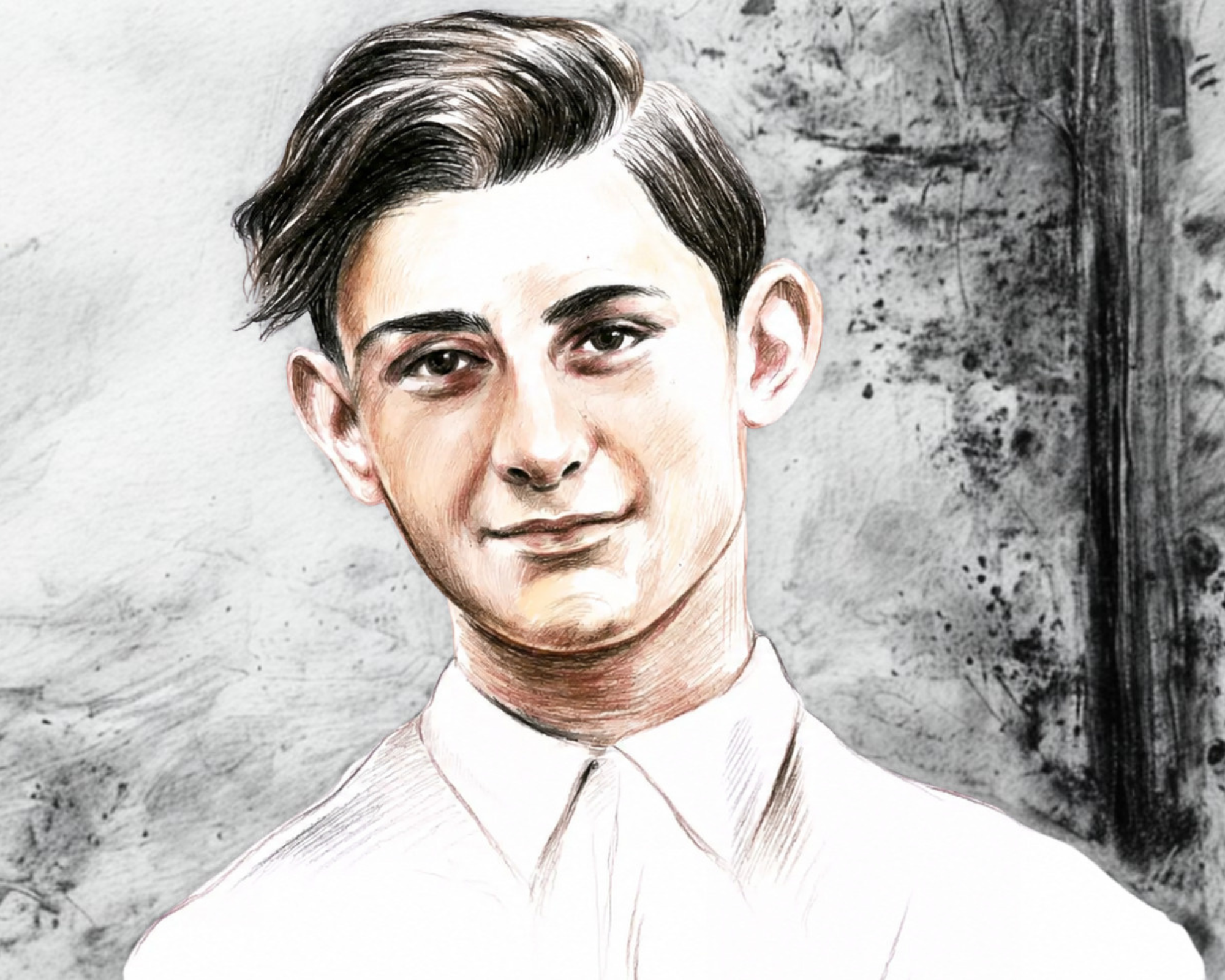
Among the choices that explain the critical success of the French diptych La Bataille de Gaulle — which, with more than 5 million combined admissions, became the surprise box-office triumph of the French summer of 2026 — one stands out as bolder than the rest: building the entire first part, L’Âge de Fer (“The Age of Iron”), around a second character almost unknown to the general public, whose fate crosses that of General de Gaulle without the two men ever meeting. That character isn’t a Free French companion, a future minister, or even a soldier. He is a 17-year-old student at the time of the 1940 armistice, who will be 20 when he fires, on 24 December 1942, two shots that reshuffle the political deck of French North Africa. His name was Fernand Bonnier de La Chapelle.
A character the director discovered through a letter
Director Antonin Baudry, who co-wrote the diptych with Bérénice Vila, says the film wasn’t originally meant to rest on this duo. It was his co-writer’s discovery of one of Fernand’s letters that reshaped the script. Baudry has said he was moved to tears by the document, to the point of making the young man a full narrative pillar mirroring the general. His conviction, stated plainly in the press around the film’s release, is that this student’s act conditioned the rest of French history: without it, he argues, “you wouldn’t know, and neither would I, the name of De Gaulle.”
It’s a striking, almost vertiginous claim for a name largely erased from collective memory. It’s worth weighing against what is actually known about Fernand Bonnier de La Chapelle — a story considerably murkier, and more interesting, than that of a simple young Gaullist patriot.
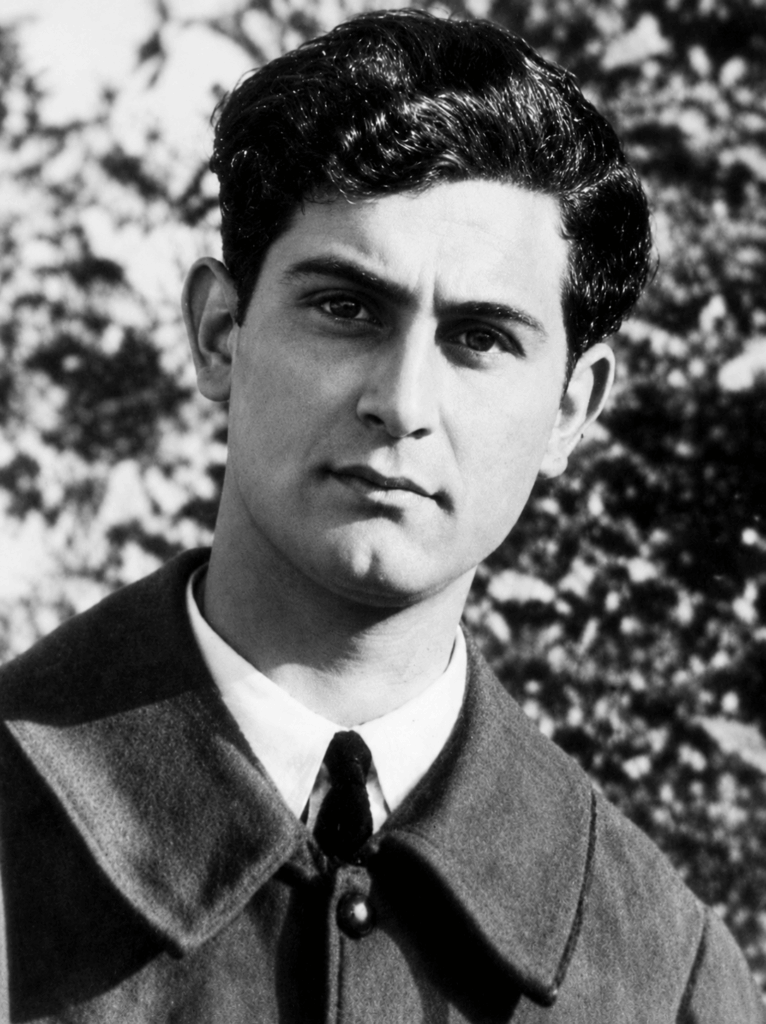
Who was Fernand Bonnier de La Chapelle, really?
Born on 4 November 1922 in Algiers, Fernand Bonnier de La Chapelle grew up in a family whose aristocratic-sounding surname suggested monarchist leanings — an image his own father, a journalist, always disputed, insisting instead on deeply republican convictions. After the collapse of June 1940, the young man dreamed of only one thing: reaching England to keep fighting. That dream, repeatedly thwarted, would eventually lead him down a very different path.
In the autumn of 1942, he took part alongside other young resistance members — the “Corps francs d’Afrique” and Algiers students — in the clandestine operation of the night of 7–8 November 1942: a coup that seized several strategic points in Algiers to facilitate the Allied landing in North Africa, Operation Torch. This real, documented act of resistance was Fernand’s first — long before the act that would make him infamous.
In the weeks that followed, a far darker plot took shape around him. Admiral François Darlan, the former head of the Vichy government who had become High Commissioner of France in North Africa after an opportunistic deal with the Americans, drew the anger of part of the Algiers resistance, who saw in him the persistence of the Vichy regime under a new guise. A circle of conspirators formed around the monarchist Henri d’Astier de La Vigerie and Father Louis Cordier: their goal was not to bring General de Gaulle to power, but to install the pretender to the French throne, the Count of Paris, then present in Algiers, with de Gaulle serving only as the military commander tasked with unifying the London and Algiers factions. Fernand, along with three other young men — Othon Gross, Robert Tournier, and journalist Philippe Ragueneau — drew straws to decide who would carry out the assassination of Darlan. Fernand drew the short straw. He obtained an old Ruby pistol, went to confession with Father Cordier, who granted him absolution, and settled on the date of 24 December 1942.
That day, as Darlan returned to his office after visiting his hospitalized son, Fernand Bonnier de La Chapelle shot him twice. He was arrested on the spot. Tried the very next day, 25 December, by a military tribunal under General Giraud’s authority, in under an hour and without a single witness called, he was sentenced to death despite appeals for clemency citing his youth. He was executed by firing squad on 26 December 1942 — just forty-eight hours after the act.
The rehabilitation of an “assassin” later recognized as a resister
Official history took its time to do this young man justice. As early as 1943, the French Committee of National Liberation issued a statement denying he had acted on the enemy’s behalf. But it wasn’t until 21 December 1945 that the appeals chamber of the Algiers court of appeal formally overturned his conviction and cleared his criminal record, ruling that he had acted “in the interest of the liberation of France.” A belated legal recognition, won through a long fight by his family, for an act whose true motivations historians still dispute today: sincere patriotism and visceral hatred of Vichy for some, a young man manipulated by more seasoned royalist plotters for others — the two readings not necessarily being mutually exclusive.
What the film chooses to show — and what it chooses to simplify
La Bataille de Gaulle makes Florian Lesieur, largely unknown until then, the breakout of its cast by entrusting him with this pivotal role. The film builds Fernand’s arc as the intimate, febrile counterpart to the general’s more institutional trajectory: a schoolboy who refuses to straighten a fallen portrait of Marshal Pétain during a scuffle, a friendship formed with two young Jewish resistance members, Pierre and Livia, a role in the 11 November 1940 demonstration under the Arc de Triomphe, Pierre’s arrest, and finally departure for Algiers, where the first film’s story reaches its resolution. The two men, de Gaulle and Fernand, never cross paths on screen — just as in reality — but the film insists that Fernand is constantly guided by the general’s voice, heard on the radio from London.
This dramatic construction, praised by much of the critical press, has its detractors too. Some observers argue the film reduces Fernand’s deeper motivations to an almost abstract, exalted patriotism, without digging into the murkier, more ambiguous reality of his actual involvement — that of a teenager caught in the net of a monarchist conspiracy that, originally, had strictly nothing to do with the Gaullist project. By turning the de Gaulle–Fernand pairing into a mirror of two pure forms of resistance, the film performs a kind of mythologizing: it erases the central role of Henri d’Astier de La Vigerie and Father Cordier, sidesteps the monarchist plan to enthrone the Count of Paris, and turns a complicated, murky political affair into a gesture of pure patriotic self-sacrifice aimed at London.
Did Fernand really “make” de Gaulle?
That leaves the question Antonin Baudry poses head-on: without Fernand’s act, would there be no de Gaulle as we know him? The claim is dramatically compelling, but history, once again, is more tangled. The immediate beneficiary of Darlan’s death was not de Gaulle but General Giraud, who inherited the High Commissionership in North Africa — precisely the man under whose authority Fernand was tried and executed within hours. The royalist conspirators’ actual project, bringing the Count of Paris to power, failed entirely. It would take a months-long power struggle throughout 1943 before de Gaulle managed to politically outmaneuver Giraud and establish himself as the sole leader of Fighting France, at the head of the French Committee of National Liberation.
In other words: the assassination of Darlan did remove a decisive obstacle — that of a recycled Vichy power broker, endorsed by the Americans, who might otherwise have durably blocked any unification of the French resistance around a clear figurehead. In that sense, Baudry’s line isn’t wrong in its intuition: had that obstacle not been removed, the political landscape of French North Africa — and thus the balance of power de Gaulle eventually exploited — could have looked very different. But it simplifies, for understandable dramatic purposes, a historical mechanism in which chance, royalist scheming, the Giraud–de Gaulle rivalry, and the central role of the American allies all count for at least as much as the act of one man.
A narrative choice that says something bigger
That may be the most interesting thing about this scriptwriting choice: by pulling out of the shadows a name that official history had long reduced to a footnote — one book, published in 2019, had been devoted to him before this film —, La Bataille de Gaulle reminds us that the Liberation of France was decided not only in the speeches of London or the war rooms of general staffs, but also in the desperate, often poorly informed, sometimes manipulated acts of very young people with no rank and no power. The film chooses to simplify the mechanics into a fable of resistant youth; history keeps its grey areas, its not-entirely-avowable sponsors, and its unpredictable side effects — none of which lessens the tragic weight of this 20-year-old’s fate, shot two days after his act, rehabilitated only three years later.