


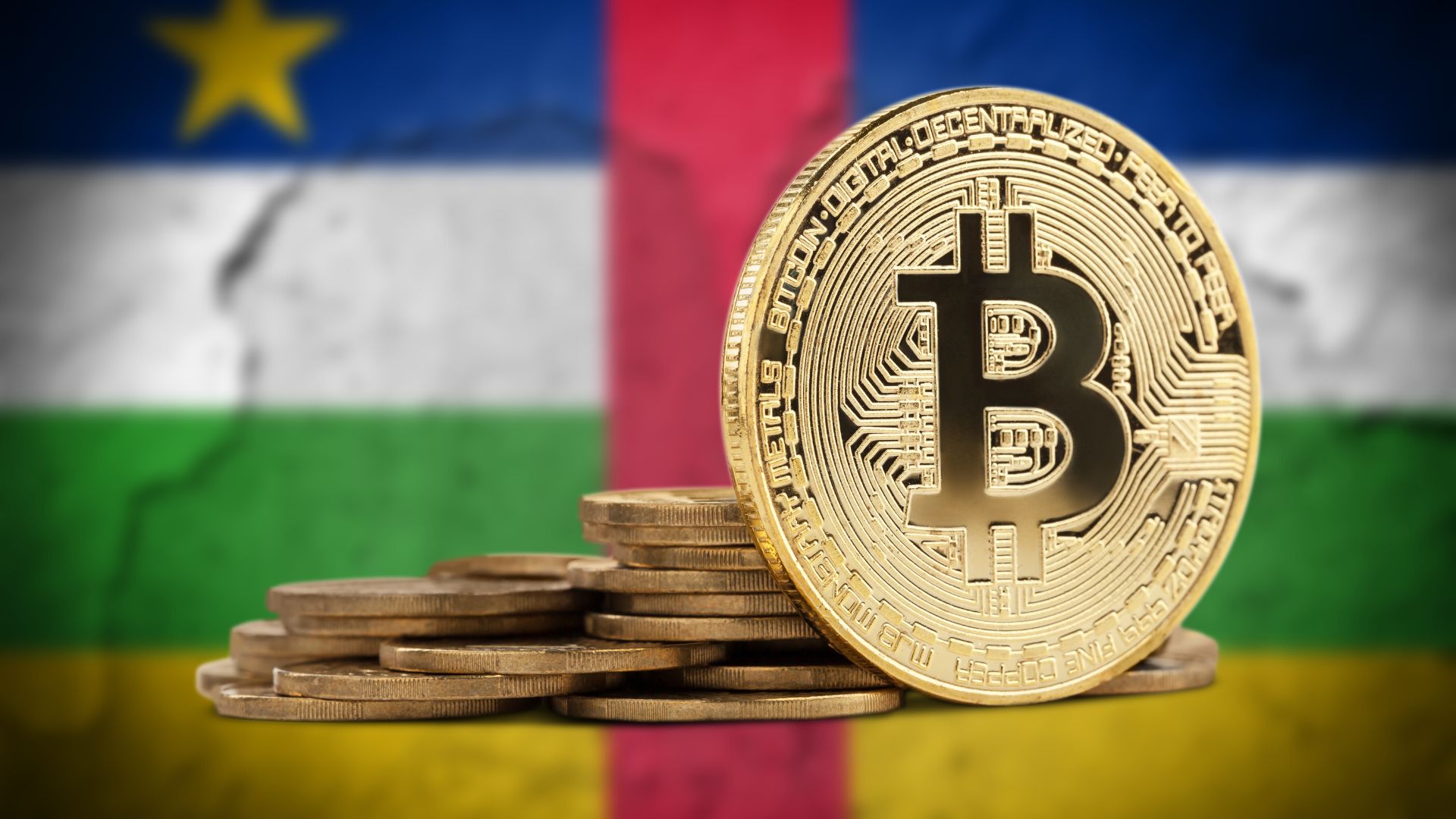
When the Central African Republic made Bitcoin legal tender in April 2022 and launched the Sango Coin three months later, the announcement reverberated globally. Three years on, the project has sold less than ten percent of its tokens, has been sanctioned by COBAC, and quietly announced a “new direction” in 2025. A look back at what this experiment really teaches the region.
The website sango.org now greets visitors with a holding page promising a forthcoming transformation. There is no live trading, no listed price, no mention of Bangui’s bold ambition of a Crypto City. It is the digital equivalent of a “closed for renovation” sign on a building that was supposed to redefine African finance.
The original promise
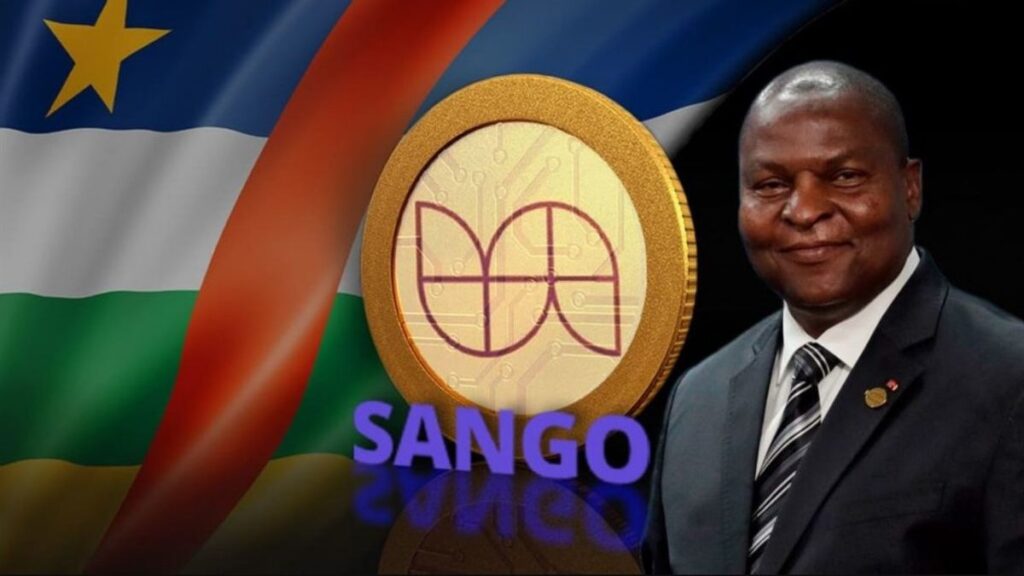
In April 2022, President Faustin-Archange Touadéra surprised observers by signing a law that made Bitcoin a reference currency alongside the CFA franc. Three months later came the Sango Coin: a national digital token meant to attract one billion US dollars in foreign investment, tokenise the country’s mineral wealth, and grant participants e-residency, citizenship and access to land. The vision was grand. The supporting cast — Binance’s Changpeng Zhao, MicroStrategy’s Michael Saylor — was high-profile. The pitch deck spoke of futuristic infrastructure and the digital reinvention of one of the world’s poorest economies.
The reality was less photogenic. According to a December 2025 report by the Global Initiative against Transnational Organized Crime (GI-TOC), Sango Coin sold roughly ten percent of its 210 million target tokens within a year, raising less than two million euros. Hardly the billion advertised. The Constitutional Court struck down the citizenship and land-for-tokens incentives in August 2022, gutting the project’s main commercial proposition. The COBAC, regulator of the CEMAC banking sector, issued a sweeping ban on crypto-asset transactions in May 2022, cutting Bangui off from regional banking rails.
Why it failed
For policy analysts, the Sango episode is a textbook example of technology deployed ahead of institutions. The Central African Republic remains one of the least electrified countries on Earth, with extremely limited internet penetration, ongoing security challenges, and a state apparatus barely able to function in much of its territory. Marketing a sovereign crypto project to a population that mostly lacks reliable mobile coverage was always going to be a stretch.
Three structural failures compounded the misalignment. First, regulatory contradiction: Bangui’s law conflicted directly with CEMAC monetary cooperation agreements, which the BEAC has actively enforced for decades. Second, governance opacity: the actual custody, distribution and use of investor funds was never clearly documented. Third, lack of demand: foreign investors had no compelling reason to take the legal and reputational risk of acquiring tokens whose key benefits had been struck down by the country’s own constitutional court.
From Sango to $CAR: doubling down on speculation
Rather than retreat, the Touadéra government pivoted. In February 2025, the country launched $CAR, a meme coin built on the Solana blockchain. According to the GI-TOC report and an independent analysis by African Security Analysis published in late 2025, around 80 percent of the supply was concentrated in a single wallet linked to anonymous developers. The token experienced an explosive launch followed by a collapse, with several technical irregularities and what analysts described as last-minute website registration and AI-generated promotional content.
The $CAR was later used to tokenise plots of land under a 2023 law that allows mineral and forestry resources to be represented as digital tokens. The GI-TOC report warned that without basic anti-money-laundering safeguards and identity verification, this framework risks turning Central African natural assets into instruments accessible to transnational criminal actors. Sovereign tokenisation, in other words, can become sovereign asset stripping under another name.
The unintended regional consequence
Three years on, the Sango episode has had at least one regional consequence its initiators never intended: it forced the BEAC to take crypto seriously. The defensive posture of 2022 — outright prohibition — has given way in 2026 to an active project for a CFA-denominated digital currency, anchored at par with the existing franc and developed with IMF support. The Bangui experiment is, ironically, part of the chain of events that made central bank digital currency a priority for the entire CEMAC.
There is a second consequence: Bangui itself has asked the BEAC to help develop a normative framework on crypto-assets. A discreet acknowledgement that going it alone, in defiance of regional monetary cooperation, has not delivered what it promised. The COBAC and the BEAC are now working on a harmonised regulatory regime to be published this year, in coordination with COSUMAF.
Lessons for the rest of Africa
Sango Coin will not be the last attempt by an African state to leverage crypto-assets for development financing or geopolitical signalling. The lessons it leaves behind matter:
First, institutional readiness precedes technological adoption. Without functioning courts, an active central bank, basic identity infrastructure and reliable connectivity, even the most elegant blockchain design collapses on contact with reality.
Second, regulatory unilateralism in a monetary union is rarely sustainable. The Central African Republic discovered that its CEMAC partners had both the legal tools and the political will to push back, and that the cost of confrontation outweighed the supposed benefit of crypto-led growth.
Third, transparency is not optional. The most damaging finding in the GI-TOC report is not technical: it is that the use and current status of investor funds remain unclear. In sovereign finance, that ambiguity has reputational consequences that outlast any token.
Three years after Bangui announced its crypto revolution, the most lasting outcome is not a new digital economy. It is a sharper, more pragmatic regional conversation about how Central Africa engages with the next phase of monetary innovation. In its own roundabout way, Sango did teach the CEMAC something — just not what its creators intended.