

The British actor’s $multi-million studio project transforms Accra into a global film hub—an economic blueprint for central africans nations
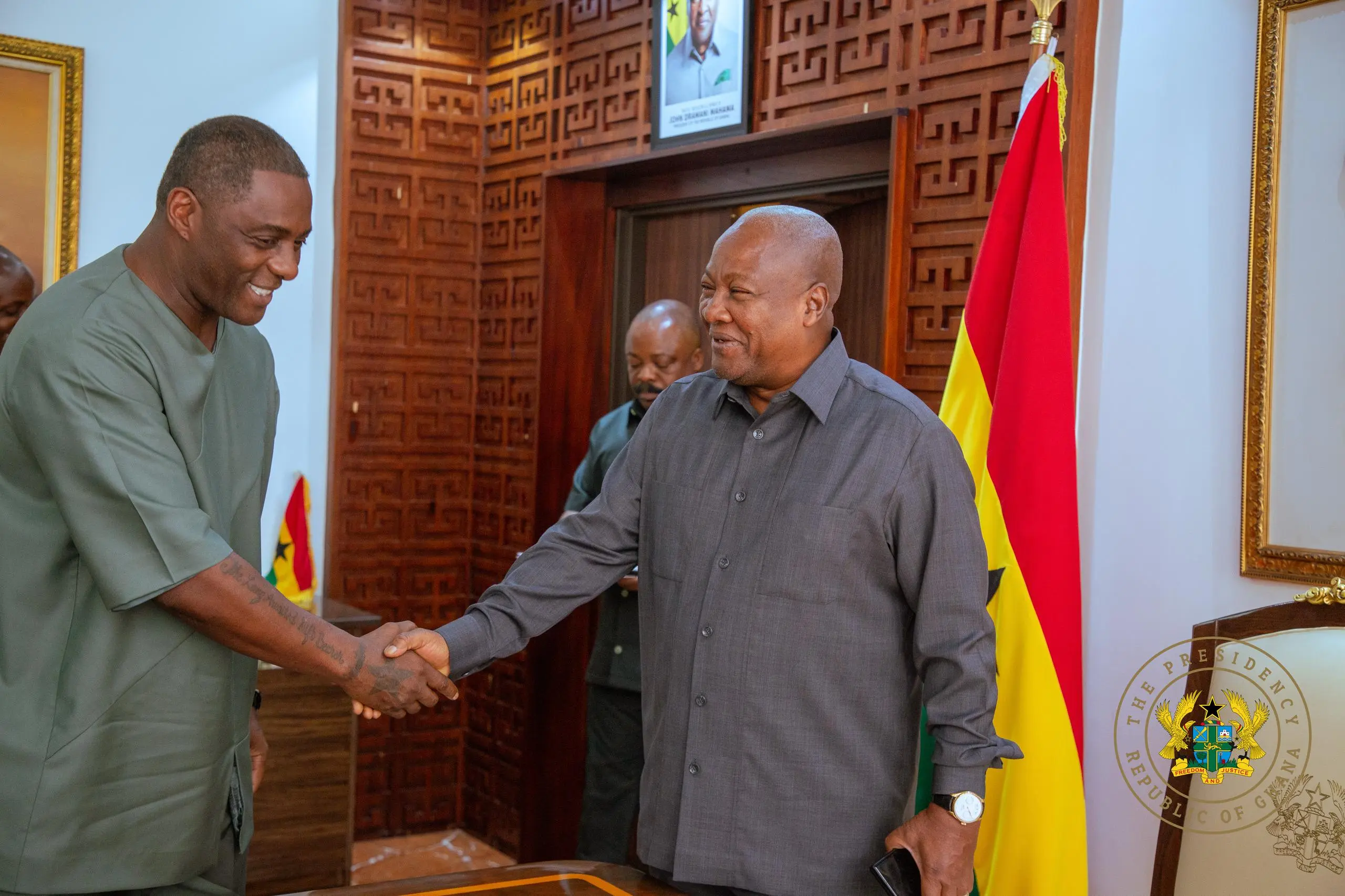
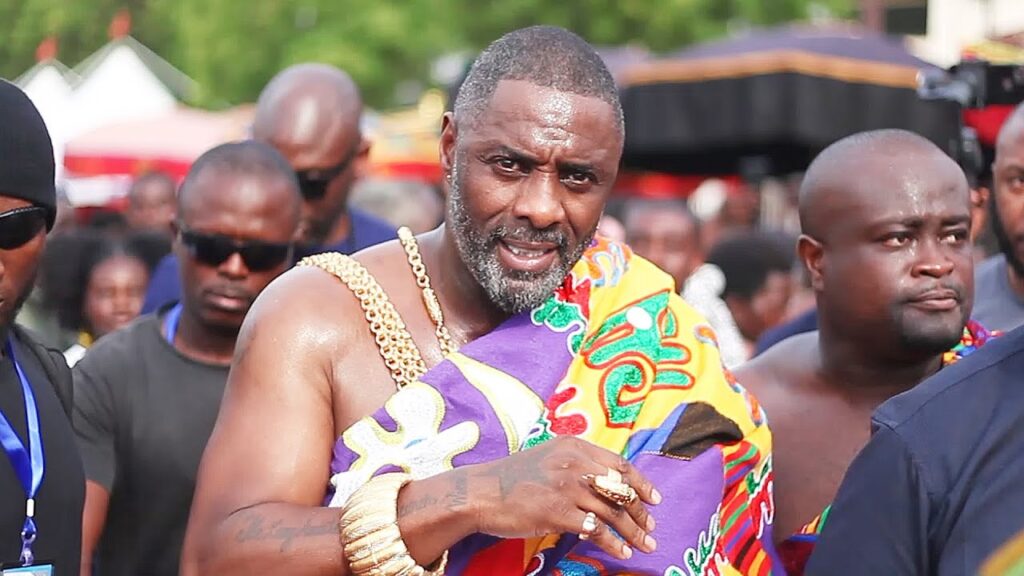
On March 25, 2025, Idris Elba did not merely visit Ghana. Crowned “son of the Ga soil” by King Tackie Teiko Tsuru II, the British-Sierra Leonean actor unveiled a multimillion-dollar, 22-acre film studio at the gates of Osu Castle. This is not philanthropy. It is a calculated industrial investment that positions Ghana as the Singapore of African cinema—and offers a replicable model for resource-diversification across the CEMAC zone.
The Economics of a Royal Welcome
The ceremony at the Ga Mantse Palace transcended cultural symbolism. With Justice Naa Yaale—daughter of independence hero Ako Adjei—and Ghanaian film stars Chris Attoh, Adjetey Anang, and Kalsoume Sinare in attendance, the King transformed the event into an act of economic statecraft.
“Our children lack direction, our youth lack tools. To come build a studio and partner with us—that is the way forward.”
— King Tackie Teiko Tsuru II, Ga Mantse of Accra
The monarch explicitly linked Elba’s investment to skilled job creation for Ghana’s youth—a critical imperative in a nation where 57% of the population is under 25 . This royal endorsement signals political risk-mitigation for international investors.
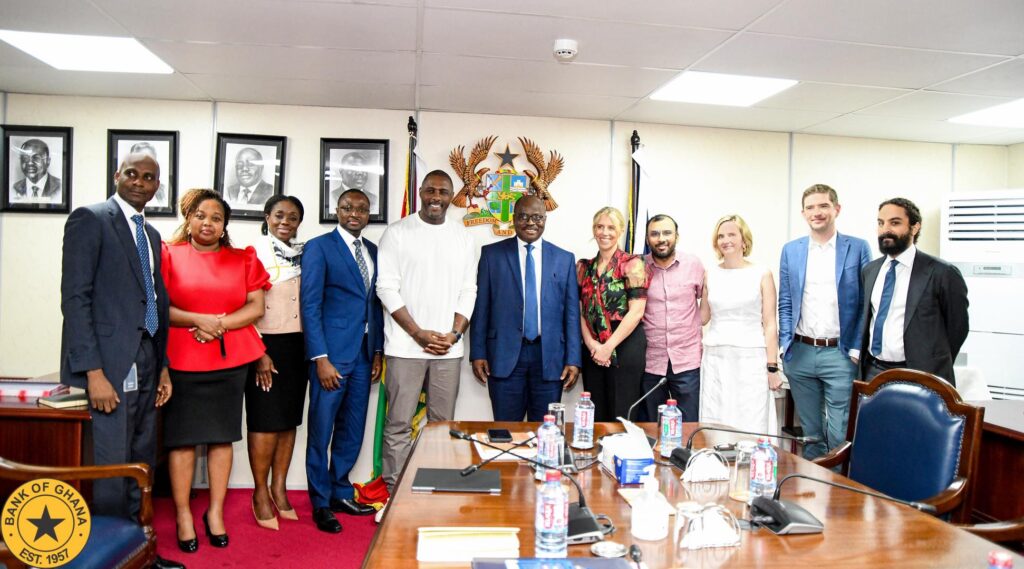
The Studio: Infrastructure as Economic Multiplier
The 22-acre (9-hectare) complex near Osu Castle—Ghana’s most iconic colonial monument—represents strategic geolocation. The facility will integrate:Table
| Component | Quantified Economic Impact |
|---|---|
| Production Studios | Capacity to service Netflix, Amazon, Disney+ productions; 30-40% cost reduction vs. European shoots |
| Film School | Training 500+ professionals annually; retention of talent currently migrating to Nollywood |
| Post-Production Hub | Regional monopoly on visual effects and editing for West African content |
| Distribution Platform | Export hub targeting 280-million-person African diaspora market |
Elba’s vision is explicitly commercial: “One of my goals is to bring the industry back to Africa” . This approach—profitability over aid—breaks with traditional development paradigms.
Ghana’s Creative Economy: The $4.8 Billion Context
Elba’s investment lands in a rapidly expanding sector. According to Ghana’s Tourism, Culture and Creative Arts Minister Abla Dzifa Gomashie, the creative economy contributed $4.8 billion to GDP in 2024 . Key metrics reveal the opportunity:
- Arts & Culture Sector: 2.5% of GDP (Ghana Statistical Service, 2024)
- Employment: 1.2 million jobs linked to cultural, creative and tourism activities (2018 baseline, Ministry data)
- Fashion Industry Alone: $2.42 billion contribution (3% of GDP) in 2025
- Policy Support: GHS 20 million ($1.3M) Creative Arts Fund established in 2025 budget
Despite this growth, Ghana’s creative sector remains under-monetized. The 2010 UNESCO cultural report found formal cultural activities at just 1.53% of GDP—though informal contributions push this higher . Elba’s studio addresses precisely this formalization gap.
The Nollywood Benchmark: What Ghana Must Match
Nigeria’s film industry sets the competitive standard. Nollywood contributes 2.3% to Nigeria’s GDP and has generated established distribution networks that Ghana currently lacks . As Ghanaian actor Kwaku Sintim-Misa (KSM) observes: “Nigerians have had a longer time of being exposed to developed systems that work for them, especially in terms of distribution” .
Elba’s studio aims to close this infrastructure gap. By offering Hollywood-grade facilities with West African cost structures, Ghana can capture “runaway production” from international studios seeking locations—much as Canada and Eastern Europe have done.
The Continental Play: Zanzibar, Blockchain, and Financial Inclusion
Elba’s Ghana project is one node in a broader African network. In Zanzibar, Tanzania, the actor has secured 200 acres for a complementary studio complex . This dual-hemisphere strategy (West + East Africa) creates a content production corridor.
Critically, Elba addresses Africa’s 1% share of the global creative economy despite comprising 18% of world population . Through Akuna Wallet—a blockchain-based payment system developed with Stellar—he enables unbanked African creatives (nearly 60% of Ghana’s under-25 population) to receive royalties without traditional banking infrastructure .
This financial innovation matters: UNESCO projects Africa’s film sector could generate $20 billion and 20 million jobs by 2030 . Elba’s payment infrastructure ensures value-capture remains local.
From Oil to Action
For CEMAC economies—Gabon, Cameroon, Equatorial Guinea, Chad, CAR, Congo—the Ghana model offers actionable lessons:
- Resource Diversification: With oil dependency averaging 60-80% of exports, creative industries provide non-extractive revenue streams
- Diaspora Monetization: CEMAC’s substantial European diaspora (particularly Cameroon and Gabon) represents untapped content demand
- Youth Employment: Gabon and Cameroon’s median ages (22 and 19 respectively) match Ghana’s demographic dividend
- Location Scouting: Gabon’s forests and Cameroon’s varied landscapes offer competitive filming locations currently under-marketed
The Ghana-Nigeria competitive dynamic demonstrates that first-mover advantage in infrastructure determines regional leadership. CEMAC nations must act before saturation.
Conclusion: When Culture Becomes Macroeconomics
Idris Elba’s return to Ghana is not celebrity tourism. It is the physical manifestation of global creative value-chain reconfiguration. When an actor whose films have grossed $9.7 billion worldwide anchors capital in African infrastructure rather than simply shooting location scenes, markets notice.
Two indicators demand monitoring:
- Q3-Q4 2025 FDI flows into Ghana’s audiovisual sector
- First co-production contracts signed from Elba’s studio (projected late 2025)
The creative economy is no longer soft power. It is hard currency. And Africa—finally—is taking the lead role.