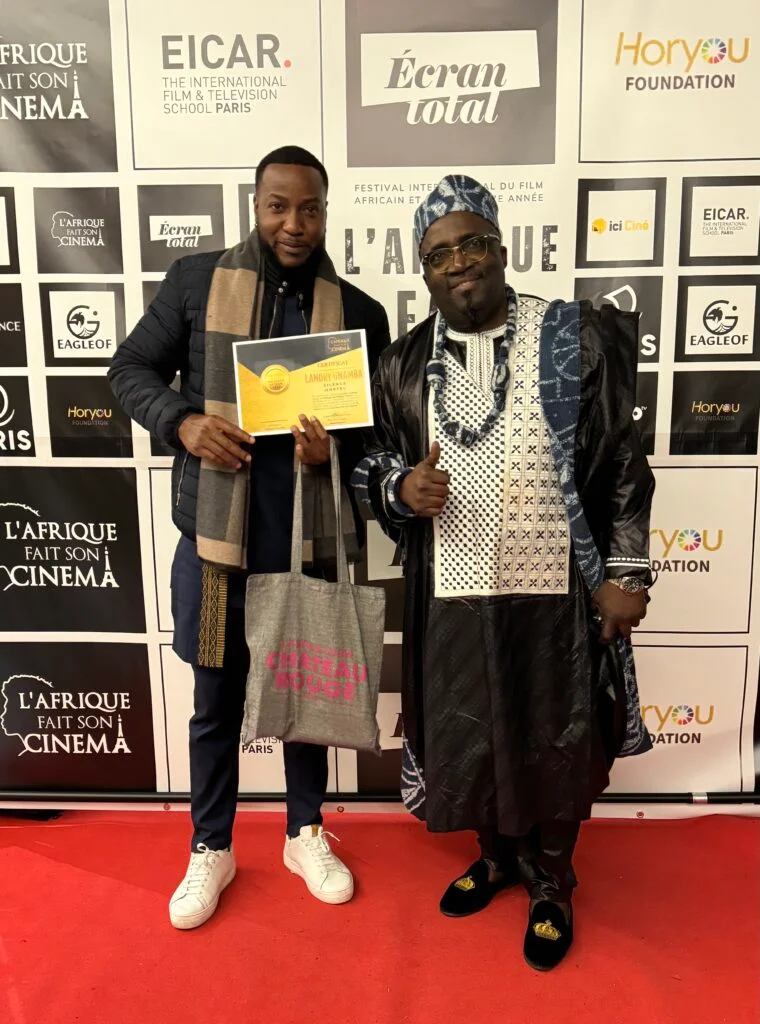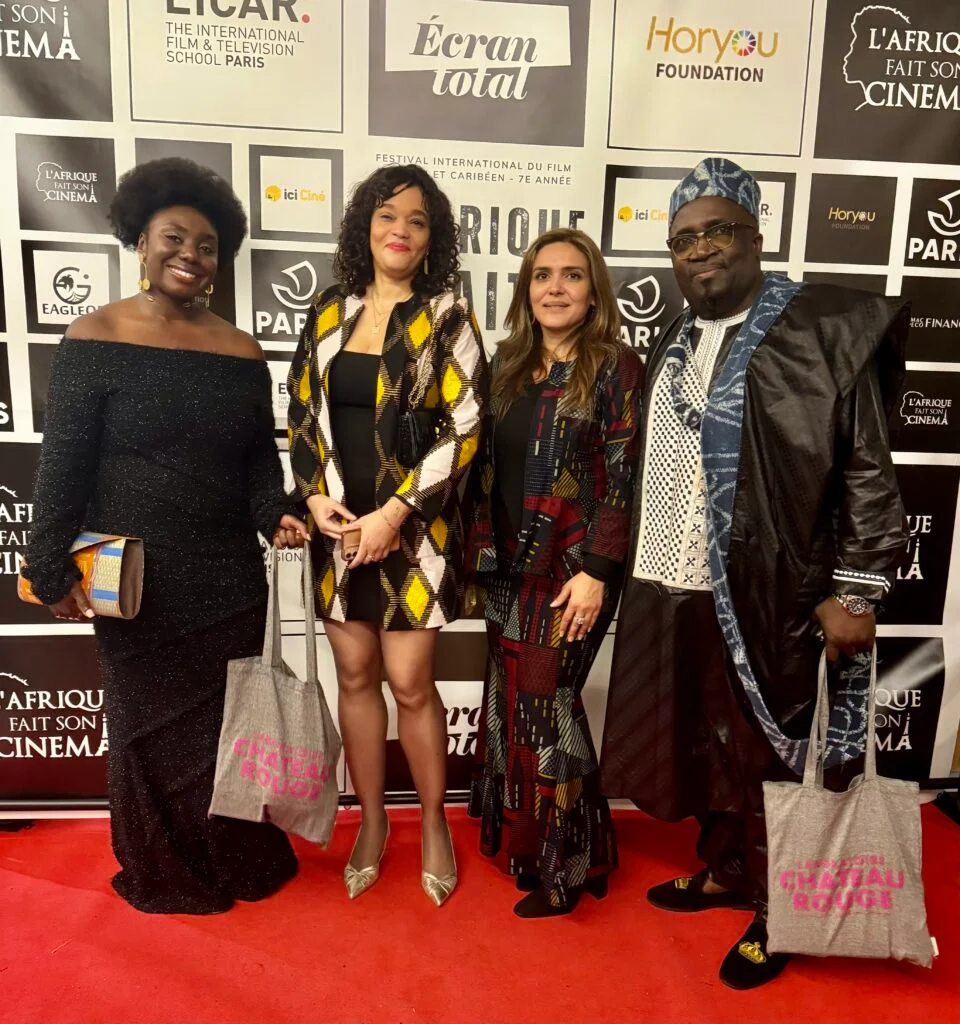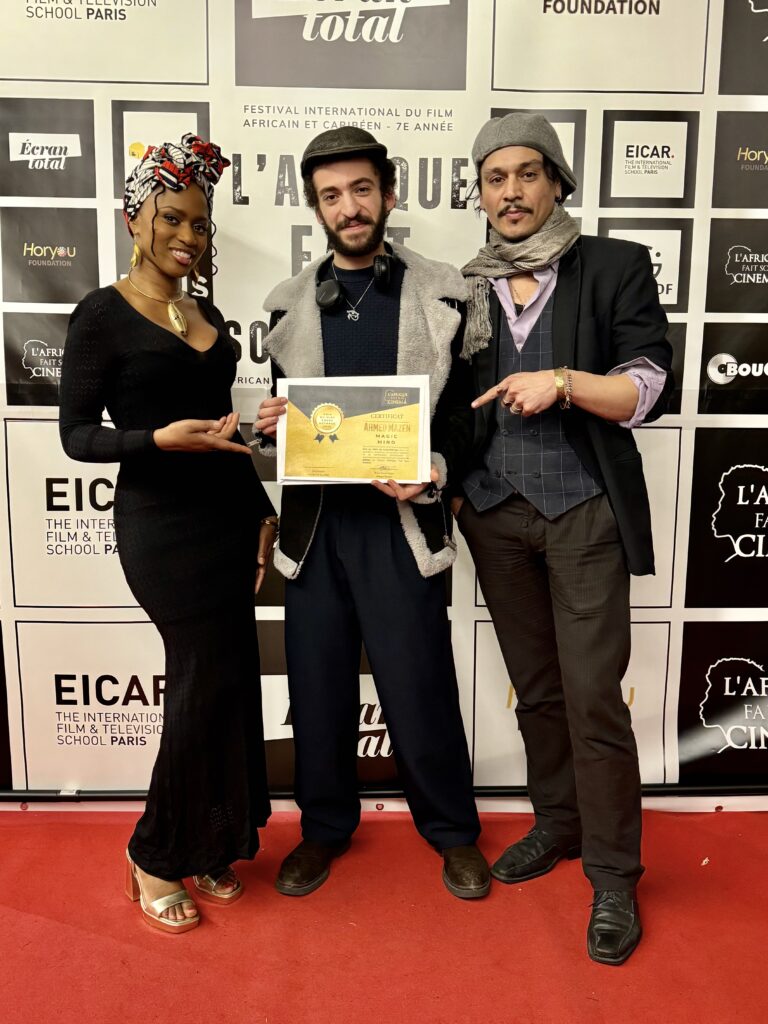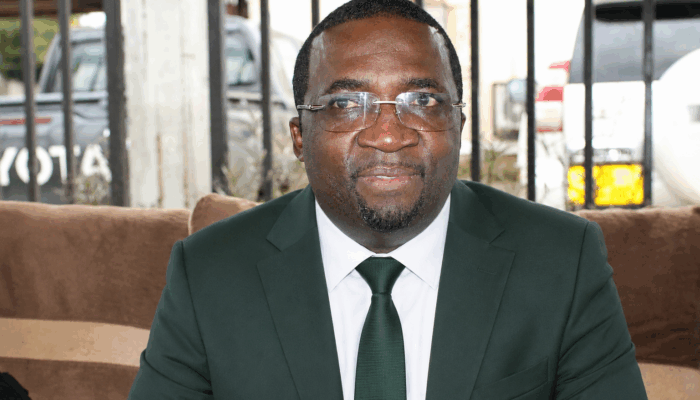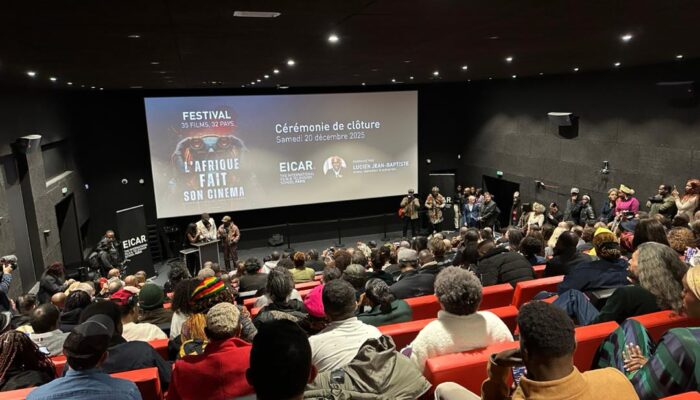

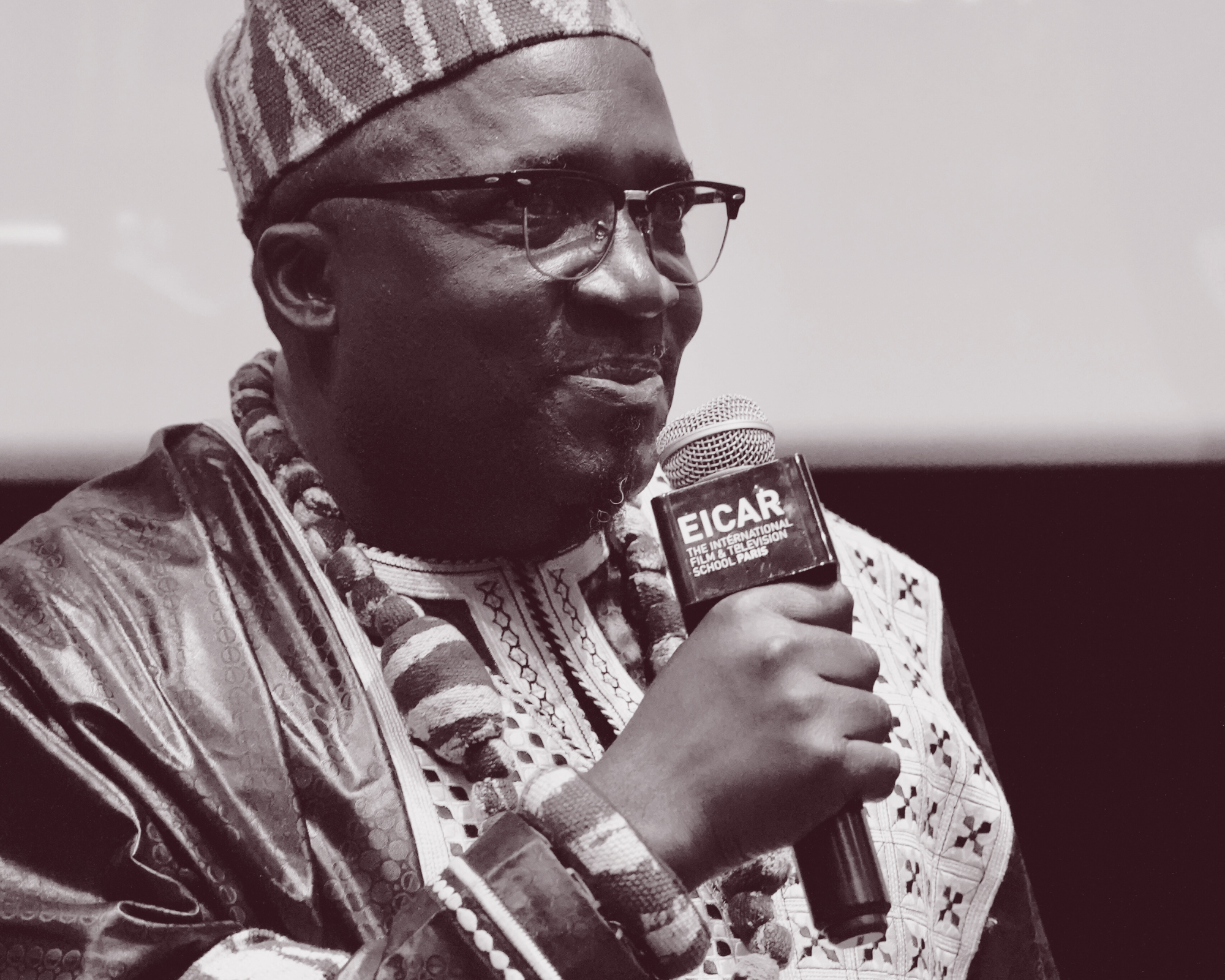
For the 7th edition of the “Africa Makes Its Own Cinema” festival, G9infos met with Blaise Pascal Tanguy, promoter and emblematic figure of this now-essential event in the Parisian cultural scene. A director, producer, distributor, and cultural activist, Tanguy embodies this new generation of builders who refuse to wait for others to tell African stories .
In this exclusive interview on G9infos, he looks back on the results of the 2025 edition, the challenges of the organization, the place of Gabonese cinema at the festival, and his ambitions for 2026. A frank and passionate exchange on the power of images and the need to change the way we look at Africa.

G9infos: Who is Blaise Pascal Tanguy?
Blaise Pascal Tanguy:
I define myself first and foremost as a cultural activist, a visual artist, and a bridge builder. Director, producer, distributor, and cultural entrepreneur—these roles are the concrete tools with which I transform a vision into reality. But my true DNA was forged in journalism, which I have practiced for over ten years, and which shaped my perspective, my curiosity, and my commitment to truth.
I am also a dreamer who has made a choice: to no longer wait for others to tell our stories for us. I have decided to put cinema at the service of a clear ambition — to interconnect Africa, the Caribbean and the rest of the world, right here, in the most beautiful city in the world, Paris.
My commitment is both cultural and strategic. On the one hand, I work to facilitate international co-productions so that our industries can engage in dialogue as equals and grow together. On the other hand—and this is the heart of my struggle—I strive to change the way Africa is perceived, to offer images of respect, excellence, and dignity.
I fight every day to prove that African cinema doesn’t need permission to exist on the world stage. I simply believed it was possible—and necessary—to roll out the red carpet for African filmmakers on the most prestigious avenues of Paris. And I continue, film after film, project after project, to make this conviction a reality.
G9infos: You are the promoter of the “Africa Makes Its Own Cinema” festival, what exactly is it?
Blaise Pascal Tanguy:
“Africa Makes Its Own Cinema”, the International Festival of African and Caribbean Film and Art, is a cultural, artistic and economic ecosystem designed for the present and built for the future.
It was born from a strong conviction: African cinema should not be confined to peripheral or alternative spaces. It deserves the biggest stages, the most prestigious venues, and recognition commensurate with its talent, modernity, and artistic ambition.
In practical terms, the festival is the international showcase for excellence in African and Caribbean cinema in Paris. It highlights films, directors, actors, and producers who are fully engaged with world cinema. Our ambition is to show Parisian and international audiences that African cinema is contemporary, technically accomplished, narratively powerful, and universal in its themes.
But “Africa Makes Its Own Cinema” goes beyond simply screening films. It’s also a hub for meetings and decisions: a structured networking space where creators, producers, distributors, platforms, investors, and institutions come together. The festival creates the concrete conditions for the distribution, co-production, and circulation of African films in international markets.
In its forward-looking vision, the festival positions itself as a strategic tool for cultural diplomacy and the structuring of African creative industries. It supports the emergence of new talents, fosters lasting alliances, and contributes to writing an African narrative driven by its own actors.
In this sense, “Africa Makes Its Own Cinema” is often perceived as the “Cannes of African cinema in Paris” — not by imitation, but by ambition: that of rolling out the red carpet for African cinema, offering it global visibility and establishing it permanently in the global film economy.

G9infos: Review of the 2025 edition: What to remember?
Blaise Pascal Tanguy:
What we should remember from this 7th edition is its maturity. We’ve reached a new level. Attendance was record-breaking, but what struck me most was the quality of the discussions. Seeing filmmakers from the Caribbean, Gabon, Senegal, Ivory Coast, and the diaspora exchanging ideas with European producers—that’s my victory. We also noted an incredible diversity in genres: we’re no longer just making “social” films; we saw science fiction, thrillers, and top-notch romantic comedies. African cinema has shed its inhibitions, and 2025 was clear proof of that.
G9infos: Awards and jury criteria for 2025?
Blaise Pascal Tanguy:
This year, the jury was uncompromising on one point: technical quality. We went beyond leniency. The winning films are those that can be broadcast tomorrow on Netflix, Canal+, or in cinemas worldwide without looking out of place alongside American blockbusters. The awards therefore recognized bold screenwriting and masterful visual storytelling. We rewarded works that break new ground, that dare to tackle contemporary themes with meticulous aesthetics. The 2025 winners are those who have successfully combined Afro-Caribbean authenticity with international standards.
G9infos: The encounter with Gabonese cinema and Melchy Obiang?
Blaise Pascal Tanguy:
Gabon is a land of cinema, and Melchy Obiang is one of its most prolific ambassadors. Our encounter with Gabonese cinema came about naturally, as Gabon produces a great deal of film with impressive regularity. Melchy is a loyal and resilient director. “Africa Makes Its Own Cinema” has followed his work for a long time. His presence at the 2025 edition was a given, as his latest film, The Heart of Men , moved the selection committee with its authenticity. The audience discovered a vibrant Gabonese cinema, one that doesn’t shy away from reality and courageously portrays social realities. Melchy proudly represented Gabon in Paris.
G9infos: What difficulties have you encountered in the organization?
Blaise Pascal Tanguy:
(Smiling) Organizing an event of this scale is a real challenge, I won’t lie to you. The biggest difficulty remains funding. Convincing institutions and private sponsors that culture is a profitable investment and not charity is a constant battle.
The other recurring challenge, the most anxiety-inducing difficulty, the one that literally hinders the festival’s ambitions, remains the mobility of artists. It’s a real obstacle course that sometimes prevents us from achieving the representation we desire. In many countries, visa procedures remain extremely complicated, which deprives us of a great deal of talent.
However, I would like to highlight a notable exception and a real success this year with Gabon. We managed to bring over a delegation of 11 Gabonese professionals, led by Melchy Obiang. It was a gamble: for 8 of them, it was their very first trip to Europe.
I made it a point of honor to manage this rigorously: I personally accompanied them to the airport upon their departure, and I can confirm that they all returned to Gabon once the festival was over. This is living proof that African artists are responsible professionals who come to work and make their mark, not to stay. If we could do it with Gabon, we should be able to do it with other countries.
G9infos: What to expect for the 2026 edition?
Blaise Pascal Tanguy:
For 2026, we’re aiming even higher. We’re working on a much more developed “African and Caribbean Film and Art Market” component, so that concrete contracts can be signed on the spot. We also want to emphasize training and knowledge transfer, with even more specialized masterclasses for young filmmakers. And why not a special focus on Central Africa, which is brimming with raw talent? Get ready, because Africa is making its mark on cinema. 2026 will be the edition that marks the industry’s recognition of our film industry.
G9infos: Any final words?
Blaise Pascal Tanguy:
I would like to say to the youth of Gabon and Africa: Take power through images. Don’t let anyone tell you that your stories are worthless. The world is hungry for our narratives. Work hard, educate yourselves, be demanding of yourselves, and know that “Africa Makes Its Own Cinema” will always be there to be your voice.
I would like to emphasize the immense responsibility we have as creators of images. Cinema is not just for entertainment; its mission is to promote, to offer dreams, and to awaken desire.
My wish for the future is that we finally move beyond the “narrative of pity.” Our films should no longer ask for the world’s compassion, but command its respect. We must have the intelligence to highlight what is best, most beautiful, and most positive within us.
Take Gabon, for example: if a viewer in Paris or New York watches a Gabonese film, they should leave the theater with one thought in mind: to buy a plane ticket and come visit Gabon. That’s the magic of cinema: transforming a local story into an irresistible showcase. It’s by highlighting our culture and landscapes that we will change how others see us.
Thank you to G9infos for the fantastic work you do in disseminating information. See you in 2026!
This interview with Blaise Pascal Tanguy reminds us that cinema is much more than entertainment: it is a tool for social transformation, a vehicle for dignity, and a bridge between cultures. With “Africa Makes Its Own Cinema,” Tanguy and his team succeeded in the audacious endeavor of making Paris the international capital of African and Caribbean cinema for the duration of a festival. The 2025 edition marked a turning point, proving that African cinema is now on par with global productions in terms of technical quality and narrative boldness.
The success of the Gabonese delegation, the diversity of genres presented, and the maturity of the professional exchanges testify to an industry undergoing profound transformation. Many challenges remain—funding, artist mobility, institutional recognition—but Tanguy’s vision is clear: to definitively move beyond the “narrative of pity” and establish images of respect and excellence.
The date is set for 2026, a year that promises to be the year of industrial recognition for African cinema. In the meantime, one thing remains certain: Africa is making its own films, and the whole world is invited to watch.