

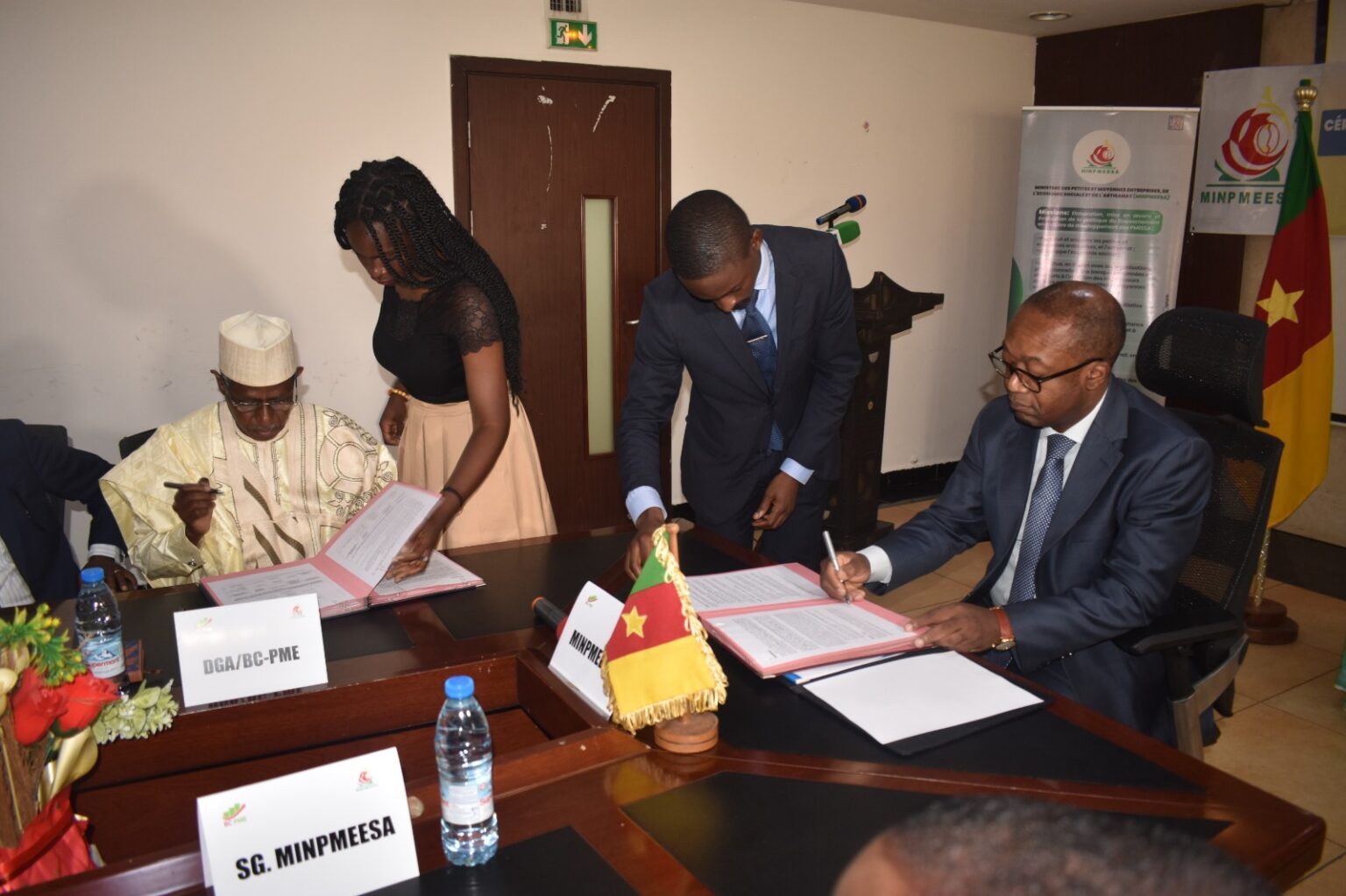
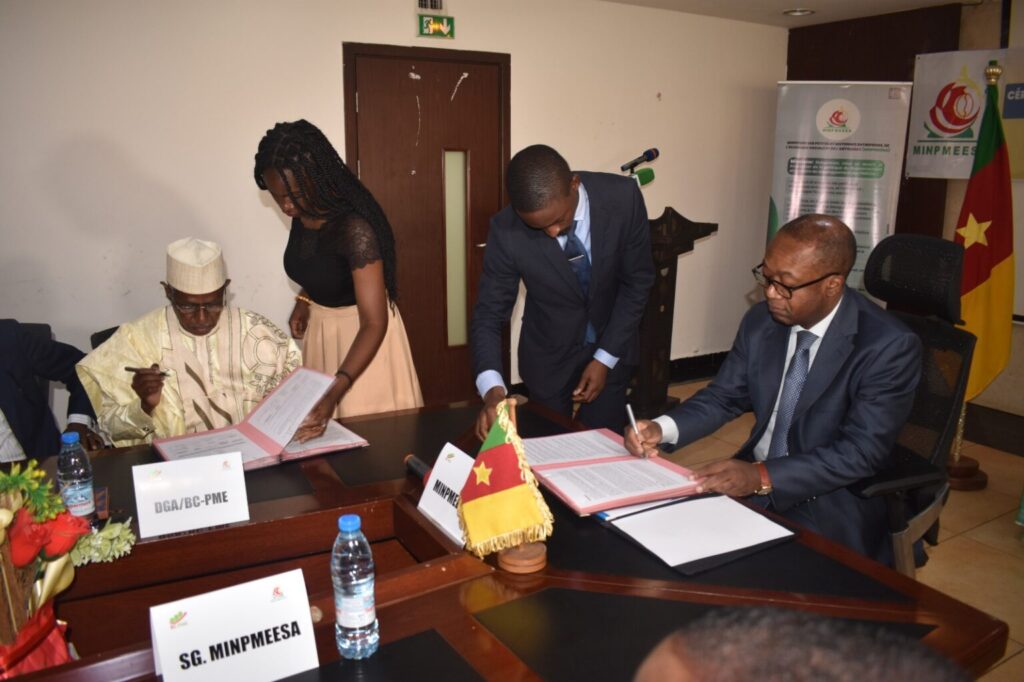
This financing signed in Yaoundé, between the Ministry of Small and Medium Enterprises and the Cameroonian Bank for SMEs (BC-PME), intended to strengthen agricultural, pastoral and fishery production, marks a key step in the national strategy of import-substitution and modernization of local sectors.
The Minister Achille Bassilekin III and the Deputy Director General of BC-PME, Amadou Haman, signed an agreement that could accelerate the transformation of the agricultural and livestock sector. The government is committing 1.5 billion CFA francs to this initiative, an amount intended to revitalize micro, small, and medium-sized enterprises involved in local production and processing. This initiative is part of the broader Integrated Import Substitution Plan for Agriculture, Livestock, and Fisheries (PIISAH), launched to reduce the country’s dependence on imported products and encourage the upgrading of rural businesses.
The funding is being meticulously allocated. An initial tranche of 330 million FCFA is earmarked for small-scale artisanal food processing units, many of which are still struggling to modernize their equipment. The largest share, 930 million FCFA, will be used to build three pilot collective units, conceived as platforms where different local stakeholders can pool machinery and expertise to increase their productivity. An additional 240 million FCFA is earmarked for the purchase of high-performance presses for palm oil cooperatives, a key sector still plagued by low yields.
BC-PME will be responsible for project selection and providing technical support to beneficiaries. Loans will be offered at a preferential rate not exceeding 4%, a virtually unprecedented rate in an environment where access to financing remains a major obstacle for small producers. The bank will also be responsible for monitoring the actual progress of investments to measure their impact on the targeted value chains, particularly in terms of processed volumes and job creation.
This funding is just one step in a larger initiative. Starting in 2026, a new allocation of 1.6 billion FCFA is planned to increase support for rural entrepreneurs. A special window for young people will also be opened to facilitate the entry of a new generation into the agricultural, social economy, and craft sectors—a strategic issue for the authorities given the aging workforce in these sectors.Financial software
Driven by a strong national ambition, the PIISAH represents a colossal investment estimated at 1,500 billion FCFA over three years. The government states that it has already mobilized 800 billion FCFA, slightly more than half of the planned funds. For 2025 alone, resources injected into agriculture and related sectors reached 511.63 billion FCFA, compared to 248.49 billion FCFA in 2024, demonstrating a clear acceleration of public efforts. The program anticipates an increase to 611.4 billion FCFA in 2026 to continue modernizing the rice, maize, fish, and other strategic production sectors.
In the corridors of the ministry, the atmosphere surrounding the signing was one of both hope and determination. For the small businesses that form the backbone of Cameroon’s productive fabric, this new financial injection comes as a breath of fresh air, as the country strives to build a more self-reliant, competitive agricultural economy focused on local processing.