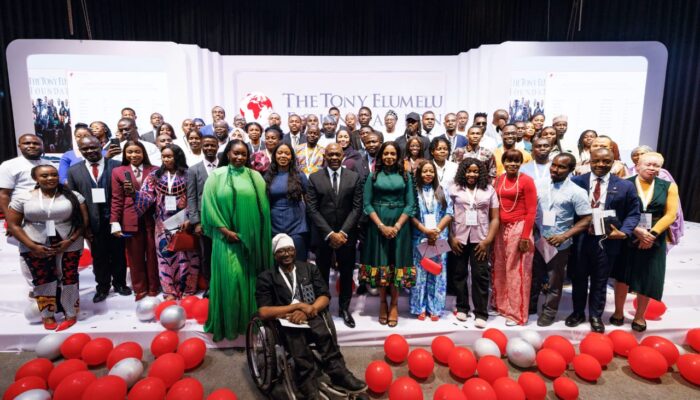
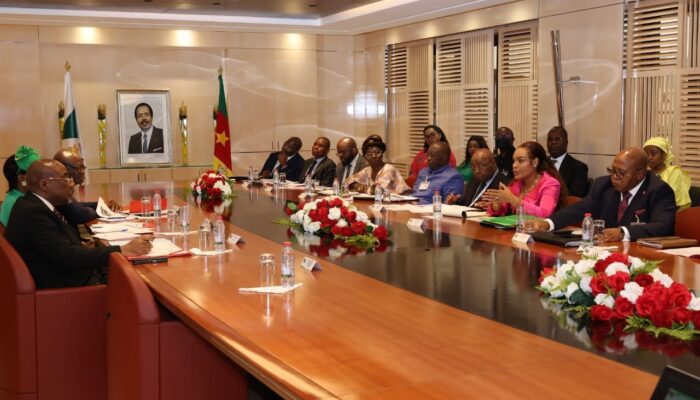
The 15th C2D Breakfast highlighted the financial and institutional effects produced since 2022 by component 2 of the Transfagri program. With 4 billion FCFA mobilized, 22 microfinance institutions involved, and several innovative mechanisms being tested, the State and its partners are progressively structuring the operationalization of the National Inclusive Finance Strategy (SNFI).
The preparation of this edition comes as the implementation of the Project to Support the National Inclusive Finance Strategy (PASNFI) reaches its full operational phase. Validated in 2019 but truly activated in January 2022, the mechanism, financed by the third Debt Reduction and Development Contract (C2D), relies on approximately 4 billion FCFA in funding allocated to the Ministry of Finance. It constitutes the central contribution of the Transfagri program, dedicated to providing access to finance for rural micro, small, and medium-sized enterprises, cooperatives, and actors in agri-food value chains.
The governance of the system relies on a triangular decision-making chain: the Ministry of Finance (MINFI) as the project owner, the Debt Reduction and Development Contract (C2D) as the source of funding, and two international technical assistance firms responsible for operational engineering. This structure enabled four key assessments to be carried out in 2022: the state of supply and demand for financial services, social performance and customer protection in microfinance institutions (MFIs), the state of financial education practices, and an analysis of the sector’s information systems, notably the Central Risk Register for MFIs (CREMF) and the CASEMF monitoring system managed by the National Financial Education Council (CNEF).
Based on this, the ramp-up in 2023 saw the deployment of all three sub-components: development of tailored financial products, improvement of social performance and financial reporting, and coordination and monitoring and evaluation. The call for proposals process resulted in the receipt of 36 applications, 22 of which were selected after technical analysis. These partner microfinance institutions (MFIs) benefit from partnership agreements and total financial support of 1.637 billion FCFA, 70% of which has already been disbursed to support the design and pilot phase of new products.
Five innovative mechanisms are being tested: warehouse receipt financing (credit backed by secure storage), Islamic finance, leasing (micro-leasing), mutual guarantee, and contract farming. Eleven storage facilities have been built to facilitate warehouse receipt financing, more than 5,000 agricultural stakeholders have been sensitized, and a database of more than 3,000 potential beneficiaries has been created.
In parallel, 184 microfinance institution (MFI) agents, representing the Ministry of Finance (MINFI) and the National Financial Education and Training Council (CNEF), received training, supplemented by a network of ten local consultants for on-the-ground support. Strengthening the CNEF is another key component. The audit of the CREMF and CASEMF applications paved the way for their upgrade, the gradual connection of MFIs, and an anticipated improvement in the reliability of financial data.
The objective is to increase the number of institutions regularly transmitting compliant information, an essential condition for securing the sector and reducing information asymmetries that hinder credit in rural areas.
All of these activities are aligned with the program’s operational objectives: increasing rural MSMEs’ effective access to appropriate financial services, improving the social governance of microfinance institutions (MFIs), structuring national financial education, and strengthening the Ministry of Finance’s capacity to monitor and evaluate the National Financial Inclusion Strategy (SNFI). The scope covers seven regions – Adamaoua, Centre, North, West, Northwest, Littoral, and Southwest – where pilot testing of the new products is scheduled to conclude in March 2025.
At this stage, the contribution of C2D and Transfagri is materialized by mobilized financial flows, a portfolio of innovations being tested, an improved financial information infrastructure and a gradual increase in the skills of local institutions.
The work presented at the C2D Breakfasts will help consolidate the prospects for accelerating inclusive finance in Cameroon, in a context where access to financial services remains an essential lever for rural transformation.