


For the first time in 53 years, four astronauts are on their way to the Moon. Artemis II lifted off from Kennedy Space Center on April 1, 2026 — humanity’s return to deep space.
At 6:35 p.m. EDT on April 1, 2026, NASA’s Space Launch System — a 322-foot-tall rocket painted white and orange — thundered off Pad 39B at Kennedy Space Center in Florida, carrying the Orion spacecraft and its crew of four on the first crewed mission beyond low Earth orbit since Apollo 17 in December 1972.
Artemis II will not land on the Moon. Instead, the crew will spend ten days aboard Orion, looping around the lunar far side in a free-return trajectory before splashing down in the Pacific Ocean. The mission’s purpose is validation: every system, every sensor, every seal must perform flawlessly before NASA commits to putting boots on the lunar surface.
What makes Artemis II remarkable is not only where it goes, but who is going. The crew breaks records before the mission even reaches the Moon.
The crew
| Name | Role | Note |
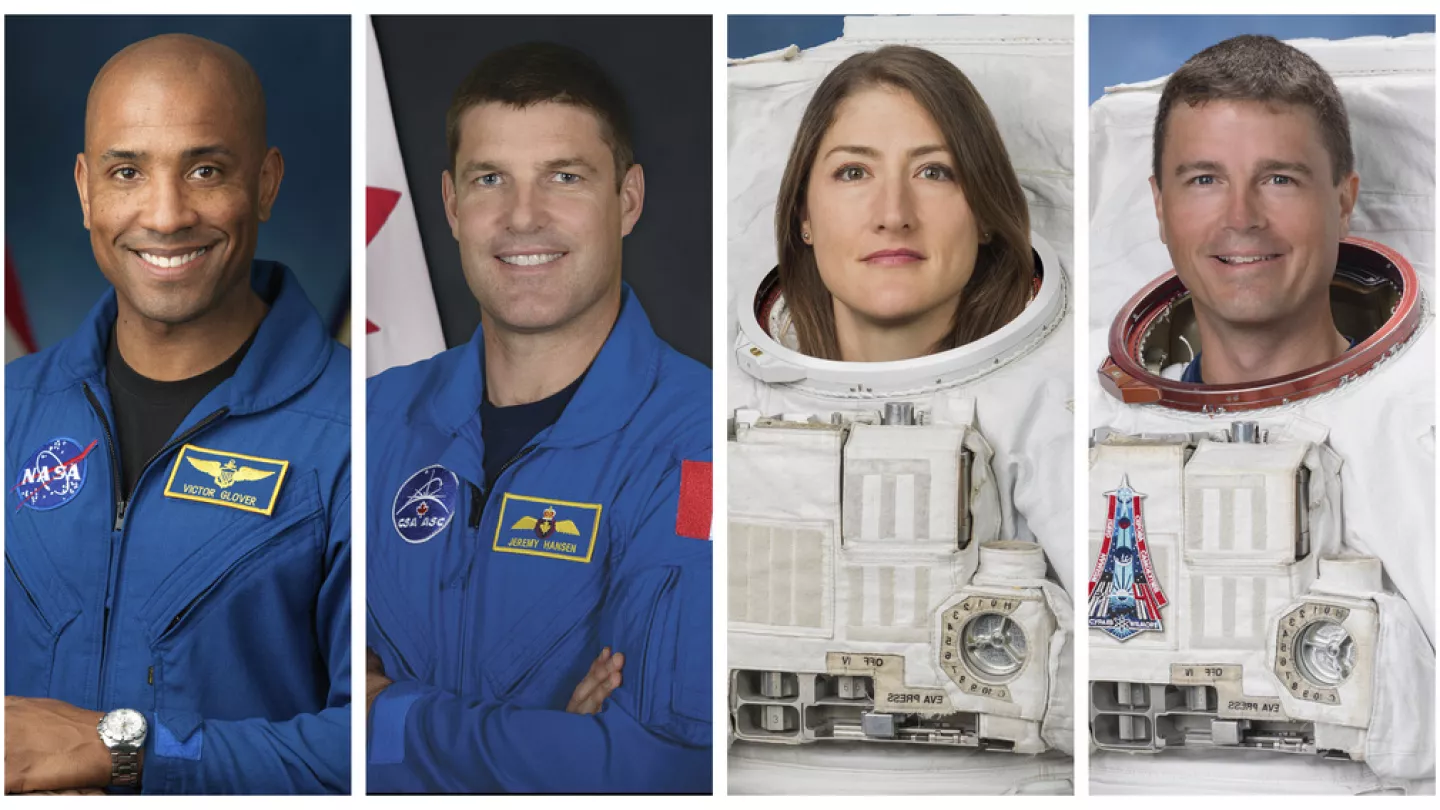
| Reid Wiseman | Commander | Former NASA chief astronaut, 50 |
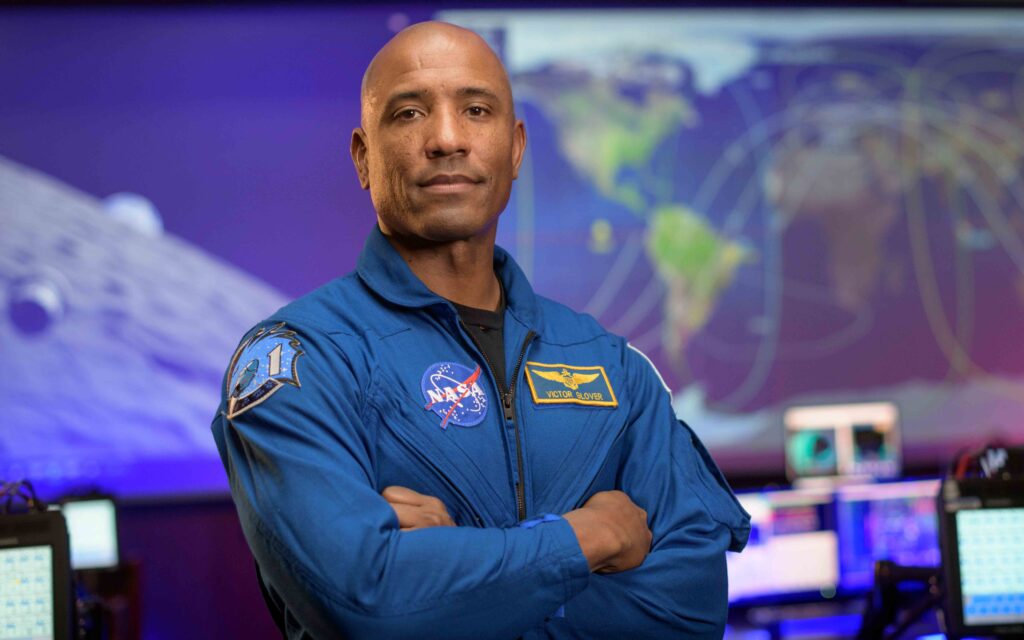
| Victor Glover | Pilot | First person of color beyond low Earth orbit |
| Christina Koch | Mission Specialist | First woman to travel to lunar vicinity; record 328-day ISS mission |
| Jeremy Hansen | Mission Specialist | First Canadian — and first non-American — to travel to the Moon |
“It’s the crew of humanity.”
Bill Nelson, NASA Administrator
Mission profile
| Day 1 | Liftoff at 6:35 p.m. EDT. SLS places Orion in low Earth orbit before the trans-lunar injection burn. |
| Days 2–3 | Three-day coast to the Moon. All Orion systems — navigation, life support, communications — tested in deep space for the first time with crew aboard. |
| Day 4 | Lunar flyby. The crew will observe the far side of the Moon through Orion’s four windows — a view no human eye has ever seen through a spacecraft window. Maximum distance: ~4,700 miles (7,600 km) beyond the lunar surface. |
| Days 5–9 | Return transit. Continued systems evaluation. Module de service européen (ESA) performs propulsion and power functions throughout. |
| Day 10 | Pacific Ocean splashdown. Orion’s heat shield endures re-entry at ~25,000 mph — its first real-world crew test. |
Context
Artemis II follows Artemis I, an uncrewed test flight that orbited the Moon in 2022. The next mission, Artemis III (no earlier than 2027), will attempt the first crewed lunar landing since Apollo 17, using a SpaceX Starship lander. NASA’s long-range goal is a permanent lunar base, followed by crewed missions to Mars.
The geopolitical stakes are high. China has announced its own crewed lunar mission for 2030. The European Space Agency is a structural partner: the service module powering Orion — providing propulsion, power, water and oxygen — was built in Europe. Without it, Orion does not fly.
In nine days, four people will return from the vicinity of the Moon. The rest of us will have watched from 240,000 miles away — and felt a little closer to the stars.
At a glance
| Launch | April 1, 2026 — Kennedy Space Center, Cape Canaveral, Florida |
| Vehicle | SLS Block 1 (322 ft / 98 m) + Orion crew capsule |
| Service module | ESA European Service Module (propulsion, power, life support) |
| Duration | 10 days |
| Max distance | ~7,600 km beyond the Moon — farthest humans have ever traveled |
| Re-entry speed | ~25,000 mph (40,000 km/h) |
| Next mission | Artemis III — first crewed lunar landing (2027 or later) |