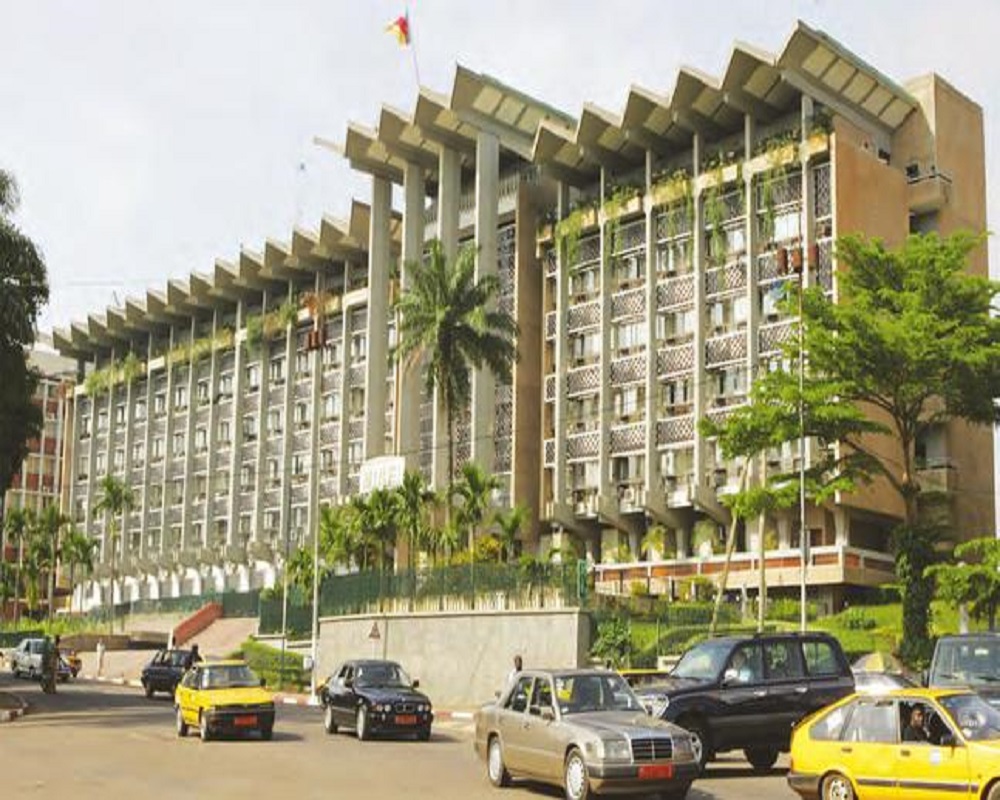
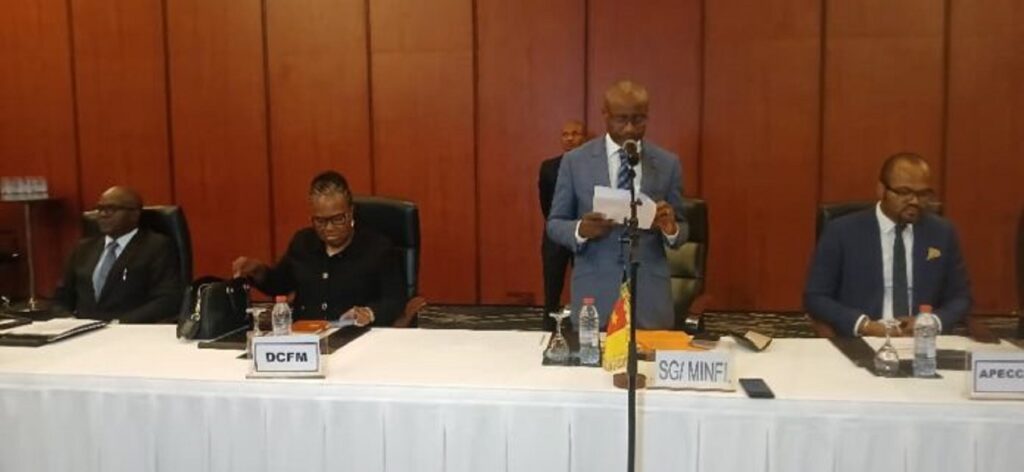
On December 22, 2025, in Yaoundé, the Cameroonian Ministry of Finance launched a national campaign to promote Islamic finance, in a context marked by the search for alternative mechanisms to finance the economy. The ceremony was held under the theme “Islamic Finance: Reforms, Regulation, Challenges and Prospects”.
“It is an ethical, inclusive and complementary financing lever to conventional financial instruments, capable of supporting economic growth and financial inclusion in Cameroon,” said Gilbert Didier Edoa, Secretary General at the Ministry of Finance, while presiding over the workshop dedicated to the national campaign to promote Islamic finance.
This is a financing mechanism based on Sharia principles that distinguishes itself from conventional finance through an approach that prioritizes Islamic ethics and morality in financial transactions. Specifically, this model prohibits the use of interest and emphasizes the social responsibility of investment, directing funding towards activities deemed compliant with the principles of justice, risk sharing, and transparency.
According to the data presented, Islamic finance remains marginal in Cameroon despite the existence of a community regulatory framework adopted in 2022 at the CEMAC level. To date, only three banks – the Autonomous Amortization Fund (CAA), Afriland First Bank, and the Commercial Bank of Cameroon (CBC) – have obtained prior authorization from the COBAC to open Islamic banking windows.
Authorities also note low penetration of these products in the microfinance and insurance sectors. “Despite COBAC regulations and measures taken in Cameroon, progress has been slow, even though Islamic finance offers numerous opportunities for growth and development,” stated Gilbert Didier Edoa, before emphasizing: “It is important that all stakeholders—potential beneficiaries, banks, microfinance institutions, insurance companies, and regulators—be informed and made aware of this opportunity so that it is effectively seized by actors in the financial system.”
The Ministry of Finance explains that this initiative aims to better inform financial institutions, regulators, and potential beneficiaries, in order to promote wider adoption of this financing method. The stated objective is to make Islamic finance an effective tool for financial inclusion and resource mobilization, in a context where access to credit remains limited for a segment of the population. “Within the banking system, there are institutions specializing in Islamic finance, and two or three have obtained licenses. However, this remains marginal from our perspective, given that the objective is financial inclusion,” stated the Secretary General of the Ministry of Finance.
The meeting brought together several actors from the national and community financial system, including the BEAC, the COBAC, the CIMA, the Directorate General of Taxes, credit, microfinance and insurance institutions, as well as financial experts and representatives of the Muslim community.
The discussions focused on the fundamentals of Islamic finance, Islamic insurance, the taxation applicable to Islamic products, regulatory compliance, and development prospects. The workshop’s recommendations highlighted that “Islamic finance remains largely unknown” and that “insurance companies have not yet fully embraced this product,” leading to implementation challenges.
It has been proposed to accelerate the development of the regulatory framework at the CIMA level to make Islamic insurance more attractive, to intensify the popularization of Islamic insurance itself, and to continue and strengthen the financial education of religious leaders and the general public on Islamic finance.
Regarding compliance, participants recommended obtaining the visa and certificate of conformity from COBAC, adopting specific community taxation, implementing incentives to attract more national and international investors, strengthening the legal security of investors, diversifying state financing offers, and continuing compliance efforts for sector actors.
Through this campaign, the Ministry of Finance intends to strengthen the dialogue between the monetary authority and the entire financial ecosystem, with a view to a more sustained development of Islamic finance in Cameroon and in the CEMAC zone.