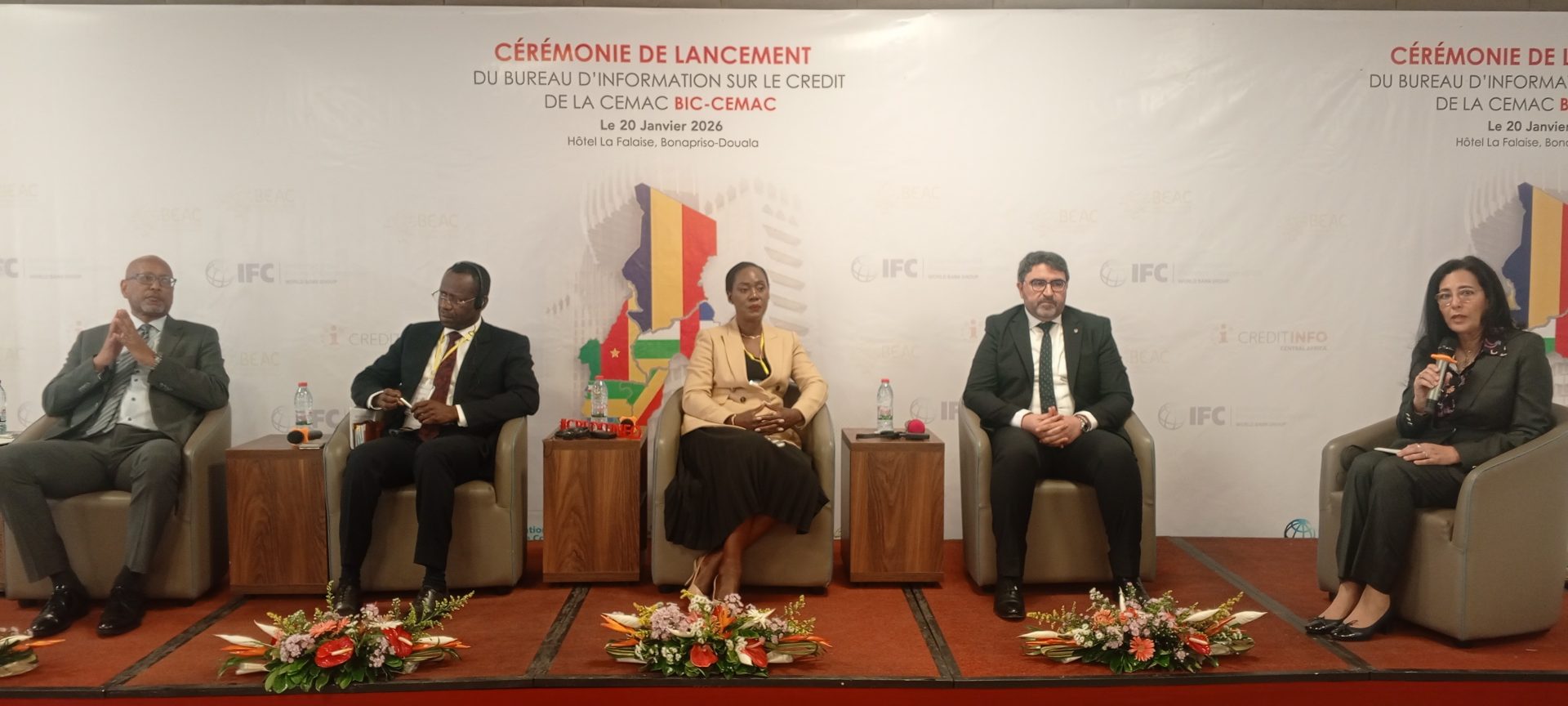
On January 20, 2026, in Douala, the Governor of the BEAC launched the Credit Information Bureau (BIC). Operated by Creditinfo Central Africa, this new tool aims to clean up the banking sector in the sub-region and facilitate access to financing for SMEs by reducing information asymmetry.
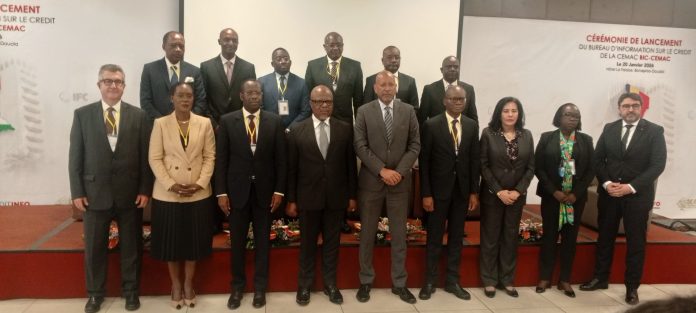
A small revolution took place on Tuesday, January 20, 2026, in Douala. Under the patronage of the Governor of the Bank of Central African States (BEAC), the inauguration days (January 20-23) marked the official launch of the BIC-CEMAC. Developed in partnership with the International Finance Corporation (IFC) of the World Bank Group, this tool now serves as the benchmark platform for assessing creditworthiness in the region.
Technically, the BIC is a centralised database that compiles the credit history of borrowers, whether individuals or businesses. The system generates credit scores and issues alerts for defaults, thus providing banks and microfinance institutions (MFIs) with unprecedented visibility into their clients’ risk profiles.
Until now, the banking sector in the CEMAC region has remained marked by significant reluctance, particularly towards SMEs, often considered too risky due to a lack of reliable data on their financial history. By making consultation with this bureau mandatory for all credit institutions via a secure digital platform, the BEAC hopes to break this glass ceiling.
The challenge is threefold for the economies of the sub-region: reduction of doubtful debts (by better identifying bad payers); financial inclusion (by valuing the “reputational capital” of good borrowers) and competitiveness (by facilitating the granting of credit to boost private investment).
The private operator selected for this mission, Creditinfo Central Africa SA (a subsidiary of Creditinfo Group), received its official approval last November. Its deployment comes at a strategic time, 48 hours before the CEMAC Heads of State summit scheduled for Brazzaville on January 22.
The dominant theme of this opening day was a noble ambition: financial inclusion. Too often, individuals and small to medium-sized enterprises (SMEs) face financing refusals due to a lack of tangible guarantees or a verifiable credit history. The BIC aims to shatter this glass ceiling.
By leveraging the borrower’s “reputational capital,” Creditinfo enables those with a good credit history to benefit from more favorable borrowing terms. This democratizes credit: merit and financial discipline become guarantees just as solid as a mortgage or collateral. Through the aggregation of granular data and the provision of sophisticated credit reports, the BIC fosters the emergence of an ecosystem where every economic agent, regardless of size, can become the architect of their own development.
It is worth noting that the launch of Creditinfo Central Africa SA is part of a long-term vision. By strengthening the resilience of financial institutions and facilitating access to capital, the BIC-CEMAC becomes a lever for resilience in the face of economic shocks.
The honor bestowed upon the city of Douala in hosting this conference underscores its position as a regional financial hub. As the proceedings continue, the participants’ enthusiasm reflects a shared conviction: the CEMAC zone has just crossed a technological and moral Rubicon. From now on, information will inform decision-making, and transparency will serve the collective destiny of the nations of Central Africa. The key message has been launched: financial clarity is the new currency of prosperity.
In a context of monetary tensions and the need for economic resilience, the BIC appears as a guarantee of transparency and modernization of the regional financial system. It is the first initiative of this scale in Central Africa, finally aligning the region with international standards for credit risk management.
However, while the technical tool is now operational, its success will depend on the rigorous provision of data by local banks. Will this increased transparency lead to significantly lower interest rates, which are often prohibitive for Gabonese and Cameroonian entrepreneurs?