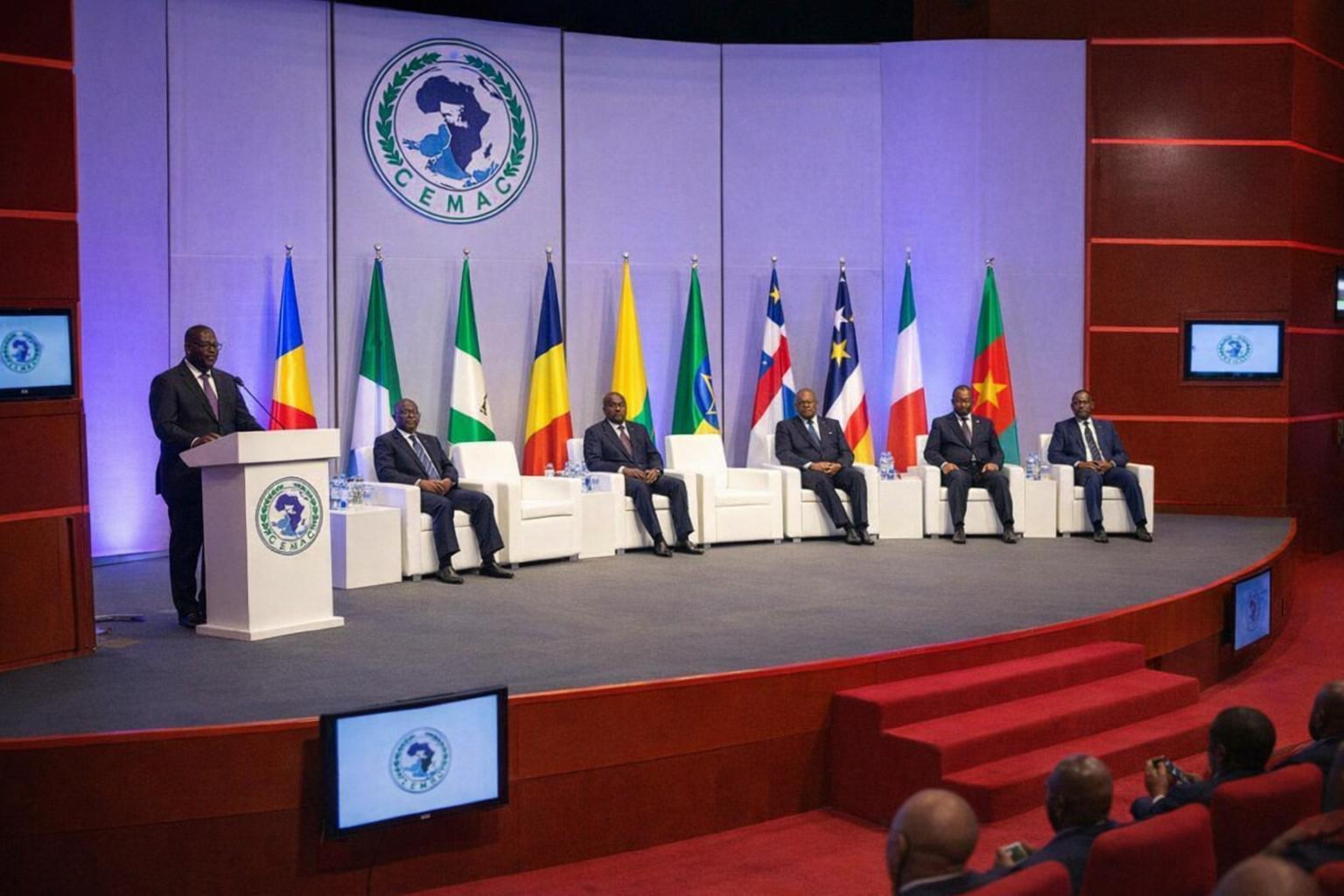
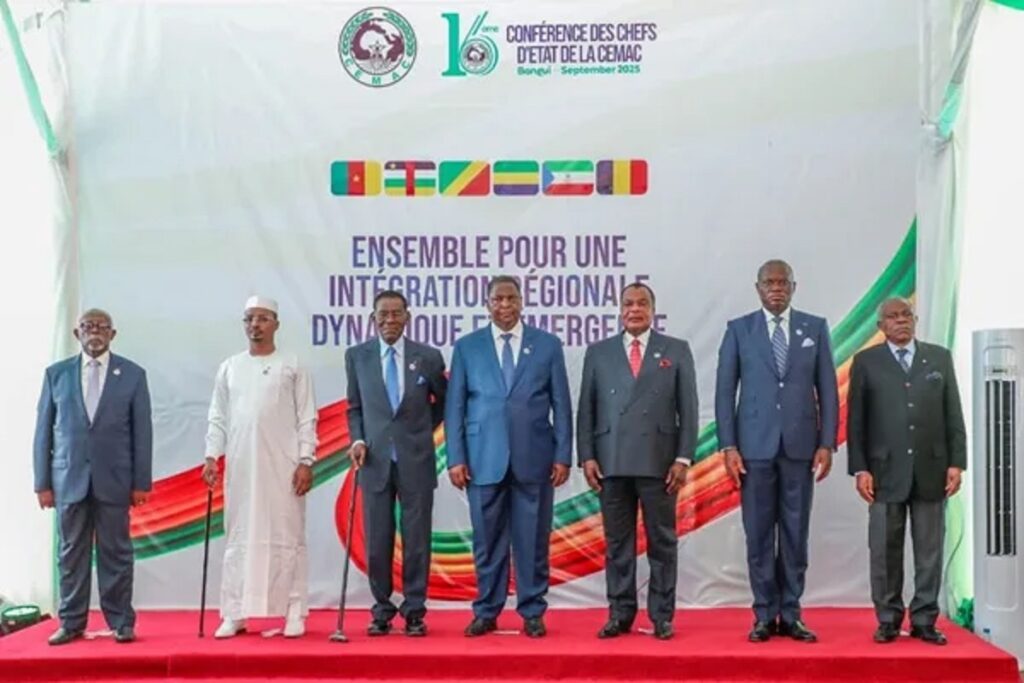
The heads of state of the Central African Economic and Monetary Community (CEMAC) are summoned to an extraordinary summit on January 22 in Brazzaville, at the initiative of President Denis Sassou N’Guesso, current chairman of the Conference of Heads of State.
Organized just four months after the last ordinary session, this meeting reflects an unprecedented sense of urgency at the highest levels of the community architecture. The objective is clear: to anticipate an economic, financial, and monetary shock likely to hit the sub-region in the first quarter of 2026 within a tense international context.
The CEMAC region operates in a global environment characterized by a sustained tightening of financial conditions, volatile commodity prices, the restructuring of value chains, and increasingly stringent demands from international lenders. For economies dependent on hydrocarbons and primary exports, the risk is twofold: a revenue shock and strain on external balances. The anticipated decline in oil prices, combined with rising interest rates and shrinking fiscal space, could put pressure on foreign exchange reserves, which are already under close scrutiny by the BEAC and the IMF. The stability of the Central African CFA franc depends precisely on the level of these reserves and on collective macroeconomic discipline.
Beyond the external context, several states in the sub-region continue to face structural imbalances: high debt, weak mobilization of non-oil revenues, delays in fiscal reforms, and prolonged dependence on external support. In this context, an asymmetric shock—affecting one or two countries acutely—could quickly become systemic, testing community solidarity and the credibility of common monetary governance. It is precisely this risk of financial and monetary contagion that the Brazzaville summit intends to address proactively, by exploring coordinated rather than national responses.
The heads of state are expected to examine several issues, including the state of public finances in each member country, the sustainability of programs with the IMF, the coordination of fiscal and monetary policies, and the strengthening of the role of community institutions, particularly the BEAC and the CEMAC Commission. Underlying this is a central question: can CEMAC still function as a credible monetary union without accelerated structural reforms and strengthened collective discipline?
Holding this extraordinary summit, outside the usual schedule, sends a strong political signal to markets, technical and financial partners, and the public. It aims to demonstrate that the sub-region is capable of prevention rather than reactive crisis management, of anticipation rather than crisis response. In Brazzaville, the CEMAC leaders will therefore be making more than just a technical adjustment: they will have to reaffirm the viability of the common monetary project at a time when the slightest hesitation could lead to a costly loss of confidence. The stakes extend beyond January 2026: they concern the economic and political credibility of Central Africa in a world that has become considerably less forgiving.