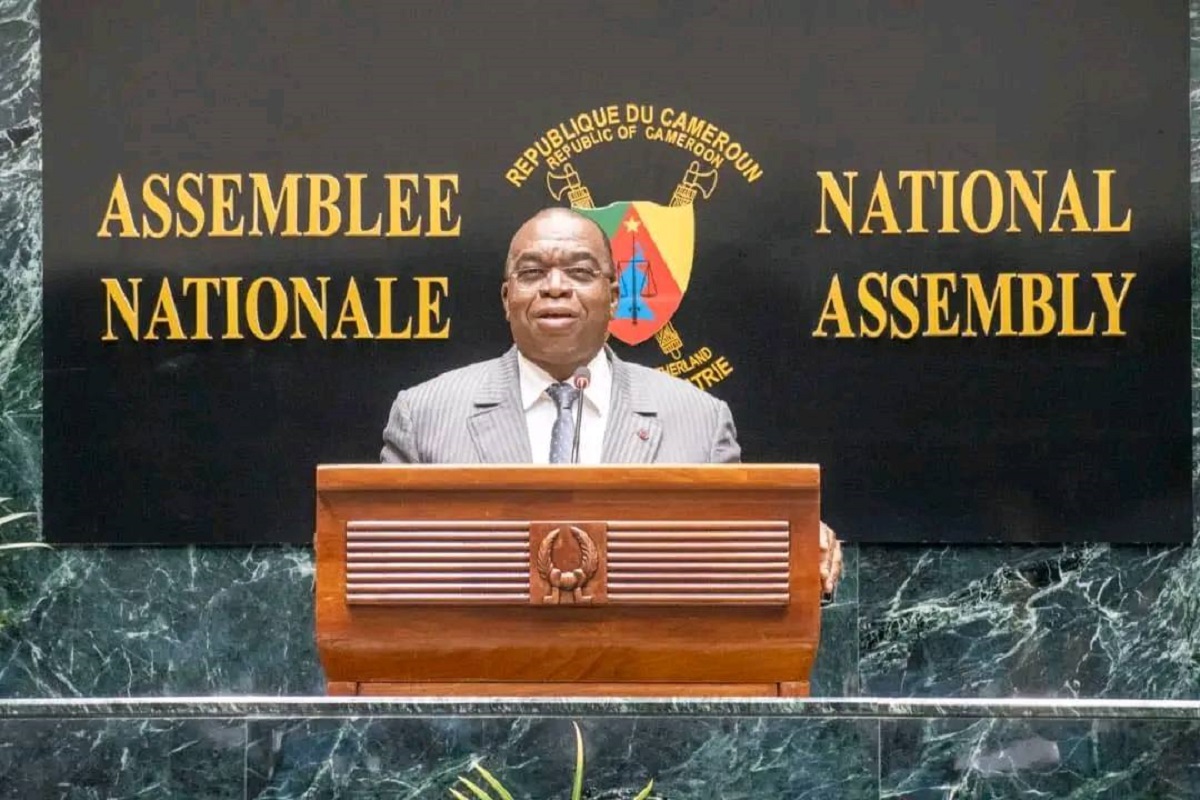
The 2026 Finance Bill, prepared in accordance with presidential directives and adopted by the National Assembly on November 26, 2025, anticipates a significant increase in both revenue and expenditure, while also introducing major structural reforms. Despite an uncertain global economic climate, Cameroon reaffirms its commitment to modernizing its public finances and supporting youth employment and women’s empowerment.
A contrasting economic context, between global uncertainties and regional dynamics
Internationally, the global economy continues to evolve in an unstable environment marked by geopolitical, economic, and health shocks. According to projections, global growth is expected to reach 3.1% in 2026, a slight decrease compared to 3.2% in 2025 and 3.3% in 2024. This global slowdown reflects the turbulence affecting several economies worldwide.
In the CEMAC zone, the trend is different. After a slight slowdown observed in 2025, activity is expected to accelerate to reach 3.3% growth in 2026, compared to 2.6% in 2025. This progress shows an encouraging economic recovery in Central Africa, driven in particular by the recovery of certain productive sectors and infrastructure investments.
In Cameroon, economic growth is also projected to improve, reaching 4.3% in 2026, compared to the estimated 3.9% in 2025. This performance is expected to be driven by the non-oil sector, which continues to show strong indicators in industry, agriculture, telecommunications, and financial services. Conversely, the oil sector is projected to experience a slight contraction of -0.1%. Inflation, meanwhile, is expected to decline to 3.0% in 2026, after reaching 3.2% in 2025, reflecting better control of price pressures.
8,816.4 billion FCFA: a 2026 budget showing significant growth.
The 2026 state budget is balanced in terms of both revenue and expenditure at 8,816.4 billion FCFA. This represents an increase of 1,080.5 billion FCFA (+14%) compared to the 2025 budget. The general budget, which constitutes the largest share, is projected at 8,683.9 billion FCFA, an increase of 1,014.9 billion FCFA (+13%) compared to 2025, when it stood at 7,669.0 billion FCFA. Special Allocation Accounts (CAS), which group budgets dedicated to specific projects and sectors, are estimated at 132.5 billion FCFA, compared to 66.9 billion FCFA in 2025, representing an increase of 65.6 billion FCFA (+98.1%). This significant increase reflects a commitment to better funding certain targeted financing mechanisms.
Increased domestic revenues, a diversified economy to support resilience.
Domestic government revenue is estimated at 5,887.0 billion FCFA, an increase of 452.2 billion FCFA (+8.3%) compared to 2025. This revenue is divided into four main components. Oil and gas revenue is estimated at 523.7 billion FCFA, a figure that takes into account market fluctuations. Tax and customs revenue, the main source of income, amounts to 4,889.5 billion FCFA, reflecting the significant contribution of taxes and foreign trade. Non-tax revenue, comprised mainly of income from government services and assets, reaches 400.0 billion FCFA. Finally, grants from technical and financial partners total 73.8 billion FCFA.
This structure shows that Cameroon relies on a predominantly domestic and diversified financing base, with a central role for taxation and customs, while retaining a contribution, however moderate, from oil revenues and external donations.
Over 2,026 billion in investments to strengthen infrastructure.
Budgetary expenditures, excluding principal debt payments, amount to 6,210.5 billion FCFA, an increase of 564.2 billion FCFA (+10%) compared to 2025. The 2026 budget maintains investment efforts. Public investment expenditures reach 2,026.3 billion FCFA, reflecting the priority given to structuring projects in roads, energy, agriculture, and industry. For example, 50 billion FCFA is allocated for goods and services, and 54 billion FCFA for direct investments in urban roads and support for the
SODECOTON, while 11 billion finances subsidies and transfers with a high socio-economic impact.
Personnel expenses amount to 1,625.4 billion, but have been reduced by 20 billion compared to the initial budget, reflecting the rationalization effort. External investments have been adjusted downwards by 65 billion, in a context of internal prioritization.
A financing need of 3,104.2 billion FCFA: a controlled mobilization of resources.
The 2026 budget shows an overall deficit of 631.0 billion FCFA, compared to 309.9 billion in 2025. This change reflects an additional financing need of 327.1 billion FCFA. Taking into account all financing costs, the total financing requirement for the State in 2026 is estimated at 3,104.2 billion FCFA, compared to 2,326.5 billion in 2025, representing an increase of 777.5 billion FCFA.
To cover these needs, the Government plans to mobilize several additional sources. Disbursements from project loans are estimated at 826.7 billion FCFA, the issuance of public securities on the regional market at 400.0 billion FCFA, while domestic bank financing would contribute 589.7 billion FCFA. Budgetary support from partners is estimated at 120.0 billion FCFA, exceptional financing at 167.8 billion FCFA, and a new external loan would be raised for an amount of 1,000 billion FCFA.
50 billion FCFA for women and young people: a strong signal of social responsibility.
In line with the President’s commitments, the 2026 budget establishes a Special Fund for the economic empowerment of women and the promotion of youth employment, endowed with 50 billion FCFA. This decision illustrates the Government’s commitment to strengthening social inclusion, supporting entrepreneurship, and fostering employability in a changing economic environment.
Reforms for better governance and greater efficiency.
The 2026 Finance Bill introduces significant innovations aimed at improving public management. Common budget chapters are eliminated and replaced by three allocations dedicated to contingency and unforeseen expenses, now managed by the Ministry of Finance (MINFI) for operating costs and the Ministry of Economy, Planning and Regional Development (MINEPAT) for investment. A change in the budget presentation method is introduced for certain sovereign institutions, which are now allocated funds.
Furthermore, the Reconstruction Fund for the Far North, Northwest, and Southwest regions has been split into two separate funds for greater efficiency in allocation and monitoring. The 2026 budget also provides for the full implementation of the State’s budget nomenclature, strengthening the clarity, transparency, and consistency of public financial operations.
A clear ambition: stability, performance, inclusion and development.
Despite a still fragile global context, the 2026 budget reflects Cameroon’s ambition to strengthen its economic sovereignty, improve public governance, and accelerate the modernization of strategic sectors, while maintaining a strong social focus. It is consistent with the CEMAC convergence commitments and the effective implementation of the 2030 National Development Strategy (SND30).
In this context, the Ministry of Finance reiterates its commitment to rigorous, transparent and responsible management of public resources, in the service of economic progress and the well-being of the people of Cameroon.