


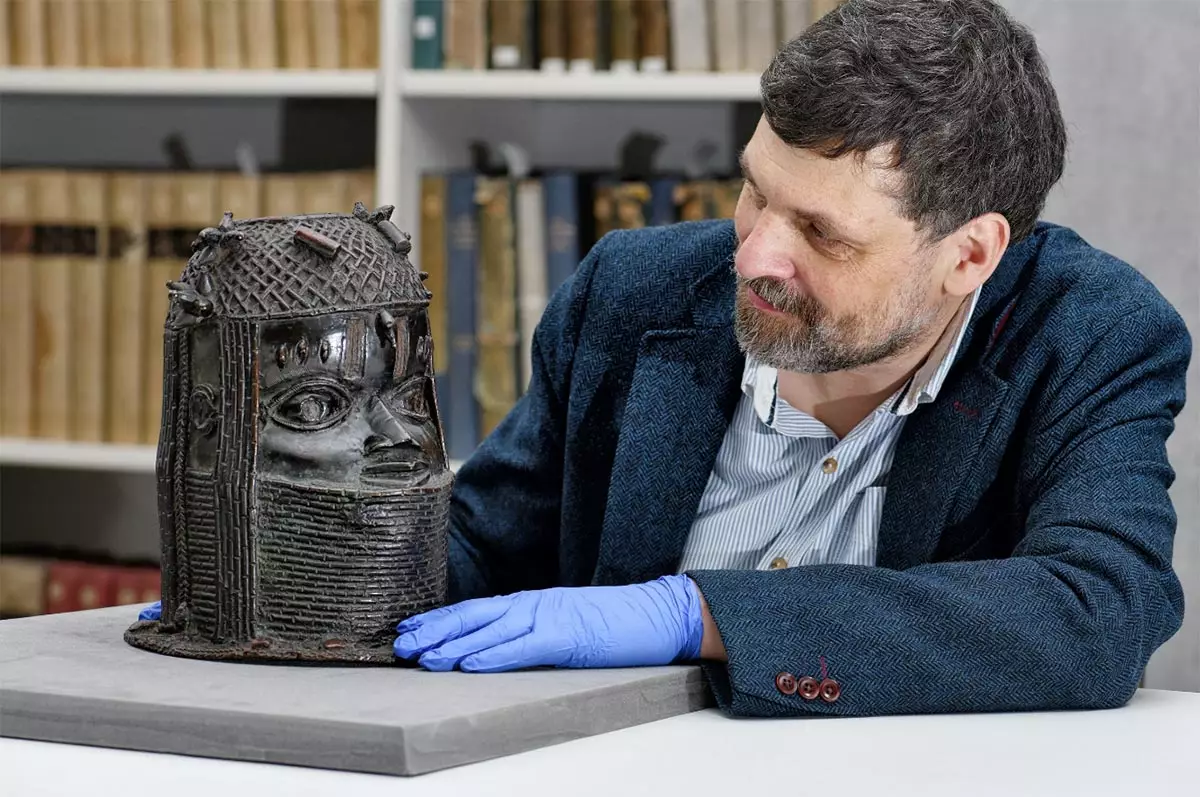
Museums agreed to return them. Then Nigeria had to decide who owns them: the federal state, the Edo state government or the Oba of Benin. The dispute is a preview of what returns will look like everywhere.
The Benin Bronzes — thousands of brass plaques and sculptures looted from Benin City by a British punitive expedition in 1897 — became the test case of restitution. German institutions transferred ownership of a large collection; other museums followed with returns, loans and long-term agreements.
Then came the harder question. In 2023, a presidential declaration in Nigeria recognised the Oba of Benin as owner and custodian of the returned objects, unsettling institutions that had negotiated with federal and state bodies, and unsettling plans for a new museum in Benin City.
Why it matters beyond Nigeria
Central African states preparing restitution claims face the same problem in their own form. An object taken from a chieftaincy, a shrine or a royal court belongs, in the moral sense, to that community. Legally, the claimant is the state. If the two do not agree before the object lands, the return becomes a dispute.
The questions for the article
- Where are the returned Bronzes physically held today, and who controls access?
- What is the status of the museum project in Benin City?
- Have returns slowed since the ownership question arose?
- What lessons are Cameroonian, Chadian and Gabonese authorities drawing for their own claims?
The comparison to make
Cameroon’s experience with the return of the Ngonnso’ figure from Germany in 2022 is instructive: a community-led campaign, a state that arrived later, and a negotiation about where the object would live. The article should set the two cases side by side.