

How the heir to Black independent cinema’s founding revolution turned an act of cultural insurgency into a durable business model — and why Paris is about to crown him
Some names are worn like a crown. Others like an anvil. Mario Van Peebles inherited both.
He is the son of the most ungovernable filmmaker America ever produced — a man who financed his own revolution because no studio would, and who was punished for it with two decades of silence. Mario could have settled for being a respectful footnote in that biography. Instead he chose the harder path: proving that an insurgent body of work could also be a solvent enterprise. That art made without permission could still make money. That integrity and profitability were not natural enemies but merely poorly introduced.
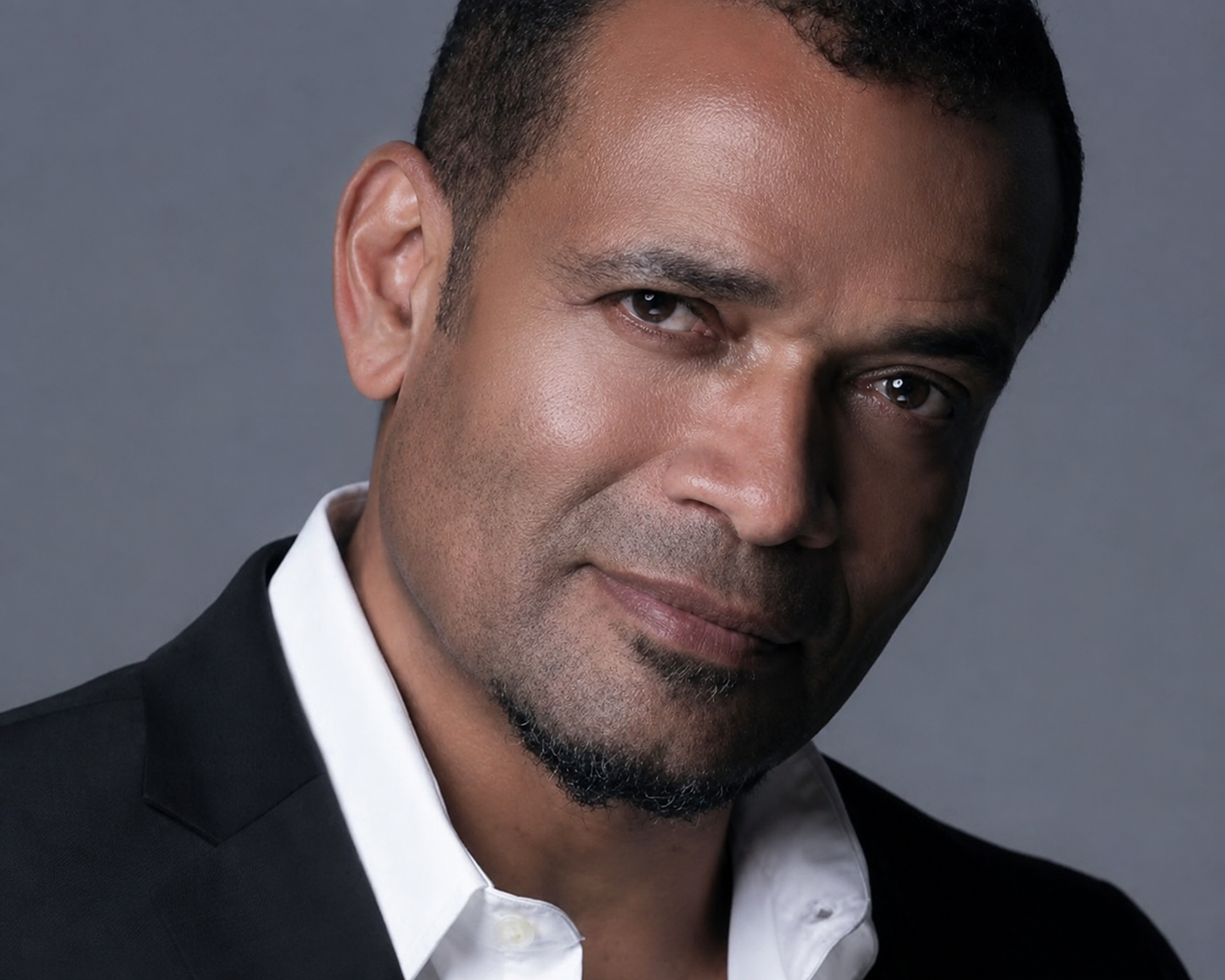
Nearly seventy, he is still writing, still directing, still producing, still acting. And this autumn he arrives in Paris as guest of honour of L’Afrique Fait Son Cinéma, where he will receive the festival’s Ubuntu d’Honneur and deliver a masterclass to a room full of filmmakers from Africa, the Caribbean and their diasporas — many of them facing, in 2026, precisely the financing wall his father hit in 1970.
The symmetry is almost too neat. It is also the whole point.
I. The Inheritance: A Father Who Embarrassed Hollywood
To understand Mario, you must first understand Melvin.
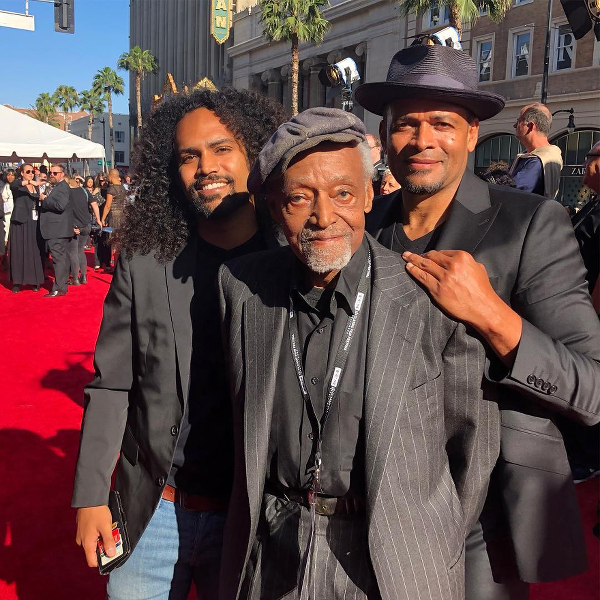
In 1971, Melvin Van Peebles released Sweet Sweetback’s Baadasssss Song. No studio wanted it. So he paid for it himself — he would say he sank “every penny I had” into the film — topped up by a $50,000 loan from Bill Cosby. He wrote it, directed it, edited it, produced it, scored it and starred in it. He shot it in nineteen days, passing it off as a pornographic production so he could hire a largely Black, non-union crew and dodge the guild rules that would have priced him out of existence.
With no advertising budget, he invented a workaround that reads today like a case study in guerrilla distribution: he released the soundtrack before the film, handing the score to a then-unknown band called Earth, Wind & Fire. The record did the marketing the studio system refused to do.
The financial outcome belongs as much to accounting legend as to cinema history. Sources place the budget somewhere between $150,000 and $500,000. The gross: roughly $15.2 million — a return of thirty to a hundred times the investment, achieved from an initial release in two theatres, in Detroit and Atlanta, amplified by the promotional machinery of the Black Panther Party, who put Sweetback on the cover of their newspaper and organised chapters to fill seats.
Melvin Van Peebles had just proved, with receipts, the existence of a solvent Black American audience that the industry insisted did not exist.
Hollywood drew its conclusions — though not the ones you would expect. It copied the formula, launched the blaxploitation cycle, made a decade of money from it, and never hired the inventor again. He was, as his son tells it, branded a troublemaker: a man who had made a hit without their money, their permission, their notes and their marketing department. Melvin turned to Broadway, to music, to novels — and to Wall Street, where he became a trader and published a book on the options market.
Read that last sentence twice. The godfather of Black independent cinema spent part of his exile learning derivatives. The Van Peebles relationship with capital has never been naive.
This is the cauldron Mario grew up in. Born in Mexico City in January 1957, raised across Paris, Copenhagen, Morocco and San Francisco, he learned editing and blocking the way a farm child learns to feed livestock — as domestic routine rather than vocation. At thirteen he was a production assistant on Sweetback and appeared in it as the young version of his father, in circumstances the adult Mario would later judge harshly, and would have the rare courage to stage, unflinchingly, thirty years on.
When Melvin died in September 2021 at eighty-nine, Spike Lee’s tribute was a single line of grief: “Damn, We Have Lost Another Giant!” Mario distilled his father’s life’s work into something closer to a manifesto: “Dad knew that Black images matter.”
II. The Detour Through the Numbers: A Filmmaker Who Came Up Through the Back Office
Here is the chapter the culture industry rarely tells — and the one that should open any handbook written for independent creators.
Mario Van Peebles did not throw himself at cinema. He went around it first.
He took a degree in economics from Columbia University in the late 1970s. He then became an analyst in New York Mayor Ed Koch’s Office of Management and Budget, during the city’s fiscal crisis. He worked the commodities markets. He structured limited partnerships for a film investment firm.
Translated into plain business language: before he knew how to frame a shot, Mario Van Peebles knew how to read a balance sheet, assemble an investment vehicle, and defend a line item in front of a municipal administration staring down insolvency.
He has never disowned that training. “My father’s always drilled into my head is that show business is much more about the business than the show,” he has said — adding, with the bluntness of a man who has sat on both sides of the table, that a brilliant idea you cannot finance is worth very little.
The rest of the apprenticeship was slow and unglamorous: Stella Adler’s studio, modelling for Ford to pay rent, off-off-Broadway theatre. Then the 1986 breakthrough in Clint Eastwood’s Heartbreak Ridge, which won him an NAACP Image Award. Then the title role in the NBC series Sonny Spoon. Then — crucially — his first directing credits in television, on 21 Jump Street and Wiseguy.
He has been candid about what the ceiling looked like from underneath. “If you were Black and you wanted to lead a movie, you were in comedy,” he told an American Cinematheque audience in 2022, describing the late 1980s. The court jester could say anything, provided he kept the king laughing.
Eastwood, having become his professional patron, walked him into the Warner Bros. executive suite and vouched for him. The studio, looking for someone who could translate the crack epidemic to the screen, gave him the job. Van Peebles has described the role they had in mind with acid precision: they needed a “Blackologist.”
He gave them something else entirely.
III. New Jack City: $8 Million In, $47.6 Million Out
March 1991. Every decision Van Peebles makes on this film is simultaneously an aesthetic decision and a market signal.
The first is about production value. Warner offers him stock footage for the opening. He refuses, and insists on shooting it himself: a helicopter move past the Statue of Liberty down to the 59th Street Bridge, landing on Nino Brown in a single unbroken gesture. The message is addressed to the audience and to the industry at once — this is a real film, not a racially segmented B-product.
The second is about casting, and it is the most visionary call of his career. Ice-T wanted to play the gangster; Wesley Snipes wanted to play the cop. Van Peebles inverted them. He cast Snipes as Nino Brown — our Pacino, he told him — and handed Chris Rock, a comedian, the shattering role of an addict. “Not every actor speaks the same language,” he explains; he shot some of Rock’s hardest scenes without sound, silent-film style, talking the actor through the take in real time.
He is also unusually honest about the limits of directorial ego. The job, he has said, was partly a matter of hiring extraordinary people and then “knowing when to get the hell out of the way.”
Ice-T, recruited one night in a New York club, did not believe a word of it. “I thought he was just making Hollywood conversation,” the rapper later recalled. He also remembers a set defined by constraint and improvisation: “Mario set out to make an epic film for $5 million” — no money, but crane shots and real cinematic ambition anyway.
The financial result is a textbook case. Budget: $8 million. North American gross: $47.6 million, including $7 million in the opening weekend alone. Close to a six-fold return — before counting the soundtrack, carried by Ice-T’s “New Jack Hustler,” which became a self-standing commercial asset. Exactly the play Melvin had invented twenty years earlier.
The film opened four days after footage of Rodney King’s beating by Los Angeles police reached American television screens. It entered cultural history before it entered the economics syllabus.
And the leverage extended far beyond its own P&L. Van Peebles put it with brutal clarity in 2022: “Hollywood’s not white or black, it’s also green.” Once Snipes had proved bankable, Warner made him the lead of Passenger 57. The commercial demonstration opened a door that thirty years of moral argument had not moved.
The lesson is uncomfortable and unavoidable: markets do not respond to justice claims. They respond to demonstrated demand. Van Peebles supplied the demonstration.
IV. Posse and Panther: The Price of the Non-Negotiable
A more calculating man would have mined the same seam. Van Peebles did the opposite: he attacked the western, the whitest genre in the American repertoire.
Posse (1993) was produced for $3.5 million and returned roughly $20 million — nearly six times the outlay, a second time. More interesting still is what happened afterwards. The film detonated on home video, where white audiences who had been wary of a Black-led western in a cinema discovered they liked it perfectly well in their living rooms. Audience-research scores that had initially favoured the comic-relief character shifted, over repeat viewings, to the Black gunslinger lead. Van Peebles drew a distribution lesson every sales agent should tattoo somewhere visible: the secondary window can correct the prejudice of the primary one.
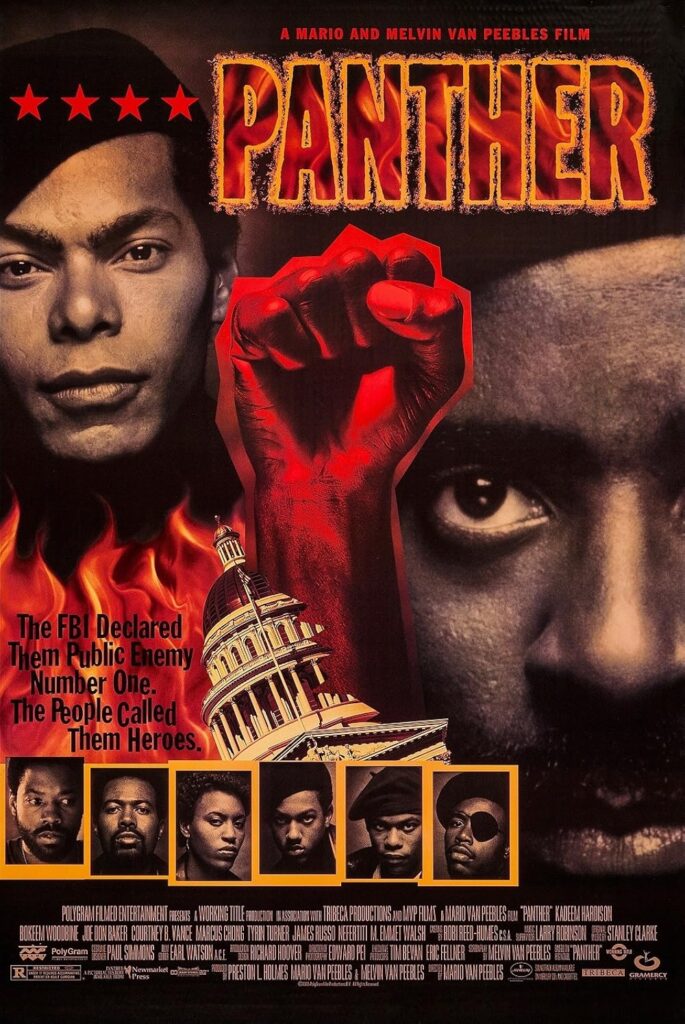
Panther (1995) was a different proposition. Adapted from his father’s novel and produced alongside him, it told the founding story of the Black Panther Party. The studios wanted a white protagonist inserted to reassure the “dominant” audience — a young Berkeley student who teaches five Black men to read and hands them the Little Red Book. The Van Peebles refused outright.
The result: a $7.5 million budget against roughly $8 million in receipts. Break-even, essentially. The film won the Silver Leopard at Locarno. It also remains, by its own director’s account, the hardest Van Peebles film to see anywhere — almost, he suggests, as if that were the intention.
This has to be said plainly, because it is where the honesty of the model lives: integrity carries a price, and Van Peebles paid it. The back half of the 1990s saw him taking rent-paying roles in forgettable thrillers. Compromise is not this man’s virtue. Persistence is. His summary of the long drought that followed the New Black Realism wave has become his most-quoted line: “They shut the financial door on Black film for damn near 20 years.”
He is describing a structural mechanism, not a grievance. When a cycle of films stops earning, the industry blames the genre. When a cycle of Black films stops earning, it blames the audience — and closes the tap. It then takes roughly twenty years for a new generation to grow up, see something in a cinema, and decide the door is theirs to open again. Singleton. Spike Lee. Mario Van Peebles. Ava DuVernay.
V. Baadasssss!: Playing Your Own Father
In 2003, Van Peebles attempted the most exposed manoeuvre of his career: writing, producing, directing and starring as his own father, during the making of Sweet Sweetback.
He cheated on nothing. Not the genius, not the selfishness, not the exploitation of an unpaid crew, not the scene involving a thirteen-year-old boy. It is homage without amnesty — a son’s tribute that refuses to launder its subject.
Roger Ebert gave it four stars, placed it among his favourite films of the year, and called it “one of the best movies I’ve seen about the making of a movie.” Leonard Maltin later included it in his book on great overlooked films, calling it Van Peebles’ most personal and, in his judgement, his finest work. It drew an Independent Spirit Award nomination for its screenplay and swept several Black Reel Awards.
Commercially? Around $366,000 at the box office. A failure, on the face of it.
On the face of it only. Because in 2021, the Criterion Collection released the box set Melvin Van Peebles: Essential Films — new 4K restorations approved by Mario, with Baadasssss! included and a father-and-son commentary track.
The theatrical flop had become a catalogue asset.
That is the whole lesson, compressed. In an intellectual-property economy, a work’s value is not measured by its opening weekend. It is measured by its capacity to survive fifty years and still be worth licensing, restoring and reissuing. The Van Peebles family understood library economics before the streaming platforms turned it into a bidding war.
VI. The Method: Seven Principles for Independent Creators
Strip the career to its operating logic and you get something remarkably transferable — to Lagos, to Douala, to Abidjan, to Fort-de-France, to any filmmaker sitting outside a system that controls the money.
1. Finance the proof before you request the permission. Melvin did not persuade Hollywood by argument. He persuaded it by return on investment. Markets ignore advocacy; they obey evidence.
2. Treat the soundtrack as a revenue line, not a cost line. Releasing the album before the film in 1971 was a cash-flow operation as much as a marketing coup. Where music travels faster and further than images, the logic applies directly.
3. Fund the personal work with the commissioned work. Van Peebles has directed episodes of Damages, Lost, Sons of Anarchy, Empire, Law & Order, Chicago P.D., Wu-Tang: An American Saga. That annuity of craft paid for the films he actually needed to make. It is treasury management, not betrayal.
4. Keep the rights. Think in catalogue, not in campaigns. The asset is not the film. It is the negative, the brand, and the duration.
5. Integrate vertically — including the family. MVP Films; his son Mandela co-starring in Outlaw Posse, thirty years after Mario co-starred with Melvin in Posse. A light structure, loyal human capital, contained fixed costs.
6. Understand the second window. Posse proved that video, and today streaming, can rehabilitate a film the theatrical market misjudged. Design your release for the full life of the asset.
7. Never confuse artistic rigour with financial suicide. Panther cost its author dearly. He does not regret it — but he had built a diversified enough portfolio of activity to absorb the blow. That is risk management, not romanticism.
VII. Paris, and the Ubuntu d’Honneur
Which brings us to a stage on the Right Bank.
L’Afrique Fait Son Cinéma, founded in 2019 by the Cameroonian-born producer Blaise Pascal Tanguy, has spent seven editions building something more ambitious than a screening series: a Paris marketplace for African, Caribbean and diaspora cinema, where the Ubuntu Awards sit alongside industry roundtables on financing, cultural soft power and artificial intelligence. It is one of the rare festivals that treats African cinema as an industry rather than a curiosity.
Naming Mario Van Peebles its guest of honour, and awarding him the Ubuntu d’Honneur, is therefore not a decorative gesture. It is an argument.
Because the room he will address knows the problem intimately. Filmmakers who cannot raise a budget in their own currency. Producers who watch their negatives sit unexploited for want of a distributor. Directors told, in 2026 as in 1970, that their protagonist should perhaps be recast to reassure a wider audience. Van Peebles has lived every one of those conversations, and has receipts from both the wins and the defeats.
His masterclass will not be an exercise in nostalgia — he does not do nostalgia. Expect the working questions: how to structure a film so it survives a bad opening weekend; how to build a soundtrack that finances the shoot; how to keep enough of your rights that the work is still an asset thirty years later; how to say no to a bad note without ending your career; how to build a career long enough that saying no becomes affordable.
And expect the underlying conviction, which he has held for three decades and states without embarrassment: “culture can be a healing force.” He calls what he makes “edu-tainment” — a word that sounds soft until you notice it describes a fifty-year project to change what audiences believe is possible, and who they believe is capable of carrying a film.
(Editorial note: confirm the edition number, exact dates and venue of the Paris ceremony and masterclass with the festival before publication — details had not been posted publicly at the time of writing.)
VIII. The Work Is Not Finished
He is not a monument. He is on set.
In 2024 he wrote, directed and starred in Outlaw Posse, a sprawling western with Whoopi Goldberg, Edward James Olmos and Cedric the Entertainer, released with a line that could serve as an epitaph: “when laws are unjust, the just become outlaws.” The same year he stood on the Lincoln Center stage in MVP, a play in which he once again inhabits his father. He is developing That’ll Be the Day for STX, about the birth of rock ‘n’ roll.
In MVP, he gives Melvin the line that closes the circle: the father brought the son into the game, and when the industry forgot the father, the son brought him back into it.
Melvin gave Mario his first lines in a feature film.
Mario gave Melvin his last.
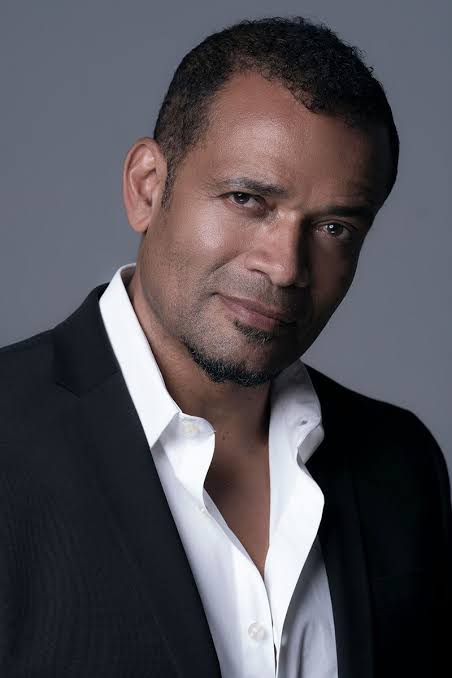
Why Mario Van Peebles, and why now?
Because he embodies, better than almost anyone alive, a thesis this publication holds: culture is not a supplement to the economy, funded out of charity and guilt. It is an industry. And industries are won with sound accounts as well as sound ideas.
Because he inherited a crushing name and never once hid behind it — and because he turned a training in economics into an instrument of artistic freedom rather than an alibi for compromise.
Because across half a century, through the defeats as much as the triumphs, he demonstrated that a creator from the margin can open a market, prove the solvency of an audience the gatekeepers had written off, force the door of a system — and, rarest of all, remain inside it without becoming its property.
And because his numbers speak a language every independent creator should learn to speak: eight million invested, forty-seven million returned; three and a half million committed, twenty million recovered; and, upstream of all of it, a hundred and fifty thousand dollars of family nerve converted into fifteen million in receipts and fifty years of posterity.
When he steps onto that Paris stage to collect the Ubuntu d’Honneur, the award will not be recognising a legacy. Legacies are for people who have stopped.
It will be recognising a method.
Mario Van Peebles did not merely inherit the fire.
He learned how to invoice it.