

Economic Analysis – The International Agriculture Show becomes the launchpad for a transforming agricultural giant. Focus on investment opportunities for international financiers, agribusiness corporations, and impact investors.
Paris, February 21, 2026 – The year’s premier agricultural economic event opens today at Paris Porte de Versailles. Côte d’Ivoire, West Africa’s leading agricultural power, takes center stage at the 62nd International Agriculture Show (SIA) – not merely as an exhibitor, but as a platform for foreign investment attraction. For international investors and financial institutions, this presence signals a strategic shift: a country transforming its agricultural commodities into industrial development leverage, opening concrete perspectives for global capital allocation.
The Numbers of Power: 20% of GDP, 66% of Active Population
The Ivorian economy rests on solid agricultural foundations. According to FAO and Ministry of Agriculture data, the primary sector employs nearly two-thirds of the active population and contributes 20% of national GDP. Yet these figures mask a complex reality: historical dependence on raw commodities (cocoa, coffee, cashew) that the country actively seeks to reduce.
Agricultural exports to the EU represent substantial flows: cocoa, coffee, tropical fruits, timber and derivatives dominate trade. France, as leading commercial partner, absorbs significant volumes, particularly in cocoa and coffee. However, the agricultural trade balance remains structurally deficit: Côte d’Ivoire massively imports cereals, dairy products, meat and processed foods, creating costly dependency.
The Transformation Bet: From Raw Exporter to Agro-Industrial Player
This paradox drives the SIA 2026 strategy. The Ivorian approach, deployed through the National Agricultural Investment Program (PNIA), targets structural transformation: shifting from cocoa bean exports to local fine chocolate production, from raw cashew to processed kernels, from cassava to industrial flours and starches.
The economic stakes are colossal:
- Job creation: Local processing generates 3 to 5 times more employment than raw exports
- Value addition: Fine chocolate commands 8 to 10 times higher prices than raw beans on international markets
- Food sovereignty: Reduced imports of basic food staples (rice, milk, meat)
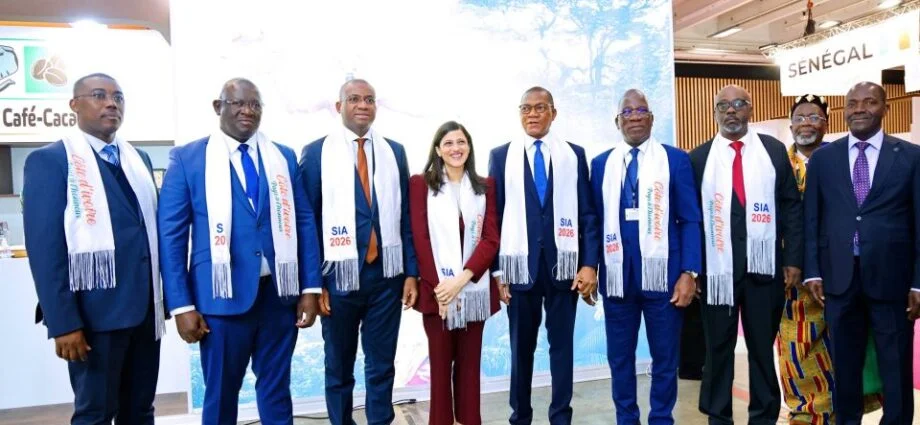
The Paris show becomes the showroom of this mutation. The 500+ sqm pavilion showcases not only raw production, but crucially finished and semi-processed products: terroir chocolates, cosmetic shea butters, pasteurized fruit juices, enriched cassava flours. The objective is clear: convince French and European investors to finance missing processing units.
France-Côte d’Ivoire: A Structuring Partnership
France accompanies Côte d’Ivoire through the Debt Relief and Development Contract (C2D) and PNIA financing, demonstrating commitment to supporting structural African agriculture. This dynamic opens perspectives for diversified international investment:
Investment Opportunities:
- Agro-industrial co-productions: Ivorian companies seek partners for cashew, rubber, and tropical fruit value chains
- Technology transfer: Irrigation, mechanization, and agritech expertise applicable to under-mechanized agricultural regions globally
- European market access: The “Made in Côte d’Ivoire” label, showcased at SIA, facilitates entry of processed products into the EU
Guy Marius Atsé, Director of Communication and Agricultural Promotion at the Ivorian Ministry, confirms: “We hope to convince French and European investors to join those already present on the ground.” Among these, groups like SIFCA, Olam, Cargill, Barry Callebaut, and Nestlé have already established major industrial operations.
High-Potential Sectors: Three ROI-Focused Value Chains
1. Cocoa: From Bean to Bar
With 2.2 million tonnes produced annually (40% of world production), Côte d’Ivoire dominates the market. Yet processing remains marginal: less than 10% locally roasted, barely 3% transformed into fine chocolate. The government targets 50% local processing by 2030, creating massive need for grinding, roasting, and conching units. Estimated investments required: over USD 2 billion by 2030.
Investment Opportunity: Private equity funds and agribusiness corporations can participate in financing new plants, partnering with Ivorian cooperatives and multinational chocolate manufacturers.
2. Cashew: The Explosive “Forgotten” Sector
As world’s leading producer with 1.1 million tonnes of raw nuts, Côte d’Ivoire processes less than 15% locally. Raw exports to India and Vietnam represent estimated USD 800 million annual value addition loss. The government launched a 30-factory shelling and peeling unit program by 2027.
Investment Opportunity: Processing joint-ventures with Ivorian partners, creating regional supply hubs for the growing global cashew market.
3. Rice: Toward Food Self-Sufficiency
Importing over 1 million tonnes annually (mainly from Asia), Côte d’Ivoire launched a local production revival program. The Danané variety, native to the country’s west, is undergoing Geographical Indication (GI) certification, creating a premium niche on international markets.
Investment Opportunity: Mechanization and irrigation infrastructure, parboiling units, and branded rice marketing for West African and European markets.
Ivorian Agritech: Africa’s Innovation Laboratory
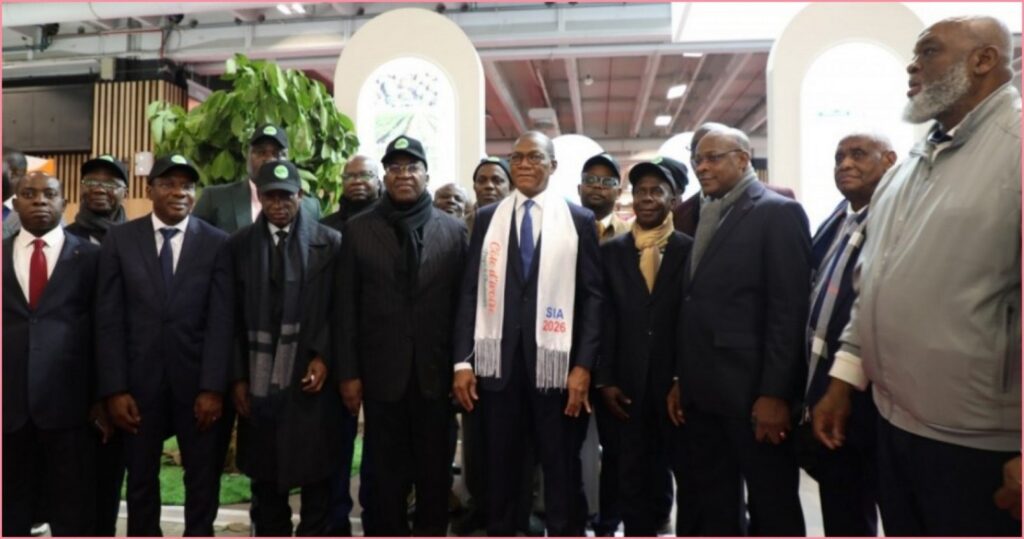
The Ivorian pavilion at SIA 2026 highlights an emerging agricultural start-up nation. Blockchain traceability applications (guaranteeing “ethical” cocoa origin), spraying drones, soil humidity sensors, crowdfunding platforms for small producers: the innovative ecosystem already attracts impact investment funds and European business angels.
For international investors, this dynamic represents a replicable model: combining mature traditional value chains with technological breakthrough.
Financing and Incentives: The Ivorian Government Package
To attract foreign capital, the Centre for Investment Promotion in Côte d’Ivoire (CEPICI) structured an attractive incentive package:
- Tax exemptions: 5 to 8 years of corporate tax exemption for agro-industrial investments
- Customs facilities: VAT and duty exemption on agricultural equipment
- Land access: Preferential land allocation in High-Potential Agricultural Zones (ZAF)
- Export support: Access to Coface financing and French Development Agency (AFD) guarantees
These measures, combined with Ivorian macroeconomic stability (average 7% growth during 2010-2020), create a conducive environment for medium and long-term investments.
Global Context: Agriculture as Economic Sovereignty Lever
Côte d’Ivoire’s presence at the 2026 International Agriculture Show transcends communication operation. It constitutes an economic demonstration of force: a country refusing eternal raw commodity provider status, investing massively in transformation, innovation, and agricultural industrialization.
For international investors, the lesson is clear: African agriculture can generate attractive returns, provided complete value chains are structured and solid public-private partnerships are established. Côte d’Ivoire, with 700+ established French companies and stated ambitions, offers an observable laboratory and a tested investment ground.
The SIA 2026 opens its doors. Capital circulating between Pavilion 7.1 and B2B conference rooms will partly shape West African agribusiness future. For global finance, the time is for attentive observation and rapid action: economic integration through agriculture is not decreed, it is built, investment after investment.
Key Economic Information:
- SIA 2026 Dates: February 21 – March 1, 2026
- Ivorian Investment Day: Thursday, February 26, 2026 (investment focus)
- Investment Contact: CEPICI – www.cepci.ci
- Priority Sectors: Cocoa, cashew, rice, rubber, tropical fruits, agritech